

More news on this day
April travelers watching delay boards flicker from green to red across the United States are facing a different kind of spring pastime this year: trying to guess where the next disruption will hit as weather systems, staffing shortfalls and fragile infrastructure combine to strain air and rail networks.
Get the latest news straight to your inbox!
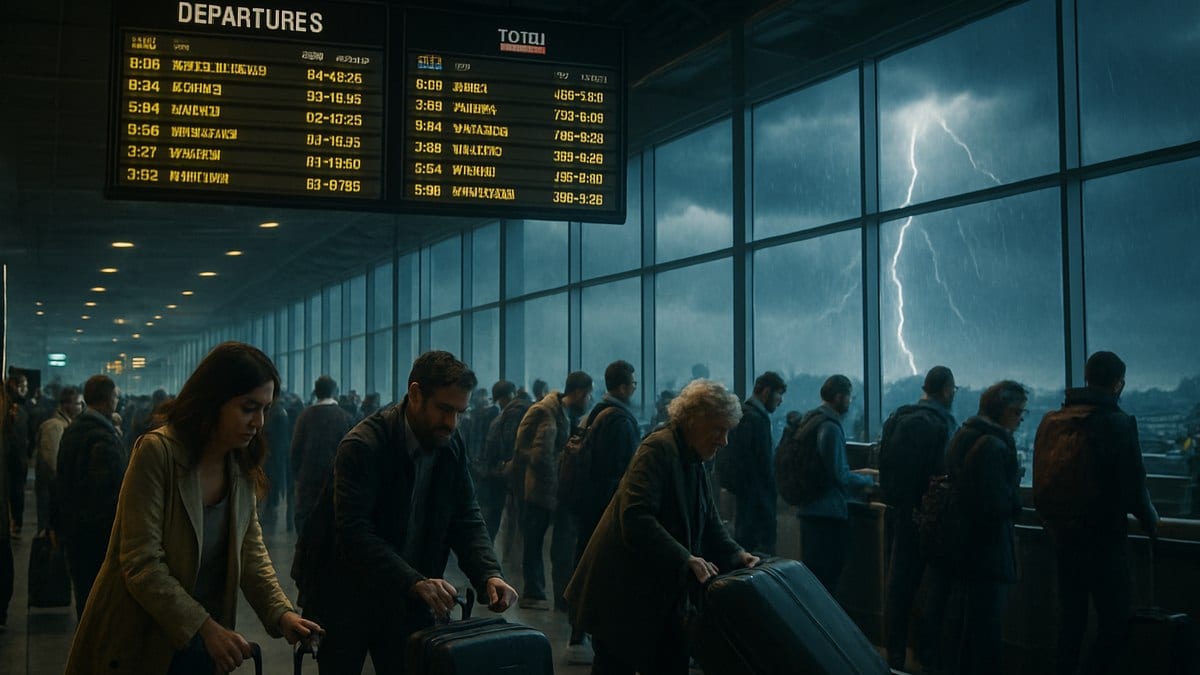
Stormy Skies Put Major Hubs Back on the Front Line
Early April has already offered a sample question for anyone testing their disruption instincts: which region will storms hit next, and how far will the fallout spread? Severe thunderstorms, high winds and air traffic control restrictions disrupted more than 3,500 flights across 27 major U.S. airports on April 8, with hubs in Miami and Atlanta among the hardest hit as operations slowed under lightning and runway constraints, according to passenger rights tracking data and flight statistics services.
Travel industry coverage indicates that these weather shocks land in a system running close to its limits. Analyses of the post‑Easter period in early April describe more than 4,700 delayed flights and hundreds of cancellations in a single day, with delays clustering at large network hubs in Atlanta, Chicago, New York, Dallas and Las Vegas. When storms roll through multiple regions within hours of each other, the result is a chain reaction that can ripple across the country well after local skies clear.
Federal aviation briefings and independent breakdowns of delay data consistently show weather as the leading cause of U.S. flight disruption. Low cloud ceilings in the Northeast, thunderstorm lines over Florida and the Midwest, and late‑season snow and wind in the West have all appeared in April air traffic reports. Each condition forces ground stops, slower arrival rates or diversions that squeeze already congested schedules at major hubs.
For travelers, that means the classic quiz question remains very current: is the next trouble spot the storm‑soaked Southeast, the fog‑bound Northeast or a snow‑streaked Rocky Mountain gateway? With spring patterns still unsettled, published outlooks suggest the answer may be “all of the above,” just not on the same day.
Staffing Squeeze Keeps Security and Control Towers in Focus
Even when skies cooperate, April is testing another weak point in the U.S. travel system: staffing. A partial federal government shutdown is putting pressure on the Transportation Security Administration, with recent reporting describing record‑high wait times at some airports and warning that a list of dozens of smaller facilities could face temporary closure if screeners are reassigned to busy hubs.
At Chicago O’Hare, local coverage has highlighted how the staffing crunch can play out on the ground, with travelers facing uncertainty over security lines as additional federal personnel are shifted into place to keep checkpoints operating. Travel analysts note that while some days pass with only modest waits, the underlying shortage means conditions can turn quickly when absenteeism rises or peak‑season crowds arrive earlier than expected.
The stress extends beyond security lanes to the nation’s control towers and radar rooms. Investigative reporting and aviation trade publications this spring point to an air traffic controller deficit that has topped several thousand positions, prompting an emergency hiring push in 2026. Policy briefs from airline trade groups estimate that staffing‑related delays cost carriers and passengers billions of dollars in the previous year, especially at complex facilities in the New York region and other high‑density corridors.
Recent incidents, including a late‑March crash involving an Air Canada jet and an airport fire truck at New York’s LaGuardia Airport, have drawn renewed attention to controller workloads at busy fields. While investigations are ongoing, aviation commentators argue that any additional strain on these workforces in April, whether from weather‑driven traffic surges or special events, increases the risk of bottlenecks even when safety margins are maintained.
Rail Corridors Juggle Old Chokepoints and New Fixes
Disruption potential this April is not confined to the skies. Amtrak and commuter rail riders along the Northeast Corridor and beyond are navigating their own set of questions about which segment will slow next. In late March, passengers moving between New York Penn Station and Newark Penn Station experienced suspensions and severe restrictions on New Jersey Transit services after signal problems on Amtrak infrastructure, according to regional broadcast reports.
At the same time, a long‑running source of rail delays in the region is undergoing a long‑anticipated upgrade. March saw the first track of the new Portal North Bridge enter passenger service between New Jersey and New York, replacing a 116‑year‑old swing bridge that had become notorious for mechanical issues and resulting timetable chaos. Rail planners describe the opening as a major milestone for reliability on one of the country’s busiest passenger rail corridors.
Farther afield, freight and long‑distance passenger operations have confronted their own vulnerabilities. A late‑winter freight derailment in Northern California temporarily disrupted the Amtrak Coast Starlight, highlighting how single‑track bottlenecks and remote access points can extend recovery times when incidents occur. Online rider communities are also tracking adjustments to Amtrak schedules in the Midwest, including reports of trains shifted to chartered buses later in April on selected Wolverine corridor services between Chicago and Michigan.
For rail passengers, the spring quiz involves a different map: will the next snag come from aging signal systems, constrained bridges, freight conflicts or temporary service substitutions on secondary routes? With infrastructure renewal progressing unevenly, the answer can vary by corridor and even by day.
Special Events, Security Zones and Policy Shocks Add Wild Cards
Beyond weather and workforce gaps, April travelers also face less predictable wild cards that can reshape flight paths and timetables with little warning. In February, three sudden temporary flight restrictions over Texas and New Mexico briefly closed key stretches of airspace, including a shutdown that effectively suspended operations at El Paso International Airport. Aviation historians note that the first of these closures was described as the most sweeping short‑notice security‑driven shutdown of a U.S. commercial airport since 2001.
Closer to the nation’s political center, special events in Washington, D.C., have already prompted rail travel advisories this spring. Coverage of late‑March movements in and out of the capital described Amtrak alerts about potential delays tied to large‑scale gatherings, a reminder that demonstrations, state visits or high‑profile dinners can trigger security perimeters and schedule tweaks across multiple modes.
Overlaying these discrete events is the broader impact of federal budget standoffs on transportation agencies. Publicly available information about the current shutdown indicates that it has contributed to stretched resources at the TSA and raised questions about longer‑term hiring plans at the Federal Aviation Administration. Analysts caution that if funding uncertainties linger into the peak of the spring and summer travel seasons, they could slow progress on efforts to rebuild staffing pipelines and modernize facilities.
For travelers trying to anticipate the next curveball, that adds another multiple‑choice item to the April quiz: will the next slowdown stem from a surprise security lockdown, a political stalemate that pinches agency operations, or a localized airspace restriction that reorders routes across a region with little advance notice?
How Travelers Can Read the April Disruption Map
While no one can script the next delay, the pattern emerging across early April suggests recurring themes that travelers can watch. Weather outlooks remain a primary early‑warning tool, especially when forecasts call for multi‑day storm systems sweeping across several regions at once. Aviation reports show that even moderate storms can have outsized effects when they intersect with peak departure banks at major hubs.
Security and staffing conditions are another critical variable. Travelers monitoring airport social media feeds, airline travel alerts and federal dashboards can often spot signs of strain, such as unusually long checkpoint times or notices of reduced arrival rates, hours before they translate into widespread cancellations. Coverage of the current government funding impasse suggests that these indicators may remain volatile through much of April.
On the rails, schedule adjustments, construction notices and temporary bus substitutions published by Amtrak and regional agencies offer clues about where bottlenecks may arise. With infrastructure upgrades such as the new Portal North Bridge starting to relieve some historic chokepoints, disruptions may shift toward other, less familiar weak links in the network.
For now, the April travel quiz across U.S. networks has no single correct answer. Instead, the evolving picture points to a landscape where storms, staffing, infrastructure and policy all contend for the role of next disruptor, leaving passengers to track multiple fronts at once as they plan their journeys.