

More news on this day
Asia-Pacific’s busiest aviation hubs are grappling with an intense wave of disruption in April 2026, as adverse weather, geopolitical detours and fuel supply pressures combine to snarl flight schedules, strand passengers and test already stretched airline operations from Tokyo to Dubai.
Get the latest news straight to your inbox!
Disruption Peaks as April Travel Demand Rises
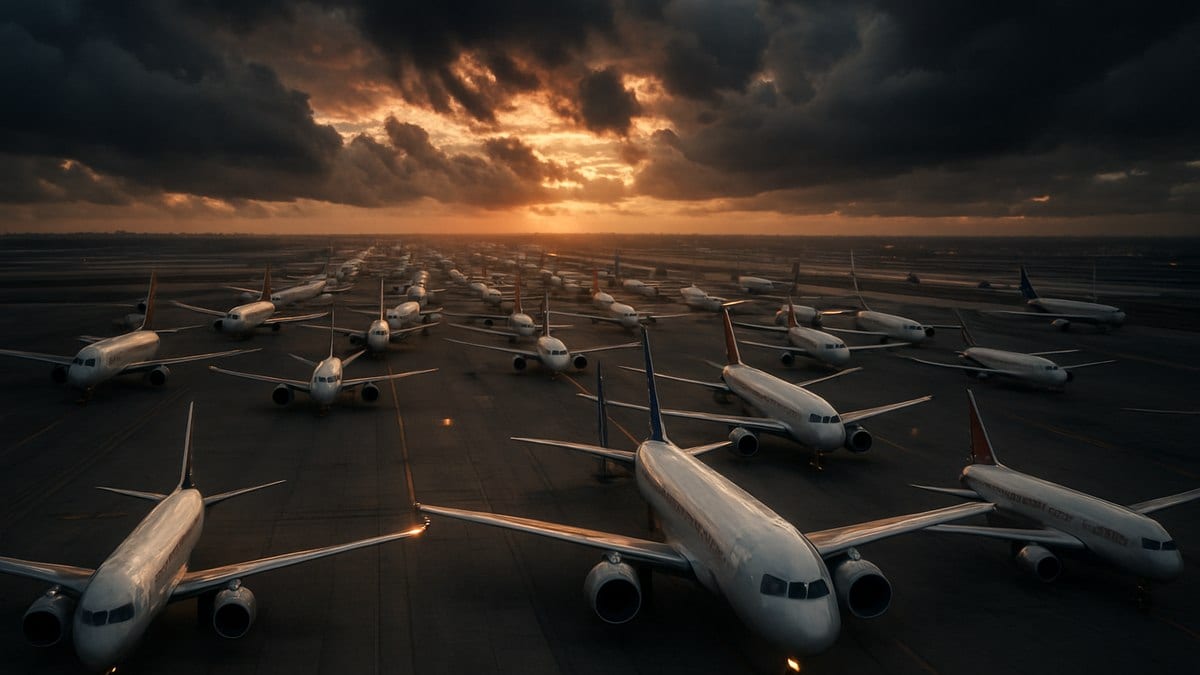
Operational data compiled in early April show that flight irregularities across Asia-Pacific have escalated sharply in recent days, hitting major transit hubs at the very moment spring travel demand begins to climb. Publicly available tracking figures for April 6 and 7 indicate thousands of delays and hundreds of cancellations concentrated at large international gateways, including Tokyo, Seoul, Shanghai, Singapore, Hong Kong and Manila, with knock-on effects reaching as far as Europe, North America and Australia.
Reports from aviation analytics providers and industry publications describe a pattern of multi-day disruption waves. On April 7, one regional summary highlighted more than 3,000 delays and over 150 cancellations across Japan, South Korea, Singapore, China, the Philippines and Hong Kong, singling out Tokyo’s primary hub as one of the most affected airports by volume of delayed movements. A separate analysis four days later pointed to fresh totals of more than 6,000 additional delays and several hundred cancellations spread across India, China, South Korea, Indonesia, Japan and the United Arab Emirates.
These figures follow an earlier spike in March, when an estimated several hundred cancellations and thousands of delays were recorded in a single day across Asia-Pacific. Analysts note that the March surge weakened network resilience and left airlines with little slack heading into April, so subsequent weather systems and routing complications have translated quickly into rolling backlogs at the region’s busiest hubs.
The result is an increasingly uneven travel experience for passengers. While many flights are still operating, they are frequently doing so behind schedule, with extended ground holds, missed connections and last-minute schedule changes now common across multiple carriers and markets.
Weather Systems Collide With Congested Airspace
Weather has been a key driver of the current turmoil. Industry coverage points to localized severe conditions in parts of Japan, Korea and East Asia in the first week of April, including thunderstorms, low cloud and poor visibility that forced temporary ground stops and tighter air traffic control separation. In southern China, reports describe thunderstorms, heavy rain and fog disrupting operations at large gateways that serve as central connectors for both domestic and international traffic.
At Shanghai Pudong, Beijing Capital and Guangzhou Baiyun, weather-related restrictions and congestion have contributed to significant clusters of delays and cancellations in recent days. Travel and aviation bulletins indicate that these airports, already among the busiest in the world by passenger volume, are currently contending with long queues for departures and arrival holding patterns that can add substantial time to flight durations.
In South Korea, publicly available statistics for April 10 show more than 400 delays and dozens of cancellations across Jeju, Gimhae, Gimpo and Incheon airports on a single day. Incheon, the country’s largest hub and a critical link for long-haul services to North America and Europe, has reported the highest number of delayed flights domestically, raising concerns about potential ripple effects across interconnected schedules.
Elsewhere in the region, reports from travel and tour outlets highlight clusters of more than 100 cancellations and over 1,000 delays across major airports such as Guangzhou, Shenzhen, Chongqing, Shanghai and Jakarta as of April 10. Analysts note that delays significantly outnumber cancellations in this latest wave, suggesting that airlines are attempting to preserve capacity but at the cost of mounting schedule irregularity.
Fuel Shock and War-Rerouted Flights Add Strain
Geopolitical developments and energy market turbulence are amplifying April’s operational challenges. The ongoing conflict involving Iran and the closure or restriction of key corridors around the Strait of Hormuz since March have created what energy and aviation analysts describe as one of the most severe jet fuel supply disruptions in decades. An associated fuel crisis is pushing up prices, complicating refuelling logistics and forcing airlines to rethink routings on long-haul services linking Asia with Europe, the Middle East and Africa.
Specialist logistics and freight publications report that air and ocean freight flows are being squeezed by the same dynamics, with carriers facing elevated fuel costs, longer routings and occasional capacity constraints. A recent Asia Pacific freight report from a major logistics provider said air cargo rates are likely to remain high in April, with some operators introducing emergency surcharges to cover increased operating expenses and uncertainty.
At the same time, travel industry media note that a number of Asian and Gulf carriers have cut or suspended selected routes, particularly on sectors that pass near conflict zones or depend heavily on refuelling options in the Gulf. Some airlines are reported to be loading additional fuel at alternative airports, increasing aircraft weight and narrowing operating margins, while others are thinning schedules to contain costs and improve reliability on remaining services.
Corporate advisories tracking global aviation risk describe Saudi Arabian and Omani airspace as critical east west corridors at present, absorbing substantial overflow traffic from other constrained routes. While these alternative pathways help keep intercontinental links open, they also increase flight times, raise fuel burn and add complexity to crew scheduling, effects that reverberate across Asia-Pacific hub banks.
Network Effects Hit Key Transit Hubs
The combination of local weather shocks and long-haul routing constraints is particularly visible at major Asia-Pacific transfer hubs such as Tokyo, Seoul Incheon, Hong Kong, Singapore Changi and Dubai. These airports function as linchpins in intricate hub and spoke systems, meaning that a delay on one feeder leg can cascade through dozens of onward connections within hours.
Recent disruption snapshots show Tokyo’s main international hub recording several hundred delays in a single day, with both domestic and international banks affected. Similar pressure is evident at Incheon, where April 10 figures highlight more than 200 delayed flights even as cancellations remain relatively limited. Hong Kong and Singapore are experiencing knock-on congestion as airlines reroute around affected airspace and adjust schedules to factor in longer sector times and constrained refuelling options.
Dubai and Abu Dhabi are also in the spotlight as key waypoints for Asia Europe and Asia Africa traffic at a time when other Gulf corridors are subject to heightened operational risk and capacity limitations. Data from global risk and infrastructure reports suggest that while these hubs remain operational, they are shouldering a disproportionate share of diversionary flows, adding pressure to airport infrastructure and airline networks already managing seasonal peaks.
Industry analysts caution that, in such an interconnected environment, even modest additional disruption at a single hub can quickly trigger widespread irregularities. Aircraft rotation imbalances, crew duty time limits and maintenance windows can force airlines to reshuffle fleets on short notice, turning what might have been an isolated delay into a multi-day pattern of late departures and missed connections across several continents.
Airlines and Travelers Adjust to a Volatile April
Airlines across Asia-Pacific are adjusting strategies in response to the turbulence. Trade and tourism publications report that some carriers are trimming flight frequencies, consolidating lightly booked services and selectively suspending routes where fuel costs, detours or operational risk are particularly acute. Others are deploying larger aircraft on constrained sectors to preserve capacity with fewer individual movements, a tactic that can reduce scheduling complexity but may limit flexibility for travelers.
Regional airline associations have renewed public calls for coordinated policy support, pointing to a trio of pressures involving higher jet fuel prices, increased insurance and security costs, and inflation in other operating expenses. Industry statements encourage governments and aviation authorities to provide clear and timely information on airspace restrictions, enable efficient rerouting and consider targeted relief measures if elevated costs and disruptions persist.
For passengers, April’s turmoil is translating into longer journeys, unpredictable transfer windows and a greater need for contingency planning. Travel advice published by airline-focused outlets and consumer sites emphasizes regularly checking flight status, allowing extra time for connections through major hubs, and considering flexible tickets or travel insurance products that explicitly cover delays and cancellations in a volatile operating environment.
With peak summer schedules only weeks away, network planners and aviation analysts are watching closely to see whether the current wave of disruption in Asia-Pacific’s busiest hubs will ease as weather patterns stabilize and fuel markets adjust, or whether April 2026 marks the start of a more prolonged period of operational volatility for one of the world’s most important air travel regions.