

More news on this day
Cruise lines are preparing a busy Arabian Gulf program for the 2026‑27 season, with new and returning ships set to link futuristic cityscapes, desert coasts and emerging heritage ports across the region.
Get the latest news straight to your inbox!
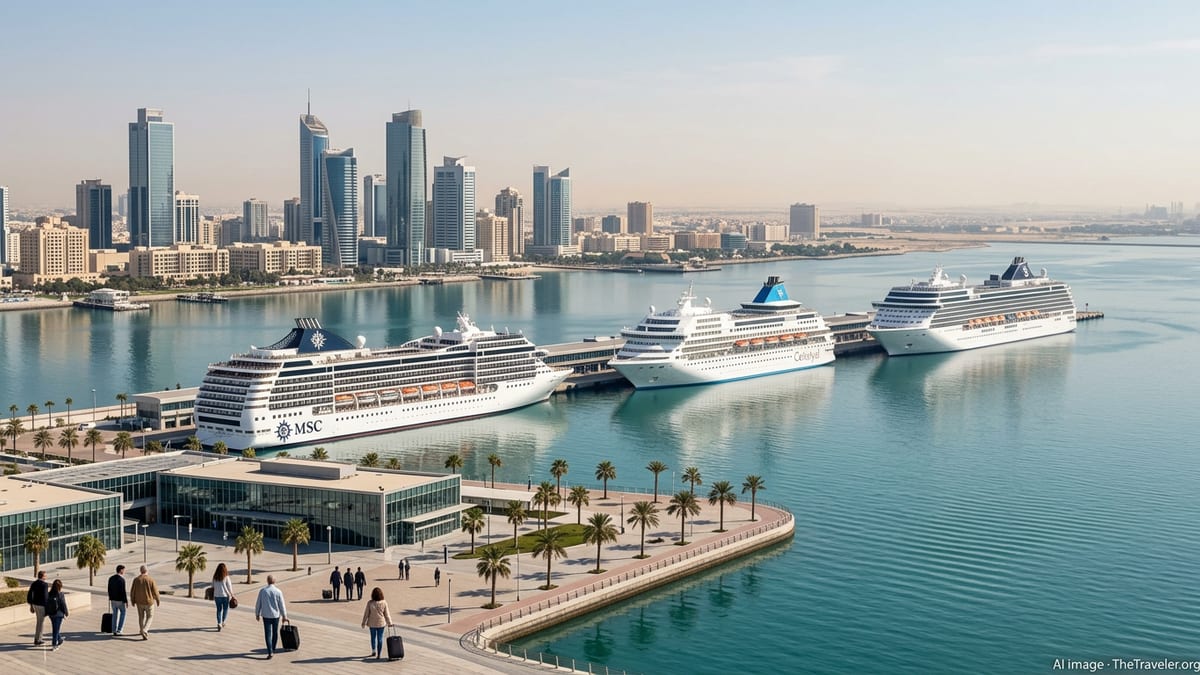
Major Cruise Brands Strengthen Winter Presence in the Gulf
Published deployment previews and booking engines indicate that the Arabian Gulf will remain a key winter hub for mainstream cruise brands into 2026 and 2027. MSC Cruises is already promoting Emirates and Qatar sailings that extend into 2026, highlighting Dubai, Abu Dhabi, Doha, Bahrain and Sir Bani Yas Island as core ports on week‑long itineraries. Marketing materials for its winter 2026‑27 program flag the Gulf as part of a broader portfolio of winter cruises designed to capture demand when Mediterranean and northern European routes wind down.
Other operators are layering capacity into the region or routing longer voyages through Gulf ports. Cruise industry deployment summaries and trade publications for the 2025‑27 window show a mix of seven‑night regional loops, repositioning cruises between Europe and Asia that call at Dubai or Doha, and selected world‑cruise segments that include Jeddah or other Saudi ports. This mix positions the Gulf both as a standalone fly‑cruise destination and as a highlight on extended itineraries linking multiple regions.
Travel trade reports suggest that newer entrants are also treating the Arabian Gulf as a growth market. Celestyal, which began sailing its first Arabian Gulf season in late 2024, is reported to be planning a return with multiple ships and itineraries that include UAE, Bahrain, Qatar and Oman in subsequent winters. For the 2026‑27 season, analysts expect a similar pattern, with Gulf programs scheduled between November and March to align with cooler regional weather and peak inbound tourism demand.
Industry commentary on deployment trends points to a gradual concentration of winter tonnage in warm‑weather basins such as the Caribbean, Gulf and Red Sea. The Arabian Gulf’s combination of modern port infrastructure, high‑spend source markets and robust air connectivity from Europe and Asia continues to underpin decisions to base ships in Dubai, Abu Dhabi or Doha for successive winter seasons.
From Dubai and Abu Dhabi to Doha: Contrasting Skylines at Sea
The core of most 2026‑27 Gulf itineraries remains a triangle formed by Dubai, Abu Dhabi and Doha, often supplemented by calls at Sir Bani Yas Island or ports in Oman. MSC Cruises’ Emirates program for 2025 and 2026, for example, showcases Dubai’s glass‑and‑steel skyline, beach districts and large‑scale entertainment venues as natural entry and exit points for week‑long cruises, a pattern that is expected to carry forward into the 2026‑27 season. Dubai’s role as an international aviation hub makes it a logical turnaround port for fly‑cruise packages from Europe and Asia.
Abu Dhabi is promoted in cruise materials as both a governmental and cultural capital, pairing dense high‑rise districts with flagship cultural attractions. Shore programs for current and upcoming seasons highlight visits to the monumental Sheikh Zayed Grand Mosque, museum complexes such as Louvre Abu Dhabi, and leisure hubs including Yas Island and Ferrari World. For winter 2026‑27, deployment documents and trade previews indicate that Abu Dhabi will continue to feature on many seven‑night loops that also include Doha and other Gulf ports.
Doha is positioned as a counterpoint to its Emirati neighbours, with a growing skyline along the Corniche and an emphasis on museums and heritage districts. Promotional content for Gulf cruises in 2025‑26 references the National Museum of Qatar, the Museum of Islamic Art and the traditional Souq Waqif as headline calls for visiting passengers. Early 2026‑27 brochures from European operators, including German‑language logbooks listing “Magic of the Orient” sailings round‑trip from Doha, signal that the Qatari capital will remain a key embarkation and transit port as the season unfolds.
These city calls are typically framed as chances to experience both rapid urban development and curated cultural narratives. Itinerary descriptions for the 2026‑27 window continue to stress skyline views from decks at sail‑away, waterfront promenades, high‑end shopping districts and museum visits, positioning the Gulf’s capitals as architectural showcases as much as logistical hubs.
Ancient Heritage, Desert Landscapes and Island Wildlife
Beyond the metropolitan gateways, the Arabian Gulf cruise season of 2026‑27 is expected to lean heavily on heritage and nature‑focused shore excursions. Current Gulf sailings marketed for 2025 and 2026 already feature desert safaris outside Dubai, dune‑bashing and coastal excursions near Doha, and mangrove kayaking routes that bring visitors close to birdlife such as herons and flamingos. Operators are likely to carry these programs forward, updating timings and capacity rather than reinventing the core experiences that have proven popular with winter passengers.
Itinerary descriptions for Qatar draw attention to the UNESCO‑designated Al Zubarah Fort and archaeological site, promoted as an example of historic Gulf merchant architecture and a window into pre‑oil trading networks. Similar emphasis is placed on restored souqs in Doha and Dubai, where passengers can encounter traditional crafts, spice markets and gold souks. For the 2026‑27 season, destination content from cruise lines and tourism boards suggests a continued focus on these heritage anchors, with curated half‑day and full‑day tours designed for cruise schedules.
Nature‑focused calls are most visible at private and protected islands such as Sir Bani Yas, an established feature of Gulf itineraries. Marketing materials highlight wildlife drives on the island’s nature reserve, beach time and low‑rise eco‑infrastructure that contrasts with the vertical skylines seen elsewhere on the route. Winter 2026‑27 deployment documents circulating in the travel trade show Sir Bani Yas listed on multiple itineraries, maintaining its role as a quieter, landscape‑oriented interlude within largely urban cruise programs.
Some long‑haul and repositioning voyages scheduled for 2026 and 2027 extend the heritage theme into the wider region, with segments that include Salalah in Oman or Jeddah on the Red Sea gateway to Mecca. While these are not strictly part of all Arabian Gulf loops, they reflect a broader trend of integrating Islamic and maritime heritage narratives into cruise experiences that begin or end in Gulf ports.
Saudi Arabia Emerges as a New Arabian Gulf Player
Saudi Arabia is poised to play a more active role in the broader Gulf cruise landscape through the mid‑2020s and into the 2026‑27 season. Cruise Saudi, the state‑backed entity tasked with building the country’s cruise ecosystem, reports that ports including Jeddah, Yanbu and Dammam are already operational, alongside the private Saba Beach island. Public information from the company outlines plans to develop 10 cruise destinations by 2030, with infrastructure and shore‑experience investment intended to attract both international brands and homegrown operators.
Aroya Cruises, described as Saudi Arabia’s first domestic cruise line, launched Red Sea sailings in late 2024 and has since added Arabian Gulf itineraries that include Dubai, Dammam, Muscat and Bahrain. Industry observers view these developments as a foundation for more regular inclusion of Saudi ports in regional itineraries by 2026‑27. As additional destinations open, future Gulf seasons are expected to feature a wider arc of calls along the Saudi coastline, complementing existing UAE, Qatar and Bahrain routes.
International operators are also beginning to weave Saudi calls into longer voyages that intersect with the Gulf. World‑cruise previews for 2026‑27 show segments that either embark or disembark in Jeddah or include multi‑day land programs in the city, often framed as opportunities to explore historic districts and coastal landscapes. These products typically bypass shorter regional loops, but they help position Saudi Arabia as part of a wider network of ports accessible to cruise passengers moving through the Gulf and adjacent seas.
For travellers considering the 2026‑27 season, publicly available deployment outlines suggest that Saudi ports will remain more common on longer or premium itineraries than on mainstream seven‑night Gulf circuits. However, as berth capacity grows and destination management offerings expand, industry coverage anticipates a gradual integration of Saudi stops into more standard regional routes over the second half of the decade.
Practical Considerations for Booking the 2026‑27 Gulf Season
Looking ahead to the 2026‑27 Arabian Gulf cruise season, timing and flexibility are emerging as key practical considerations. Cruise deployment schedules for major brands often open winter programs 18 to 24 months in advance, with some 2026 and early 2027 itineraries already visible for booking. Travel advisors monitoring release patterns note that Gulf sailings are commonly published alongside Caribbean and Red Sea winters, giving prospective passengers a window to compare pricing and routing across warm‑weather regions.
Recent years have also highlighted the potential for itinerary adjustments as geopolitical or security conditions evolve, particularly around choke points such as the Red Sea and Gulf of Aden. Reports on revised world‑cruise routes in 2025‑26, including diversions that affect segments between Dubai and Mediterranean ports, underline the importance of checking for updates in the months leading up to departure. For the 2026‑27 Gulf season, observers expect operators to retain a degree of flexibility while keeping core city and island calls intact wherever possible.
Weather remains a key factor in itinerary design. The principal Arabian Gulf cruise window typically runs from around November to March, when daytime temperatures moderate and outdoor excursions are more comfortable. The 2026‑27 season is forecast to follow this established pattern, with the busiest months likely to cluster around year‑end holidays and the northern‑hemisphere winter school breaks. Travellers looking for lower crowd levels or different price points may find shoulder‑season departures in November or early March appealing.
As deployment details for late 2026 and early 2027 continue to be refined, the broad outlines of the Arabian Gulf cruise offering are already visible. Prospective passengers can expect itineraries that balance skyline‑dominated ports like Dubai, Abu Dhabi and Doha with heritage forts, traditional souqs, desert landscapes and emerging Saudi destinations, all packaged into compact winter voyages tailored to international fly‑cruise markets.