

More news on this day
The 2026-27 Arabian Gulf cruise season is shaping up to be smaller in fleet numbers but bigger in ambition, as Dubai, Doha and neighboring ports adapt to a shifting deployment map with a clear focus on technology, premium hardware and smarter shore experiences.
Get the latest news straight to your inbox!
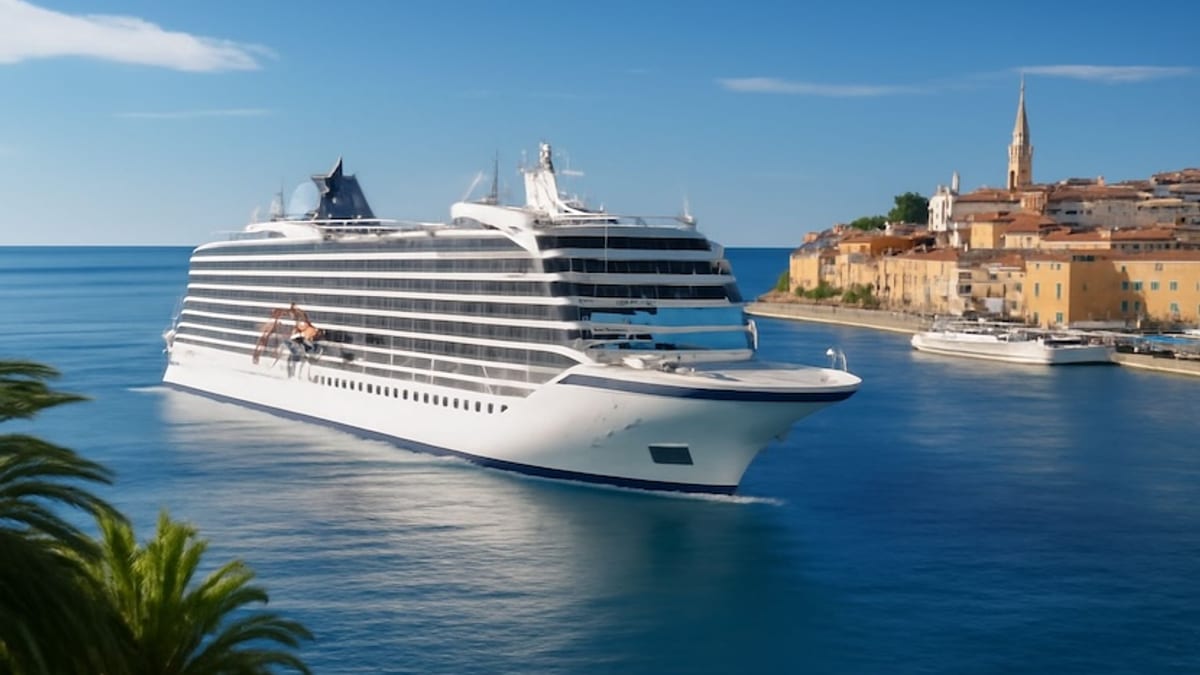
Image by International Cruise News: Latest Cruise Line & Cruise Ship News
Fewer Big-Ship Brands Commit to Winter 2026-27
Early deployment signals for winter 2026-27 point to a leaner line-up of major brands in the Arabian Gulf, as several European operators trim or suspend sailings amid ongoing regional uncertainty. Published coverage indicates that AIDA Cruises has removed its Middle East program for the 2026-27 winter months, following an earlier reshaping of Gulf and Red Sea itineraries for 2025-26 that diverted capacity toward the Canary Islands and Atlantic routes instead.
Reports from European media and trade outlets also highlight a broader rebalancing of capacity away from Dubai and Doha toward alternative warm-weather bases. TUI Cruises has already shifted ships that had been deployed in the Gulf to itineraries centered on the Canary Islands and Atlantic ports, reflecting a wider industry trend of prioritizing operationally stable regions for winter sun programs.
At the same time, sector analysis shows that lines such as MSC Cruises and Costa Cruises are recalibrating rather than exiting completely, with revised deployment models that reduce reliance on the Red Sea and Strait of Hormuz as through-routes between Europe and the Gulf. These adjustments mean that, while Gulf homeports remain on the map, the total number of ships and turnarounds projected for 2026-27 is likely to fall short of the pre-2025 trajectory many destinations had anticipated.
For travelers, the net result is a season with fewer mass-market options originating in Dubai or Doha, and more emphasis on select itineraries positioned as higher-value, tech-forward and experience-led. Analysts suggest this environment will favor brands prepared to invest in distinctive onboard product and robust contingency planning.
Dubai Doubles Down on Smart Travel and Seamless Access
Even as cruise deployment shifts, Dubai is accelerating efforts to make arrivals and departures smoother for passengers connecting through the city. Recent airport updates describe the activation of more than one hundred next-generation smart gates at Dubai International Airport, designed to process travelers within seconds using biometric recognition. Travel trade coverage notes that these systems are being framed as a foundation for friction-light transit, including for cruise guests joining ships after long-haul flights.
In parallel, the United Arab Emirates has introduced niche entry permits such as a Maritime Tourism Visa, aimed at supporting cruise-linked stays and specialist maritime travel activity. Public information on these policy moves indicates that they are intended to help the country capture more value from every ship call by encouraging pre- and post-cruise overnights rather than simple transit flows.
On the ground, Dubai continues to position its cruise facilities as integrated gateways to the city. Port infrastructure built up around Dubai Harbour and existing cruise terminals is being marketed as part of wider smart-city planning, with easy links to metro, road corridors and major visitor districts. Industry observers point to this multi-modal connectivity as a key selling point for lines that remain committed to the Gulf, especially when pitching shorter, fly-cruise packages for 2026-27.
The technology drive aligns with a broader narrative that the next phase of Gulf cruising will be less about sheer volume and more about efficient, high-yield operations. For passengers, that translates into shorter queues, more predictable transfers and the potential for richer stopovers between ship and city.
Doha’s Grand Cruise Terminal Targets Quality Over Quantity
Across the water in Qatar, Doha Port continues to consolidate its role as a boutique gateway for regional cruise calls, even as overall deployment into the Gulf moderates. Recent seasons have brought a succession of maiden calls and record call volumes, indicating that cruise planners still see value in including the city on itineraries built around the United Arab Emirates and Oman.
The Grand Cruise Terminal on Doha’s Corniche, which has been steadily ramping operations since before the FIFA World Cup, is now promoted by tourism authorities as a major arrival point for winter itineraries. Destination material emphasizes the terminal’s integrated services, from streamlined check-in zones to cultural and retail offerings within walking distance, framing Doha as a compact, high-impact stop for week-long Arabian Gulf voyages.
Future seasons are expected to build on this momentum with a more selective roster of ship calls rather than relentless growth. Cruise scheduling data points to a pattern in which Doha remains a regular feature on itineraries operated by a smaller circle of brands, including new entrants that are using the Gulf as a stage for short regional deployments and special-event cruises.
For visitors, the emphasis is tilting toward curated experiences that maximize limited time ashore. Shore programs highlighted for 2025-26 and projected for 2026-27 increasingly package the Museum of Islamic Art, Katara Cultural Village and desert excursions into tightly timed offerings designed to align with compressed port calls and late-afternoon departures.
Newcomers and Niche Players Redraw the Gulf Map
While some long-established operators pull back, new and niche players are stepping into the Arabian Gulf with compact but targeted deployments. One of the most closely watched examples is Resorts World Cruises, which has announced a homeport season in Dubai with itineraries spanning the Arabian Gulf and Gulf of Oman. Company releases describe plans for five and seven night sailings, with Doha listed as a homeport during Qatar school holidays, positioning the brand squarely in the regional family and short-break market.
Industry reports suggest that such entrants see an opportunity in the gap left by larger European brands, especially for guests based in the Gulf Cooperation Council region and nearby source markets. By concentrating on mid-sized ships and flexible sail lengths, these operators can pivot more quickly if conditions change, while still leveraging the infrastructure investments made by ports around the Gulf.
At the same time, several luxury and upper-premium brands are keeping options open for 2026-27, using the Gulf for repositioning voyages and limited-run itineraries rather than full-season commitments. Analysts note that these programs are often sold as part of longer grand voyages, with calls at Dubai, Abu Dhabi, Doha and Omani ports presented as highlights within broader Indian Ocean or Asia-Europe journeys.
This evolving mix means that the 2026-27 season is likely to feature a narrower but more varied selection of products, from gambling-focused short cruises and family-oriented holiday sailings to high-end segments that prioritize enrichment and destination immersion over repetitive weekly loops.
From Volume to Value: What Travelers Can Expect
For travelers weighing an Arabian Gulf cruise in late 2026 or early 2027, the headline change is a shift from abundant choice to curated options. Published coverage from trade media and regional travel outlets consistently points to fewer ships homeporting in Dubai and Doha, but it also highlights a clear push toward elevated onboard product, upgraded terminals and better-connected city infrastructure.
Smart-border schemes, expanded biometric processing and specialized visas are set to make it easier for eligible passengers to move between ship, airport and city, even as airspace patterns and rerouted flight schedules remain in flux. Port cities, for their part, are refining excursion offerings, with more emphasis on culture, design, gastronomy and desert landscapes tailored for time-pressed guests.
Travel commentators advise that anyone considering the Gulf for the 2026-27 season should pay close attention to deployment updates, as lines may continue to adjust itineraries and ship assignments in response to regional dynamics. With fewer departures on sale, early booking is becoming more important, particularly for travelers seeking specific sailing dates tied to holidays or school breaks.
What is emerging across Dubai, Doha and neighboring ports is a cruise season that is less about headline capacity numbers and more about sophisticated, tech-led journeys. Even with a reduced roster of cruise lines, the Arabian Gulf is positioning winter 2026-27 as a testbed for how ports and operators can deliver bigger, smarter experiences out of a smaller but more strategically deployed fleet.