

More news on this day
Arabian Gulf cruising is undergoing a rapid reshuffle, as several international lines scale back or cancel upcoming sailings while regional operators and niche brands move in with new itineraries designed to keep the Gulf on the cruise map.
Get the latest news straight to your inbox!
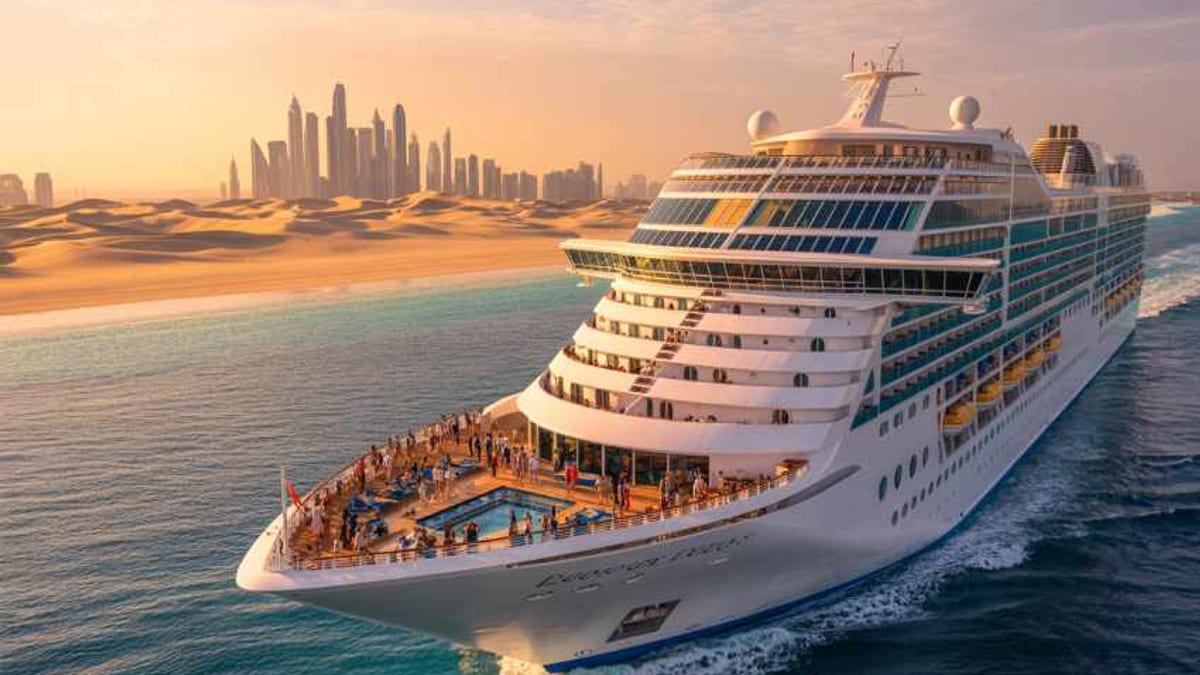
Image by International Cruise News: Latest Cruise Line & Cruise Ship News
Security Concerns Trigger Season Cancellations
Recent months have seen a wave of itinerary changes affecting the 2025 and 2026 winter cruise seasons in the Arabian Gulf, as security risks around key choke points reverberate across the industry. Publicly available advisories highlight heightened tensions in the Strait of Hormuz and the wider Gulf, prompting some cruise brands to re-evaluate their presence in the region.
Cruise Industry News reporting in mid-March 2026 indicates that multiple cruise lines have now cancelled the remainder of their 2025 to 2026 Arabian Gulf programs, citing a mix of operational complexity and evolving travel guidance for the area. Ships that had been scheduled for late-season departures from ports such as Dubai, Abu Dhabi and Doha are instead being reassigned to alternative regions or placed into repositioning service.
Specific vessels, including ships previously based in the United Arab Emirates and Qatar for the winter, have had final sailings in the Gulf quietly removed from deployment schedules. Industry coverage notes that safety, routing reliability and insurance considerations are central to these decisions, with operators choosing to avoid potential disruptions in narrow sea lanes and nearby conflict zones.
These cancellations follow a broader pattern that began when Red Sea instability and attacks on commercial vessels prompted cruise lines to rethink routes that combined Suez Canal transits with Gulf itineraries. Adjustments to world cruises, repositioning voyages and Middle East circuits underscore how quickly regional security dynamics are reshaping the flow of global cruise traffic.
Major Brands Pivot Away From UAE Homeports
The tightening security picture is coinciding with strategic deployment shifts by several large European brands that had helped anchor the Gulf’s winter season. CruiseMapper and other schedule trackers show that Costa Cruises, for example, has reconfigured its winter 2025 to 2026 deployment, significantly reducing previously planned operations from United Arab Emirates ports and reinforcing a focus on Mediterranean programs instead.
Similar recalibrations have been reported for selected MSC Cruises sailings involving Red Sea and Gulf segments. Earlier changes to repositioning itineraries that would have linked the Mediterranean, Suez and Arabian Gulf highlighted growing caution over long-haul routes threading multiple sensitive maritime zones. By late 2025 and into 2026, this caution had translated into a slimmer roster of mainstream European ships based in Dubai or Abu Dhabi for the full season.
Regional maritime reporting also points to temporary suspensions and diversions in the wider shipping industry, as container carriers adjust bookings to and from Arabian Gulf ports in light of war-risk assessments. While cruise lines operate under different commercial models, analysts suggest they are responding to the same underlying conditions, prioritizing itineraries that can be delivered consistently without last-minute diversions.
For Gulf tourism boards and port authorities that have invested heavily in cruise infrastructure, the near-term pullback from some global brands represents a setback. However, the shift is not uniform. Other operators are expanding or holding steady, creating a patchwork landscape in which some berths fall quiet while others prepare for new arrivals.
Newcomers and Niche Lines Step Into the Gap
At the same time that certain household-name brands are reducing exposure, a new wave of operators is moving into Arabian Gulf waters with targeted programs. Travel trade publications and regional tourism outlets highlight Celestyal Cruises and Saudi Arabia’s new line Aroya Cruises among those positioning ships in the Gulf through the 2025 and 2026 seasons.
Celestyal is promoting a series of winter itineraries branded around “Iconic Arabia,” combining short three-night cruises with longer seven-night and 14-night options. These sailings are scheduled to homeport in Dubai or Doha and call at ports such as Abu Dhabi, Ras Al Khaimah, Khasab in Oman and the UAE’s Sir Bani Yas Island wildlife reserve. Industry material describes these as destination-focused voyages, built around longer days in port and culturally oriented shore excursions.
Aroya Cruises, backed by Saudi interests, is also emerging as a new regional player, with early programs featuring Gulf circuits that link Dubai and Abu Dhabi with Dammam, Doha and island stops. According to published coverage in Gulf-based news outlets, these itineraries are designed to tap into both the local source market and international visitors seeking a cruise segment as part of a wider Middle East trip.
For passengers, the growing presence of these niche and regional lines means that the Gulf is not disappearing from cruise maps, even as some of the largest global players trim their deployments. Instead, the mix of options is changing, with more emphasis on shorter sailings, culturally themed routes and ships tailored to warm-weather, port-intensive cruising.
Fresh Itineraries Center on Sport, Culture and Short Breaks
Looking beyond the immediate disruption, itineraries unveiled for late 2026 suggest that cruise planners still see long-term potential in the Arabian Gulf, especially for themed voyages and short-break cruising. Travel media in the region has spotlighted new sailings tied to major events, including motorsport and yachting fixtures that are drawing international attention to Gulf waterfronts.
One widely reported example is a seven-night cruise built around the Abu Dhabi Grand Prix, scheduled to operate in December 2026 with three nights berthed near Yas Marina Circuit before continuing to Gulf ports such as Doha, Ras Al Khaimah and Khasab. The itinerary is being marketed as a way to combine race-week access with a relaxed coastal escape, introducing cruise guests to both headline events and lesser-known harbors.
Additional programs for winter 2026 point to an emphasis on flexible embarkation, with some ships offering interporting between Dubai and Doha so that guests can start and end their cruise in different cities. Industry observers note that this model allows visitors to pair a cruise with pre- or post-stays in hubs that have expanded their hotel, museum and entertainment offerings in recent years.
Short three- and four-night loops are also becoming more prominent in deployment announcements. These compact schedules, sailing roundtrip from Dubai, Abu Dhabi or Doha, appeal to regional residents looking for weekend-style getaways as well as international travellers layering a mini-cruise onto stays in the Emirates or Qatar.
Ports Invest While Watching the Risk Horizon
Despite current headwinds, Gulf governments and port operators continue to invest in cruise-related infrastructure, positioning the region for a rebound when maritime risk levels ease. Reports from UAE and Saudi media highlight ongoing upgrades to cruise terminals in Dubai, Abu Dhabi and Dammam, as well as broader logistics initiatives that aim to keep sea trade flowing even in periods of tension.
Public statements from Saudi transport regulators in March 2026 referenced measures to support vessels operating in the Arabian Gulf, including streamlined procedures intended to maintain maritime activity. While these steps are focused primarily on commercial shipping, analysts interpret them as part of a wider effort to sustain confidence in Gulf ports among all categories of operators, including cruise lines.
Industry-focused publications note that the rise of Gulf-based cruise brands could, over time, deepen the region’s resilience to external shocks. Lines that homeport ships locally, recruit from regional markets and tailor itineraries tightly to Gulf ports may be better placed to navigate temporary airspace closures or rerouting of international traffic, provided core sea lanes remain open.
For now, prospective passengers weighing Arabian Gulf cruises for late 2025 and 2026 are being urged by travel advisors and consumer media to monitor line announcements carefully, as timetables remain fluid. While some long-planned voyages have disappeared from booking engines, a new generation of event-driven and short-haul itineraries is rising to take their place, promising a different kind of Gulf cruising experience when conditions allow.