

More news on this day
The Arabian Gulf is emerging as one of the most closely watched cruise battlegrounds for winter 2026–27, as at least five major brands map out deployments that blend big-ship thrills, luxury experiences and expanded regional itineraries linking Dubai, Abu Dhabi, Doha and beyond.
Get the latest news straight to your inbox!
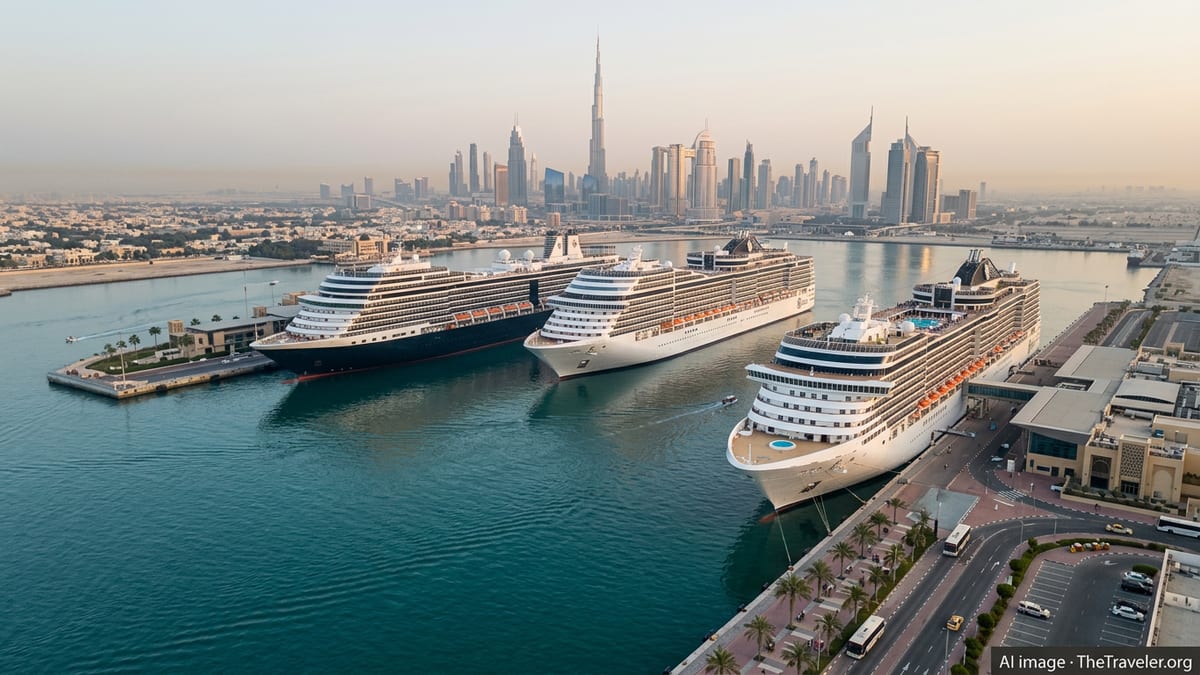
Region Positions for a High-Profile Cruise Comeback
Publicly available deployment previews and trade presentations suggest that the Arabian Gulf will remain a core winter playground for the global cruise industry into 2026–27, even as some lines re-balance capacity between the Gulf, the Mediterranean and other warm-weather regions. Planning documents and published schedules highlight a cluster of brands preparing ships for Dubai, Abu Dhabi and Doha turnarounds, reinforcing the area’s role as a convenient, flight-connected hub for winter sun.
The 2025–26 season was initially projected to deliver more than 300 sailings from Gulf homeports, and while some operators have since reshaped their Middle East programs, industry reporting continues to describe the region as a strategic long-term market. The 2026–27 season is expected to build on this foundation with refined itineraries, new hardware and closer integration with emerging Red Sea and Indian Ocean routes.
Travel trade coverage also points to a broader Cruise Arabia vision that ties the ports of the United Arab Emirates, Qatar, Bahrain, Oman and Saudi Arabia into a more cohesive cruise playground. That approach is designed to make weeklong Gulf itineraries more varied, while enabling longer voyages that can stretch into the Red Sea, East Africa or the Mediterranean when conditions allow.
Five Major Brands Chase Winter Sun Demand
Among the mainstream and premium operators, MSC Cruises is widely viewed in trade reporting as the anchor brand for Gulf winters, with its own materials promoting Dubai, Abu Dhabi and Qatar as key hubs across 2025 and 2026. The line has been developing multi-port itineraries that combine marquee skylines with beach days on Sir Bani Yas Island and calls in destinations such as Doha, Bahrain and Oman, creating a template that is likely to be extended into 2026–27 with newer tonnage and longer sailings.
Royal Caribbean has historically targeted the region on a more seasonal basis, using large resort-style ships to offer shorter Gulf loops packed with waterslides, entertainment and family-focused activities. Trade deployment grids for 2026 hint that similar hardware could be steered back toward the Arabian Gulf for 2026–27, capitalizing on demand from fly-cruise guests from Europe and Asia who combine city stays in Dubai or Abu Dhabi with weeklong voyages.
Norwegian Cruise Line and Celebrity Cruises have been leaning into longer, more port-intensive sailings that string the Gulf together with the Indian Ocean, India and occasionally the Eastern Mediterranean. Booking channels already list late-2026 itineraries for some premium brands that include Jeddah and Dubai on the same route, suggesting that by winter 2026–27, at least part of their fleets will be using the Arabian Gulf as either a turnaround point or a marquee call on extended journeys.
A fifth pillar is emerging in the form of regionally focused operators backed by Gulf investment, including Saudi Arabia’s Cruise Saudi venture and its Aroya brand. While current schedules concentrate on the Red Sea, industry analyses describe a strategy that eventually connects those operations more tightly with Arabian Gulf ports, positioning the wider region as a unified winter alternative to the Caribbean.
Itineraries Blend Skyline Icons, Culture and Desert Adventure
For winter 2026–27, the broad outlines of planned itineraries point to a familiar yet evolving mix of ports. Dubai and Abu Dhabi are expected to hold on to their status as primary homeports, with itineraries that showcase glass-and-steel skylines, sprawling malls and indoor attractions balanced against cultural districts, traditional souks and waterfront promenades.
Doha is set to feature prominently as both a turn-around and transit port, with travel trade reports emphasizing its waterfront skyline, museums and desert-fringe location. Calls to Bahrain and Oman add a different flavor, with itineraries highlighting historic forts, older merchant quarters and more traditional souks that contrast with the futuristic cityscapes of the Emirates.
Several published schedules and promotional materials also underscore the role of beach and nature stops such as Sir Bani Yas Island, where wildlife reserves and mangrove-fringed shores offer a softer, more natural counterpoint to the cities. Shore excursions marketed for the late-2020s Gulf seasons emphasize dune bashing, desert camps, cultural shows and guided mosque visits, indicating that cruise lines are tailoring experiences to first-time visitors seeking a snapshot of Gulf culture as well as repeat guests looking for fresh angles.
Longer voyages that link the Arabian Gulf with the Red Sea, Egypt and Saudi Arabia are expected to remain more sensitive to evolving conditions along key choke points. Travel advisories and industry commentary continue to note that itineraries involving the Red Sea and Suez transit may remain subject to late adjustments through at least 2026–27, encouraging cruise planners to design routes with flexibility in mind.
Luxury and Premium Segments Elevate the Experience
While large mainstream ships will continue to carry most Gulf cruise passengers, the luxury and upper-premium segments are gradually increasing their visibility across the wider region. Voyage descriptions for late 2026 from brands such as Explora Journeys showcase itineraries that begin in Jeddah and conclude in Dubai, with extended stays in Saudi ports, Red Sea gateways and Egyptian resort towns before pivoting into the Arabian Gulf.
Luxury-focused cruises in the region typically feature smaller ships, longer overnight calls and curated shore programs that spotlight heritage districts, contemporary art scenes and desert landscapes away from the busiest commercial strips. Industry previews for 2026–27 indicate that these voyages will continue to position the Gulf as a gateway to both cutting-edge architecture and lesser-known coastal settlements, appealing to travelers who may already have visited Dubai or Abu Dhabi on land-based vacations.
Premium brands such as Celebrity Cruises are also expected to deploy ships on itineraries that weave together Gulf ports with India and Southeast Asia, creating multi-week journeys that rival traditional world-cruise segments. These routes often attract guests booking higher-category cabins and suites, adding a layer of demand for more exclusive onboard venues and personalized shore experiences.
As competition intensifies, analysts anticipate that onboard offerings tailored to Gulf sailings will continue to evolve, with spa programs, culinary themes and entertainment designed around Middle Eastern and Indian influences, and late-night departures timed to allow guests to experience illuminated skylines and cooler evening temperatures ashore.
Opportunities and Uncertainties Shape Planning for 2026–27
Behind the marketing gloss, deployment decisions for winter 2026–27 reflect a careful balance between opportunity and risk. The Arabian Gulf offers modern port infrastructure, reliable air connectivity and predictable winter weather, all factors that industry observers cite as key advantages over some competing regions. At the same time, operators remain highly attentive to broader regional dynamics, particularly on routes that depend on Red Sea passages or access to emerging ports in Saudi Arabia.
Several European brands have already revised or withdrawn earlier Middle East plans for the mid-2020s, redirecting ships back to the Mediterranean, Canary Islands or Caribbean after re-evaluating itineraries that required Suez Canal transits or close proximity to sensitive maritime corridors. Those moves have opened room for other players to consolidate their Gulf presence, particularly lines with strong air partnerships or dedicated fly-cruise programs.
For winter 2026–27, current indications suggest that the Arabian Gulf will be defined by a core group of five major brands, supplemented by niche luxury and regional operators that experiment with longer or more specialized voyages. Booking channels show that consumers are already securing cabins for late-2026 departures, even as final deployment details continue to evolve.
For travelers, the result is likely to be a crowded but dynamic menu of options: from weeklong loops focused on Dubai, Abu Dhabi and Doha to extended journeys that reach into Egypt, Saudi Arabia and the Indian Ocean, positioning the Arabian Gulf as one of the most competitive cruise arenas of the 2026–27 winter.