

More news on this day
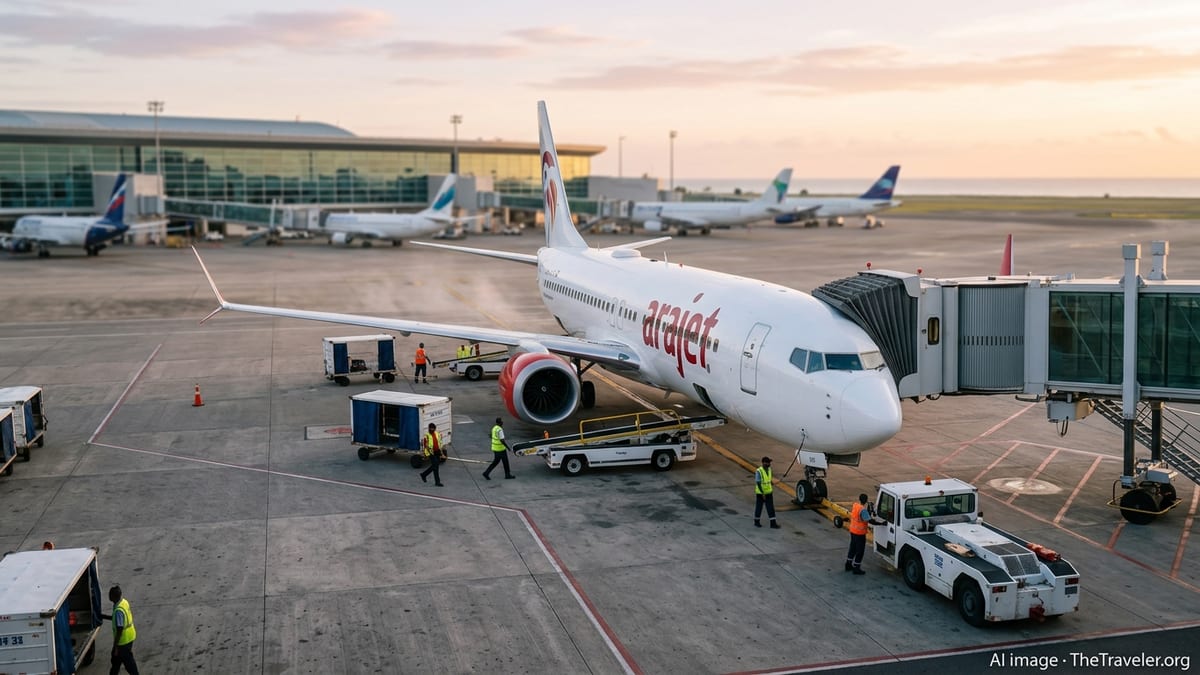
Dominican low-cost carrier Arajet is accelerating its bid to become a major connector across the Americas, striking a new distribution pact with Amadeus that is set to underpin an expanded 2026 route map and a fast-growing Boeing 737 MAX fleet.
Get the latest news straight to your inbox!
Strategic Tech Alliance Aims to Unlock New Demand
Publicly available information indicates that the new agreement will see Arajet inventory distributed through Amadeus’ global travel technology platforms used by thousands of travel agencies and corporate travel managers worldwide. For a still-young airline founded in 2022, tapping into this scale is viewed by industry analysts as a critical step in shifting from niche low-cost challenger to a mainstream option for itineraries spanning North, Central and South America.
The deal arrives as Amadeus steps up its role as a leading aggregator of airline content built on New Distribution Capability standards, which enable richer fares, ancillaries and servicing options inside agency systems. For Arajet, plugging into this ecosystem is expected to make its ultra-low fares, add-ons and connection options from Santo Domingo more visible and easier to book, particularly in corporate and managed-travel environments that traditionally rely on full-service carriers.
Travel industry coverage suggests that Arajet is positioning the Amadeus partnership as part of a broader digital strategy that includes modern retailing tools and partnerships with other intermediaries. By aligning with one of the world’s largest distribution providers, the carrier seeks to narrow a visibility gap with longer-established competitors and encourage passengers to consider a one-stop connection via the Dominican Republic instead of traditional hubs.
The agreement also provides Arajet with access to analytics and revenue-management capabilities that can help optimize pricing on new routes as they scale up. With 2026 set to bring a significant increase in capacity, being able to fine-tune fares and schedules in real time is likely to prove important to sustaining load factors in both leisure and emerging business-travel segments.
Fleet Growth Sets Stage for Wider Americas Network
Arajet’s tie-up with Amadeus is timed to coincide with a rapid expansion of its Boeing 737 MAX 8 fleet. Industry reports show the carrier has already grown beyond its initial ten aircraft, with additional deliveries planned that could bring the fleet close to 19 aircraft by the end of 2026. Orders and sale-and-leaseback arrangements in place for further 737 MAX units in 2026 and 2027 indicate that the airline intends to more than double the size of its original operation.
The single-type, fuel-efficient fleet is central to Arajet’s low-cost model and its ability to serve destinations stretching from Canada to Argentina from a single hub at Santo Domingo’s Las Américas International Airport. The 737 MAX 8 offers the range to connect deep into South America and as far north as major U.S. and Canadian cities, allowing the carrier to weave a north–south network that can challenge traditional hub-and-spoke flows via Panama City, Bogotá or major U.S. gateways.
Public data from aviation publications notes that Arajet surpassed one million passengers in 2024 and targeted 1.2 million by year-end, suggesting that a larger fleet is already translating into stronger traffic volumes. With more aircraft arriving in 2026, the airline is expected to boost frequencies on existing routes while adding new city pairs where demand for affordable cross-continental travel is rising.
Fleet expansion also provides redundancy and scheduling flexibility that can make connections more reliable, a key factor if Arajet is to persuade travelers to accept a one-stop itinerary through Santo Domingo instead of flying nonstop with larger legacy competitors. The Amadeus agreement is expected to help showcase these connection options more clearly in booking displays.
New Routes Target Key U.S. and Latin American Gateways
Route announcements over the past year point to a deliberate strategy of securing a foothold in high-profile North American markets while continuing to deepen Arajet’s reach within Latin America and the Caribbean. The airline has already inaugurated service between Santo Domingo and Miami and is adding links to Newark and San Juan, building a presence in two of the largest source markets for traffic to the Caribbean.
Specialist aviation media report that Arajet is also preparing an advance into the U.S. West Coast through a planned Los Angeles route, tapping into significant Dominican and broader Latin American communities as well as connecting traffic bound for Central and South America. These services are in addition to existing links from Santo Domingo to cities such as São Paulo and Buenos Aires, which position the carrier as a competitive option for travelers moving between the Southern Cone and North America.
For 2026, industry commentary anticipates that Arajet will use its expanded fleet to thicken these north–south corridors and add secondary city pairs that have been underserved by traditional network airlines. The airline’s ultra-low-fare model, supported by ancillary revenue from baggage, seat selection and onboard sales, is designed to stimulate new demand rather than simply divert passengers from incumbent carriers.
By combining new capacity with increased distribution reach through Amadeus, Arajet is likely to appear more frequently in fare searches for itineraries that once defaulted to large alliances. This could place price pressure on established players, particularly on routes where connections through Miami, New York or Panama have long dominated.
Santo Domingo’s Hub Ambitions Gain Momentum
The strengthened distribution footprint comes as Arajet and Dominican aviation authorities promote Santo Domingo as a future north–south hub for the Americas. Coverage in regional business media highlights the airline’s stated ambition to help transform the country into a leading aviation connector, leveraging its central Caribbean location to handle flows between Canada, the United States, Mexico, Central America and the southern cone of South America.
As more flights are added in 2026, passengers could see Santo Domingo emerge as an alternative connection point to larger hubs such as Panama City, Bogotá or San José for itineraries that do not require a stop in the United States. This positioning may be particularly attractive to travelers in markets where securing U.S. transit visas adds cost and complexity to their journeys.
Infrastructure improvements at Las Américas International Airport, combined with the arrival of additional Boeing 737 MAX aircraft, are expected to support tighter banked connections and shorter minimum connection times. When these operational changes are paired with wider availability in global distribution systems like Amadeus, travel planners can more easily map multi-leg itineraries that route via the Dominican capital.
If successful, this strategy would not only benefit Arajet but also contribute to broader tourism and trade growth in the Dominican Republic, as more transfer passengers have the opportunity to stop over and explore the country. Industry watchers note that the airline’s rapid growth has already raised the country’s profile within regional aviation circles.
Competition Heats Up Across the Americas
Arajet’s expansion coincides with a broader wave of investment in low-cost and ultra-low-cost capacity across the Americas, intensifying competition on many of the same routes the Dominican carrier is targeting. Established players such as JetSmart, Volaris and several U.S. low-cost airlines continue to grow their own narrowbody fleets and add cross-border services linking secondary cities.
In this environment, the new distribution agreement with Amadeus is seen by analysts as a defensive as well as offensive tool. Broader visibility in agency and corporate booking channels could help Arajet secure higher yielding passengers and business travelers who might otherwise default to full-service airlines in global alliances, especially on longer journeys where loyalty benefits and connecting reliability are key considerations.
At the same time, greater reliance on third-party distribution can introduce additional costs and complexity for a carrier built on tight unit economics. Market observers will be watching how Arajet balances the need to keep fares low with the fees and incentives associated with global distribution systems, while also investing in direct digital channels.
As 2026 approaches, the interplay between Arajet’s growing fleet, its aggressive route strategy and the newfound reach provided by Amadeus is set to offer a revealing test case for how a young ultra-low-cost carrier can leverage sophisticated distribution technology to mount a serious challenge across an entire continent.