

More news on this day
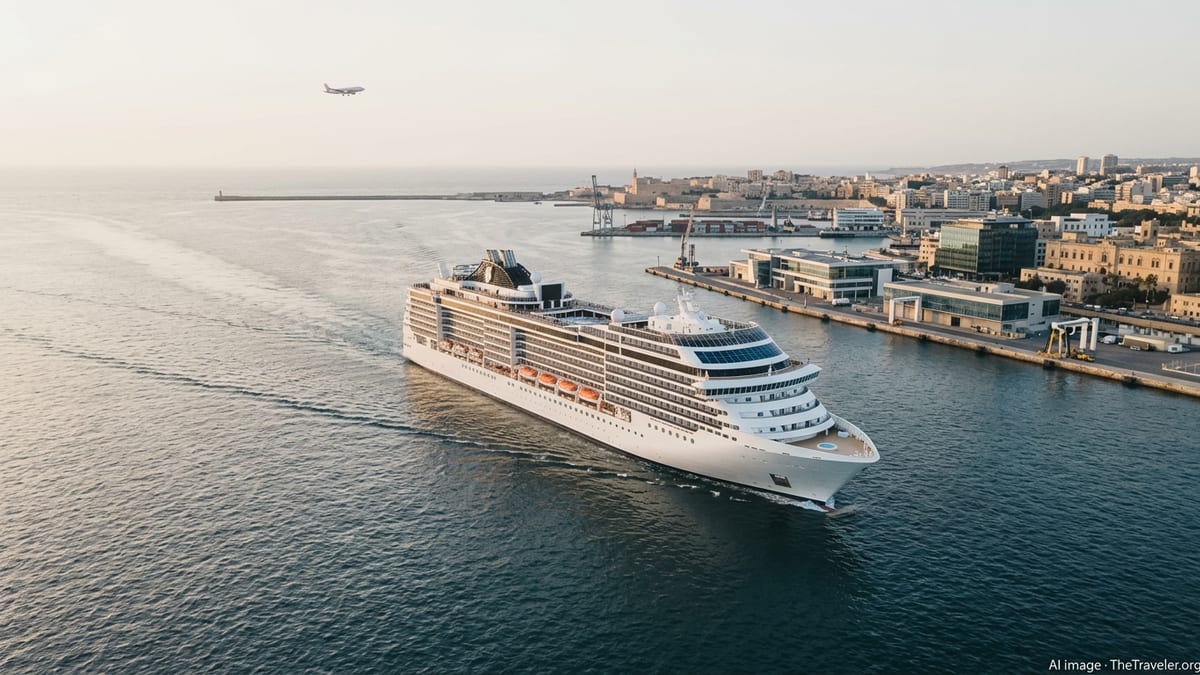
As climate-conscious travelers reassess the carbon cost of every getaway, a wave of next-generation “green” cruise ships entering service in 2026 is challenging long-held assumptions that cruising is automatically worse for the planet than flying to a beach resort.
Get the latest news straight to your inbox!
A Climate Reputation Problem Meets New Technology
For years, cruises have been a symbol of high-emission tourism, frequently singled out in debates over aviation, overtourism and marine pollution. Environmental groups have highlighted the sector’s reliance on heavy fuel oil, its contribution to local air quality problems in port cities and the additional climate impact of black carbon and methane leaks.
That perception is now colliding with a burst of investment in cleaner propulsion and energy systems. Major cruise groups are positioning the ships entering service in 2026 as testbeds for what a lower-carbon ocean holiday could look like, from alternative fuels and fuel cells to shore power connections and waste-to-energy plants on board.
Industry sustainability reports and recent technical briefings indicate that more than 40 percent of new large cruise ships on order are designed to run on liquefied natural gas, methanol or hybrid power systems, with battery packs and fuel cells increasingly integrated alongside conventional engines. The sector’s stated long-term goal is to operate a fully net-zero ship within the next decade, and vessels launching around 2026 are being marketed as key steps toward that target.
From LNG to Methanol: 2026’s Showcase Ships
Several of the highest-profile new ships scheduled around 2026 illustrate how quickly cruise technology is evolving. Royal Caribbean’s Icon class, introduced in 2024, is being used as a platform for waste-heat recovery, waste-to-energy systems and shore-power readiness. Company materials describe the class as a proving ground for energy-saving technologies the group intends to scale across its fleet by 2035.
On the luxury end of the market, Explora Journeys, part of the MSC Group, plans to add an LNG-powered vessel, Explora III, in mid-2026, following two earlier ships already at sea. Corporate releases highlight features such as advanced waste treatment, high-efficiency hull design and participation in fuel-cell research projects aimed at turning LNG into hydrogen onboard to cut emissions during hotel operations.
Hybrid concepts are also moving from pilot to commercial scale. Silversea’s Silver Nova, delivered earlier in the decade, combines LNG with a fuel-cell system and batteries that allow the ship to eliminate direct emissions while in port. The design approach, which separates hotel loads from propulsion and uses batteries for peak shaving, is now influencing specifications for upcoming luxury and premium ships due in 2026 and beyond.
In parallel, shipbuilders and engine makers are advancing methanol-ready designs. Celebrity Cruises’ Celebrity Xcel, due to enter service before the end of 2025, is equipped with engines that can be adapted to run on methanol, a fuel seen by many analysts as a bridge to scalable green methanol produced from renewable sources. Other lines, including Disney Cruise Line with Disney Adventure, are signaling interest in lower-emission methanol blends where supply chains allow.
Shore Power, Cleaner Ports and the Resort Comparison
One of the biggest shifts affecting how cruises compare with fly-and-stay trips is happening not at sea but alongside the pier. More new ships are being delivered with shore-power connections that allow them to turn off engines in port and plug into the local grid, avoiding local air pollutants and some greenhouse gas emissions.
Recent upgrades in ports such as Brooklyn and European destinations have enabled large ships, including MSC Meraviglia, to connect to shore power for the first time. Cruise groups are signing multi-year agreements with ports in Italy and Spain to expand capacity through 2026 and 2027, signaling that connecting in port is evolving from a voluntary feature to an operational expectation on key routes.
This matters for the broader “guilt trip” debate because emissions at destination are increasingly scrutinized alongside the flight. A traveler flying to a resort typically depends on a patchwork of local grids and hotel energy systems, many of which still rely heavily on fossil fuels. By contrast, a shore-power-capable ship calling at a port with a relatively clean grid can, in some cases, reduce local emissions more than a cluster of conventional hotels serving the same number of guests.
However, the advantage is highly context dependent. Analysts caution that if a ship plugs into a coal-heavy grid, total climate impact may not improve significantly. Detailed lifecycle assessments that compare a cruise itinerary with a similar fly-and-stay package are still limited, and independent researchers stress that transparent fuel and power mix data are essential before sweeping conclusions are drawn.
Can Cruises Really Compete With Flights on Carbon?
A key question for travelers in 2026 is whether taking a new-generation cruise can be less carbon intensive than flying to a destination and checking into a resort. Publicly available research suggests that, on a per passenger basis, a long-haul flight and a week on a conventional cruise ship have historically produced comparable or higher emissions than a week at a land-based hotel reached by rail or short-haul flight.
The new ships complicate that equation. LNG typically lowers direct carbon dioxide emissions compared with heavy fuel oil and significantly reduces sulfur oxides and particulate matter. When paired with advanced exhaust treatment, hydrodynamic hull designs and speed optimization software, some of the latest vessels report double-digit percentage reductions in fuel burn per passenger day compared with older tonnage.
At the same time, critics point out that LNG is still a fossil fuel, and unburned methane escaping along the supply chain can erode climate benefits. Environmental organizations have urged the industry to move quickly toward fuels such as green methanol, renewable LNG or hydrogen-based solutions, and to publish independent verification of real-world performance rather than relying on modelled savings.
For individual travelers, the most meaningful comparison may hinge less on technology labels and more on absolute distance traveled, occupancy levels and itinerary design. A short cruise on a modern, shore-power-equipped hybrid ship sailing close to home may compare more favorably with a long-haul flight to an energy-intensive resort complex than with a simple regional rail trip to a modest hotel.
What Climate-Conscious Travelers Should Watch in 2026
As more of these ships launch, the practical test will be how transparently cruise lines translate technical claims into information that travelers can use. Industry observers note a trend toward publishing ship-specific emissions metrics, participating in third-party rating schemes and aligning marketing with broader corporate net-zero targets.
Travelers weighing their options in 2026 can look for several concrete indicators: whether a ship can plug into shore power on most of its route, whether it uses LNG, methanol-ready or hybrid systems rather than heavy fuel oil, and whether itineraries avoid unnecessary high-speed repositioning that increases fuel burn. Some lines are also beginning to bundle certified carbon accounting and voluntary contributions into fares, though opinions differ on the climate value of offsets versus direct reductions.
Beyond the technology, the rise of these ships is already influencing how destinations manage tourism. Ports competing for next-generation vessels are investing in grid upgrades and stricter emissions standards, which can have spillover benefits for cargo shipping and local communities. Resorts, meanwhile, are under pressure to match the narrative with their own energy-efficiency investments, renewable power purchases and water-use transparency.
The result is that the “guilt trip” conversation is starting to shift from whether cruises are inherently worse than other holidays to how any trip is powered and managed. For travelers in 2026, the emergence of next-generation sustainable cruises does not automatically erase the climate impact of a week at sea, but it does broaden the options for those trying to align leisure with lower-carbon choices.