

More news on this day
Air travelers across Argentina faced fresh disruption on March 10 as Aerolineas Argentinas, LATAM and low cost carrier Flybondi scrubbed a cluster of key domestic departures, interrupting busy routes linking Buenos Aires, Cordoba, Bariloche and other major destinations at the height of the late-summer travel season.
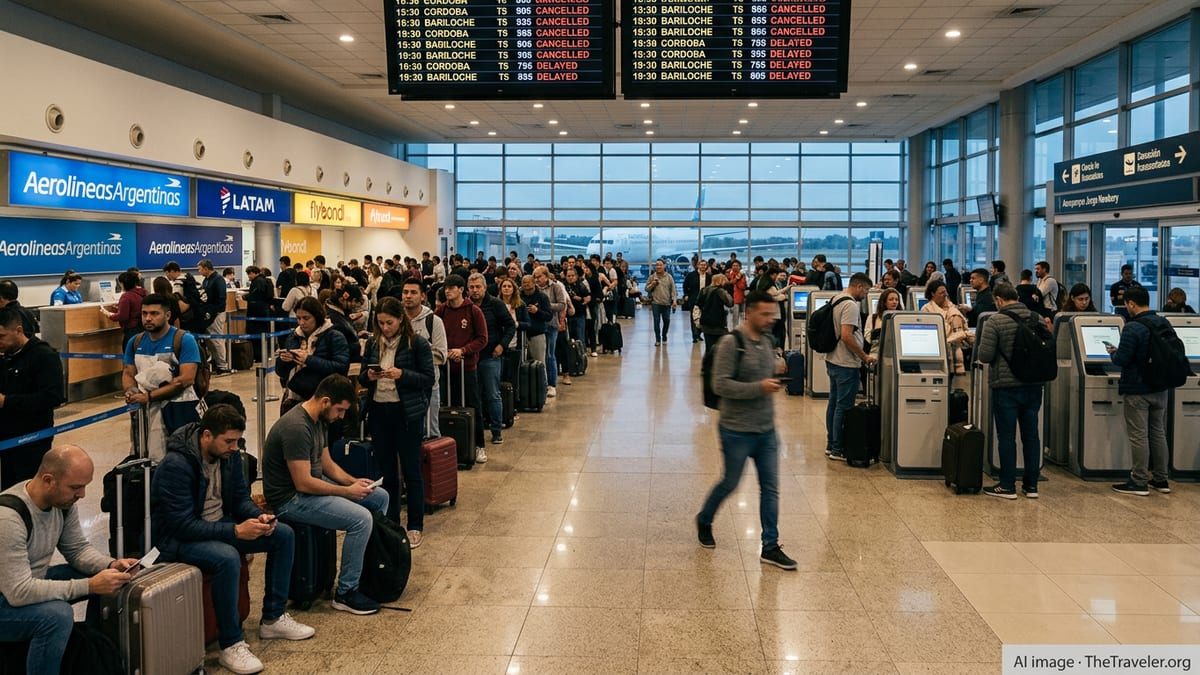
Seven Strategic Departures Pulled from Schedules
According to live schedule data from multiple airport and flight-tracking platforms, at least seven departures on Tuesday were listed as cancelled or heavily disrupted on high-demand corridors, including services between Buenos Aires and the popular Patagonia gateway of San Carlos de Bariloche, as well as flights touching Cordoba and other interior cities. The cancellations came on top of earlier operational adjustments following this season’s wave of labor actions and capacity reshuffles in the Argentine market.
Among the affected services was an Aerolineas Argentinas flight scheduled to operate between Bariloche and Buenos Aires’ Aeroparque Jorge Newbery, which was flagged as cancelled in real-time status feeds, leaving passengers to scramble for later departures or refunds. Other Aerolineas services on the Buenos Aires–Cordoba–Bariloche triangle showed status changes ranging from significant delays to equipment swaps, adding to confusion for travelers holding connecting tickets onward to regional or international destinations.
Industry observers noted that while the total number of disrupted flights is far smaller than the hundreds wiped out during nationwide strike days in February, the latest wave has hit disproportionately on leisure-heavy routes favored by domestic tourists and international visitors finishing Patagonia itineraries. With school holidays ending and business travel rising into March, the sudden loss of frequencies on specific corridors has created pressure points at check in counters and airline call centers.
Airline sources, speaking on background, said schedule planners have been juggling aircraft rotations affected by earlier strikes, technical checks and weather-related holds at southern airports, leaving little room to absorb fresh operational hiccups without resorting to targeted cancellations.
Aerolineas Argentinas Under Renewed Scrutiny
Flag carrier Aerolineas Argentinas remains at the center of the disruption narrative after a year in which its reliability has been closely watched by both regulators and passengers. The company is still working through the knock-on effects of a 24-hour general strike in February that forced the cancellation of more than 250 flights and affected tens of thousands of travelers across its domestic and regional network.
On Tuesday, Aerolineas again saw select Bariloche and Cordoba services altered or pulled, including one Bariloche to Buenos Aires operation listed as cancelled and another Bariloche–Buenos Aires rotation running on a revised schedule. Additional flights on the Buenos Aires–Cordoba–Bariloche axis operated, but with modified timings, leaving many passengers uncertain whether their itineraries would hold until boarding time.
Passenger frustration has been amplified by the difficulty of reaching customer service quickly when last-minute changes hit. Travelers posting on social platforms in recent weeks have complained of long waits on telephone lines and limited responsiveness via messaging apps when trying to confirm altered departure times or rebook cancelled domestic segments. Others, however, report that Aerolineas staff at airports have been able to reroute them onto earlier or later services when capacity allowed.
Aerolineas has previously argued that high demand, congested airport infrastructure in Buenos Aires and the complexity of operating in Argentina’s vast geography all contribute to occasional disruption, and that the majority of its flights still operate close to schedule.
LATAM and Flybondi Adjust Domestic Operations
The latest disruption has not been limited to the state-controlled flag carrier. Regional heavyweight LATAM and ultra-low-cost operator Flybondi also showed cancellations and tactical schedule changes on Argentine routes that feed key hubs such as Buenos Aires and Cordoba. While each airline publishes its own update channels and app notifications, real-time trackers on Tuesday pointed to scrubbed departures and altered timings on services that are important for both business travelers and tourists.
For LATAM, the domestic adjustments come alongside a broader strategy of optimizing flights between Argentina and neighboring countries such as Chile and Brazil, with recent government data showing the carrier holding a significant share of cross-border capacity. Any cut to internal legs that connect into international flights can ripple through itineraries, forcing passengers to overnight in Buenos Aires or reroute through alternative cities.
Flybondi, which has built its brand on point to point domestic links at low fares, has faced its own reliability questions from travelers who recount experiences of extended delays, airport changes and occasional cancellations on routes such as Buenos Aires to Bariloche and Cordoba. On Tuesday, the airline again appeared in updated schedules for routes from provincial cities into Buenos Aires that showed selected frequencies removed or rescheduled, reducing options for price-sensitive passengers and those relying on tight connections.
Both carriers continue to market aggressive promotions for autumn and winter travel, but travel agents said recurring short-notice schedule shifts are prompting many international visitors to favor more conservative minimum connection times or to build in buffer nights in Buenos Aires before onward flights.
Impact on Tourists Heading to Bariloche, Cordoba and Beyond
The timing of the cancellations has been particularly disruptive for travelers heading to or from Patagonia and central Argentina, where March is a transition month between peak summer holidays and the start of cooler-season tourism. Bariloche, a major hub for hiking, lake tourism and winter sports, relies heavily on frequent flights from Buenos Aires Aeroparque and other cities such as Cordoba to sustain its visitor numbers.
On affected routes, travelers arriving at airports on Tuesday reported being offered a mix of options, from same-day rebooking on later departures where seats were available, to travel the following day or full refunds. Those with separate tickets for long haul departures out of Buenos Aires, however, face the greatest risk, as airlines typically do not take responsibility for missed onward flights sold on separate reservations, even when domestic segments are cancelled or delayed.
Cordoba, Argentina’s second largest city and an important connector between northern provinces and the capital, has also seen its schedules fluctuate. While many flights between Cordoba and Buenos Aires operated normally on Tuesday, the loss of specific departures tightened capacity on remaining services and raised fares on last minute seats, according to booking system data monitored by local agents.
Some domestic travelers have responded by shifting to overnight long distance buses on the most heavily affected corridors, trading speed for reliability and cost certainty. Others are watching flight status pages closely and arriving at airports earlier than usual in case of gate changes or additional rolling delays.
What Travelers Should Do Now
With the situation evolving flight by flight rather than through a single nationwide shutdown, industry experts recommend a cautious but proactive approach for anyone flying within Argentina over the coming days. Passengers are being urged to monitor their bookings through airline apps or booking websites at least 24 hours before departure and again on the day of travel, as status changes can appear with little warning.
Travel advisers also suggest allowing more generous connection windows between domestic and international flights, especially when flying to or from Bariloche, Ushuaia or other southern destinations that are more vulnerable to weather and crew rotation issues. Where possible, booking domestic and international legs on a single ticket can provide added protection, as the operating airline is then typically responsible for rebooking in the event of missed connections.
For travelers already in Argentina, going directly to an airline desk inside the airport can sometimes yield faster solutions than remote customer service channels when widespread schedule changes are under way. Staff at Buenos Aires Aeroparque, Ezeiza and other main airports have a greater ability to see real time seat maps and to issue new boarding passes when flights are cancelled or overbooked.
Although Tuesday’s seven key cancellations and associated delays fall short of the systemwide shutdowns seen during recent strikes, they underscore the fragility of Argentina’s domestic air network at a time of strong demand. For visitors planning trips in the weeks ahead, flexibility, close monitoring of reservations and a willingness to adjust itineraries at short notice remain essential tools for navigating the country’s skies.