

More news on this day
Air travel across Argentina faced fresh disruption on March 31, as publicly available data and media monitoring showed at least 31 delays and 24 cancellations affecting Aerolineas Argentinas, LATAM, and Flybondi services in and out of Buenos Aires, Bariloche, and Mendoza, stranding and rerouting hundreds of passengers at the tail end of the Southern Hemisphere summer season.
Get the latest news straight to your inbox!
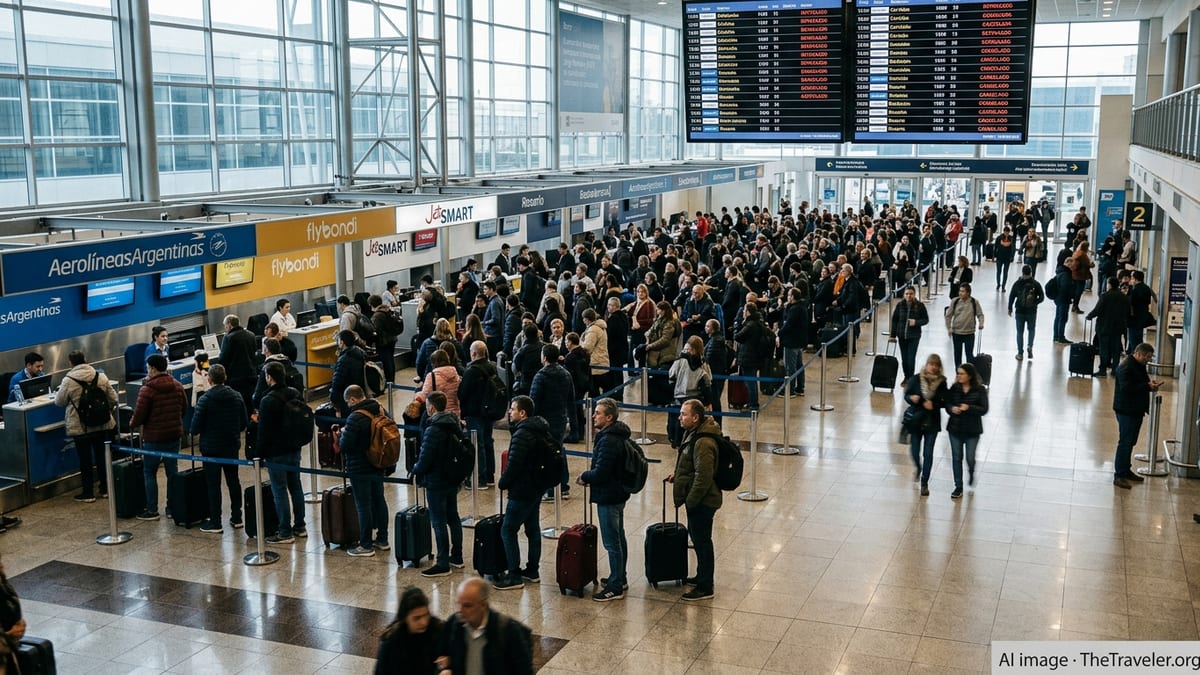
Delays and Cancellations Disrupt Key Argentine Gateways
Reports from airport monitoring platforms and regional travel coverage indicate that the latest wave of disruption concentrated on Argentina’s busiest domestic and regional corridors, with Aerolineas Argentinas, LATAM, and low cost carrier Flybondi all affected. While exact tallies varied during the day as schedules shifted, aggregated information pointed to 31 delayed services and 24 outright cancellations linked to the three airlines across Buenos Aires, San Carlos de Bariloche, and Mendoza.
Buenos Aires, split between the inner city Jorge Newbery Aeroparque and the larger Ezeiza international airport, again emerged as the main pressure point. Flight tracking boards showed multiple services between the capital and interior destinations such as Mendoza and Bariloche operating behind schedule, while a smaller but still significant number were withdrawn from the timetable altogether. Similar patterns were visible at Bariloche’s Teniente Luis Candelaria Airport and Mendoza’s Governor Francisco Gabrielli Airport, where departures to and from Buenos Aires bore the brunt.
The disruption followed a series of difficult operational days for Argentina’s aviation sector in early 2026, including previous rounds of mass delays and cancellations highlighted in domestic aviation statistics and specialized travel outlets. The latest episode added to a climate of uncertainty for travelers who rely on short haul flights to connect tourist regions such as Patagonia and the wine country with the capital.
Although some long haul services continued more or less on time, the knock on impact of missed domestic connections was felt by international visitors using Buenos Aires as a gateway to reach Bariloche’s lake district or the vineyards and Andean foothills around Mendoza.
Flybondi Under Scrutiny as Reliability Concerns Resurface
Flybondi, Argentina’s ultra low cost carrier, once again drew particular attention from travelers and online commentators. Publicly available background material shows that the airline has faced mounting criticism in recent years over last minute cancellations and extended delays, along with previous regulatory pressure to present a concrete plan to reduce disruption. Those concerns resurfaced as a portion of the latest cancellations and late operations were traced to Flybondi services touching Buenos Aires, Bariloche, and Mendoza.
Social media posts and travel community discussions on March 30 and 31 described passengers dealing with flights rescheduled by one or two days or canceled altogether, forcing last minute rebookings on other airlines. Several contributors contrasted Flybondi’s record with that of Aerolineas Argentinas and LATAM, indicating a preference for paying higher fares in exchange for more predictable schedules when traveling on tight itineraries or needing to protect international connections.
Industry analyses and investor documents consulted by travel media have also pointed to Flybondi’s exposure to fines and customer complaints over irregular operations in Argentina’s provinces. These issues have reinforced a perception among many visitors that low headline fares can come at the cost of reliability, especially on heavily traveled tourist routes linking Buenos Aires with Mendoza’s wine region and Bariloche’s mountain resorts.
Despite the criticism, Flybondi retains a notable share of domestic traffic, helped by its focus on point to point connections and aggressive pricing. The latest disruption is likely to intensify debate over how budget carriers balance rapid growth, cost control, and operational resilience in Argentina’s volatile economic environment.
National Carrier Aerolineas Argentinas and LATAM Also Affected
Although much of the traveler anger centered on Flybondi, publicly accessible flight status boards showed that Aerolineas Argentinas and LATAM were not immune to delays and cancellations during the March 31 disruption. Schedules involving Buenos Aires and Mendoza, as well as services linking the capital to Bariloche, displayed multiple late departures and arrivals. Some flights did operate close to schedule, but others were held at the gate or saw revised departure times ripple through the day.
Domestic discussions among passengers planning trips to Patagonia and the wine country have reflected a nuanced view of the national carrier. Many travelers see Aerolineas Argentinas as comparatively dependable within the local context, while still noting regular delays linked to weather in southern destinations or congested turnarounds in Buenos Aires. Online trip reports from recent weeks describe late evening arrivals, changed departure times, and the need to build generous buffers between domestic and international segments.
LATAM, which connects Argentine cities to regional hubs in Brazil and Chile as well as operating some domestic legs, also appeared in the latest delay statistics. Regional traffic flows through São Paulo and Santiago amplify the impact of schedule changes, as a delayed feeder flight from Buenos Aires, Mendoza, or Bariloche can cause missed onward connections across South America. Travel advisories in the region have increasingly urged passengers to treat any connection that blends domestic and international tickets through separate reservations as high risk during periods of operational strain.
For the three airlines combined, the pattern on March 31 underlined how even moderate numbers of delayed and canceled flights can cascade into substantial disruption for passengers without robust contingency plans, especially in a country where many iconic destinations are accessible primarily by air over long distances.
Impact on Tourism Hotspots at the End of Summer
The timing of the disruption late in March, as Argentina transitions from peak summer into the quieter shoulder season, created particular challenges for tourism hubs. Bariloche, popular for hiking, lakeside stays, and early autumn foliage, relies on a dense schedule of flights from Buenos Aires to accommodate both domestic holidaymakers and foreign visitors pairing Patagonia with the capital. Canceled or heavily delayed flights can compress itineraries, leading to shortened stays and missed excursions.
In Mendoza, flight irregularities threatened connections for wine tourists heading to vineyard tours or boutique lodges in the surrounding valleys. Many itineraries are built around carefully sequenced tastings and pre booked accommodations; lost travel days are difficult to recover, and last minute changes often carry higher costs. For local tourism businesses, inconsistent air links add an element of unpredictability just as they seek to stabilize revenue outside the busiest summer months.
Travel industry observers note that Argentina’s long distances and relatively limited rail infrastructure magnify the importance of reliable air service. When segments between Buenos Aires, Bariloche, and Mendoza are disrupted, alternatives such as overnight buses, one way car rentals, or restructured routes through other cities may be feasible but time consuming. This reality makes on time performance a key element of the country’s competitiveness as a destination, especially for visitors on one or two week vacations.
Repeated episodes of widespread delays and cancellations in early 2026, including those documented in February and now in late March, have prompted questions within the sector about infrastructure capacity, staffing levels, and the resilience of airline operations amid cost pressures and fluctuating demand.
What Travelers Can Do When Argentina Flights Go Awry
While the latest disruptions unfolded rapidly, travel experts and consumer advocates in the region consistently highlight a set of practical steps for those caught in similar situations. First, they recommend monitoring flight status through official airline applications and airport information screens, rather than relying solely on initial reservation confirmations. Schedule changes and rolling delays are often visible in these channels before they filter through to email updates.
Second, travelers are encouraged to build wider connection windows when mixing international and domestic flights within Argentina, particularly when using separate tickets. Allowing six hours or more in Buenos Aires between an arrival from abroad and a domestic departure to Bariloche or Mendoza can provide a buffer against moderate delays, although major cancellations may still require hotel stays or itinerary changes.
Third, comprehensive travel insurance that explicitly covers missed connections, long delays, and cancellations can help soften the financial impact of disrupted plans. Publicly available guidance from consumer organizations stresses the importance of reading policy details carefully, as coverage for low cost carriers or separate tickets may differ from that offered on single through itineraries.
Finally, regular travelers to Argentina advise having a contingency route in mind, such as alternative airlines on the same route, nearby airports, or overnight long distance buses linking major cities. As the events of March 31 again demonstrated, flexibility and awareness of backup options can make the difference between an extended airport stay and salvaging much of a planned journey, even when disruption affects airlines across the country’s main aviation gateways.