

More news on this day
Argentina is facing another round of travel disruption as Aerolíneas Argentinas cancels more than 15 additional flights across its domestic network, with services to popular destinations such as Bariloche, Puerto Iguazú and Córdoba among those affected, according to recent local coverage and updated airline schedules.
Get the latest news straight to your inbox!
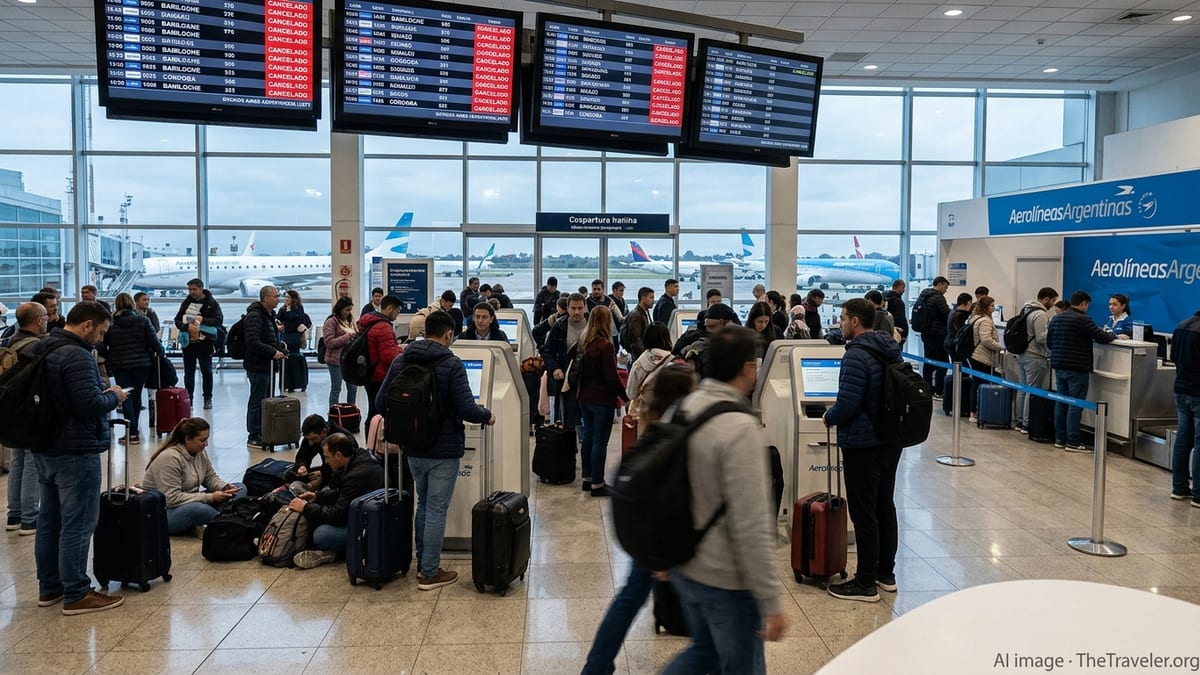
Fresh Cancellations Add Strain to Domestic Air Travel
Recent reports from Argentine travel and business media indicate that Aerolíneas Argentinas has withdrawn over 15 newly scheduled flights from sale, primarily within the domestic market. The adjustments appear in updated timetables and booking engines, where certain previously available frequencies have disappeared or been flagged as unavailable for sale. While the number is modest compared with mass disruption during nationwide strikes, the cuts are concentrated on high-demand leisure and provincial routes, amplifying their impact.
Early indications suggest that the latest cancellations are spread across multiple days rather than concentrated in a single event. This pattern, combined with reductions in specific time slots, points to a strategy focused on trimming capacity where demand or operational margins are weaker. Travelers who had already booked on the affected flights are being shifted to alternative departures where space allows, but limited availability during Argentina’s busy travel periods is complicating rebooking options.
These changes arrive on the heels of a turbulent period for the country’s aviation sector, which has recently navigated large-scale disruptions linked to labor actions and broader economic pressures. For many passengers, the new round of cancellations reinforces a perception of fragility in domestic air connectivity, particularly on routes that feed Argentina’s key tourism destinations.
Popular Tourism Routes Among Those Most Affected
Published route information and industry coverage show that flights linking Buenos Aires with Bariloche and Puerto Iguazú feature prominently among the affected services. Both cities anchor major tourism regions: Bariloche as a gateway to Patagonia’s lakes and snow sports, and Puerto Iguazú as the main access point to Iguazú Falls. Even a limited reduction in frequencies on these corridors can quickly ripple into higher fares and tighter seat availability during peak periods.
Cancellations are also reported on services to Córdoba, a vital hub connecting central Argentina with both northern and southern provinces. As a secondary aviation center after Buenos Aires, Córdoba relies heavily on stable schedules to maintain “federal” connectivity between interior cities, reducing the need for passengers to route through the capital. When flights are removed from this network, journeys that once required a single hop can stretch into multi-leg itineraries or overnight waits.
Additional adjustments on routes to other provincial cities, including secondary tourist gateways, further narrow options for travelers trying to stitch together complex domestic itineraries. Some passengers are turning to alternative carriers, while others are reshaping their plans around overnight buses or rental cars when air connections no longer align with hotel or tour bookings.
Operational and Economic Pressures Behind the Cuts
Publicly available financial reports and sector analyses highlight that Aerolíneas Argentinas has been operating against a backdrop of high operating costs, currency volatility and intense competition from low-cost rivals. In this environment, selectively canceling lower-yield or operationally challenging flights can be a way to consolidate loads and protect revenue on remaining services. Airlines operating in Argentina also face fluctuating fuel and airport costs, as well as seasonal swings in demand, which can accelerate schedule adjustments.
Recent general strikes and labor actions have compounded these structural issues, forcing mass cancellations that disrupt crew rotations and fleet utilization. Even after such events formally end, airlines often need days or weeks to realign schedules and recover regular patterns. The latest removal of flights may reflect a lingering effort to rebuild a more sustainable timetable after earlier large-scale disruptions.
Analysts tracking the Argentine aviation market note that the flag carrier remains the dominant player in domestic traffic, meaning that any capacity cut reverberates more strongly than similar moves by smaller competitors. When Aerolíneas trims frequencies, especially to provincial or tourist destinations with limited competition, entire regions can suddenly find themselves with fewer options and narrower booking windows.
What Travelers Are Experiencing on the Ground
Social media posts and traveler forums over recent days have described last-minute e-mails notifying passengers of cancellations or significant schedule shifts. In many cases, alternative flights are offered on the same day, but sometimes at much earlier or later times than originally booked. For visitors with tight connections to long-distance buses, domestic links or international departures, even a few hours of movement can force costly changes to downstream plans.
Some travelers report success in securing same-day alternatives by calling the airline or visiting airport ticket counters, while others point to long waits and limited options during peak travel days. Where Aerolíneas Argentinas is the only operator on a specific route or time slot, passengers have fewer realistic alternatives and may need to overnight in Buenos Aires or another hub before continuing.
Budget-conscious tourists, including many visiting Patagonia and the north of Argentina, are weighing whether to shift to competing low-cost carriers or to build extra buffer days into their itineraries in case of further changes. However, low-cost airlines in the country have also faced periodic operational challenges, leaving travelers to balance ticket price against perceived reliability.
Advice for Travelers with Upcoming Argentina Flights
Travel experts and local consumer publications recommend that anyone with upcoming domestic flights in Argentina closely monitor their bookings in the days leading up to departure. Checking reservations directly on the airline’s website or app, rather than relying solely on confirmation e-mails issued at the time of purchase, can provide an earlier warning if a flight disappears from sale or its status changes.
Passengers who booked through online travel agencies or tour operators are being advised to stay in regular contact with those intermediaries, as they may be able to negotiate rebookings or propose alternative routings more efficiently. Keeping schedules flexible, especially on the days connecting with international arrivals or departures, can help reduce the risk of missed onward travel due to last-minute cancellations.
For those planning new trips, travel planners suggest considering slightly longer connections between flights, particularly when pairing Aerolíneas Argentinas services with other carriers. Building in a buffer of several hours, or even an overnight in Buenos Aires before long-haul departures, may offer added peace of mind in a period where timetables are subject to ongoing adjustment.