

More news on this day
Argentina has joined Brazil, China, Colombia, Mexico, Namibia, Tanzania and other headline destinations on a prestigious 2025 list of the world’s most beautiful and diverse countries, reflecting a broader shift in global tourism toward nature-rich, culturally layered and year-round travel experiences.
Get the latest news straight to your inbox!
A New Spotlight on Argentina’s Remarkable Diversity
The latest 2025 rankings and perception studies of attractive and desirable countries highlight Argentina alongside other major destinations such as Brazil, China and Mexico, underscoring how global travelers are increasingly seeking destinations that combine dramatic landscapes with strong cultural identities. Publicly available data on global attractiveness shows Argentina climbing in perceived appeal, particularly among younger travelers looking for authentic experiences and varied geography in a single trip.
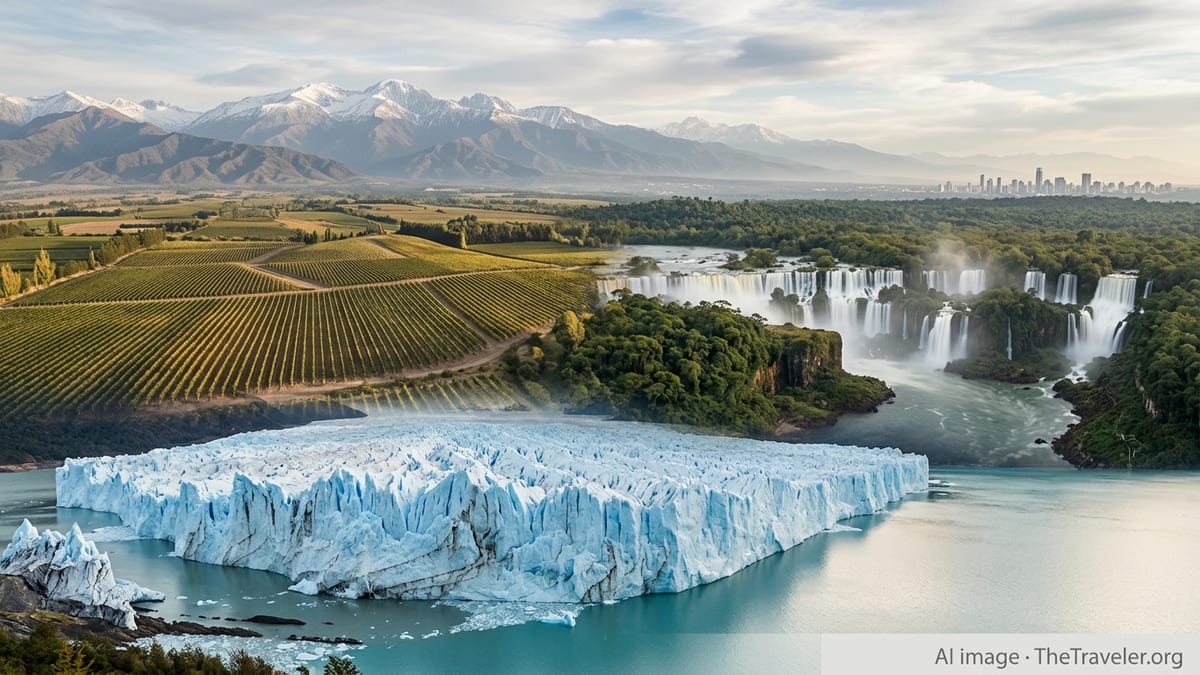
Travel-focused reports indicate that Argentina’s renewed visibility is closely tied to its geographic breadth. From subtropical rainforests and massive waterfalls in the northeast to Andean highlands in the northwest, wine valleys in Mendoza and the icy wilderness of Patagonia in the south, the country offers a concentration of ecosystems that typically require visiting several different nations. This range positions Argentina naturally within conversations about the world’s most beautiful and diverse destinations for 2025.
Regional coverage of South American tourism trends also points to Argentina’s evolving tourism strategy, which emphasizes both its natural wonders and its urban centers. Buenos Aires continues to be presented as one of the region’s most compelling capitals, while lesser-known provinces are increasingly promoted for their landscapes and indigenous heritage. Together, these developments have helped move Argentina onto shortlists used by international travelers and tour operators when planning future trips.
From Patagonia to Iguazú: Landscapes That Define a Continent
Destination guides and 2025 travel features repeatedly highlight Argentina’s south, where Patagonia’s glaciers, windswept steppes and coastal biosphere reserves stand out among the world’s iconic natural settings. The region’s combination of towering ice fields, stark cliffs and rich marine life has made it a reference point for adventure tourism, cold-weather trekking and wildlife watching.
In the subtropical north, Iguazú Falls remains one of South America’s most photographed natural attractions and a major factor in Argentina’s inclusion on global beauty lists. The multi-tiered waterfalls, framed by dense rainforest and protected national parks, are regularly cited in travel publications as a must-see for visitors to the continent. For many travelers, the ability to pair Patagonia’s glacial landscapes with Iguazú’s tropical environment in a single itinerary encapsulates the diversity that recent rankings aim to capture.
Beyond these flagship sights, inland regions such as Salta and Jujuy are drawing more attention in 2025 itineraries for their multicolored mountains, high-altitude vineyards and living indigenous cultures. Travel planners note that these areas offer quieter alternatives to traditional circuits while reinforcing Argentina’s image as a destination where scenic variety and cultural depth intersect.
Cities Competing on the Global Stage
Argentina’s cities are playing a key role in its new status among 2025’s standout destinations. International observatories that track city attractiveness list Buenos Aires among the world’s notable urban centers, citing its cultural magnetism, identity and dynamism. This recognition sits alongside growing traveler interest in the capital’s historic neighborhoods, leafy parks and vibrant arts and gastronomy scenes.
Buenos Aires has long been associated with tango, Belle Époque architecture and European-influenced avenues, but recent coverage emphasizes a broader mix of influences, including immigrant neighborhoods and contemporary cultural districts. As a result, the city is increasingly framed as a gateway to the rest of Argentina: a place where visitors can immerse themselves in nightlife and museums before heading out to glaciers, vineyards or deserts.
Secondary cities such as Córdoba and Mendoza are also gaining visibility in global rankings and travel reports. Córdoba is recognized for its blend of colonial history, student-driven energy and surrounding sierras, while Mendoza is firmly established as a wine capital with the Andes as a dramatic backdrop. Together, these cities reinforce the idea that Argentina’s appeal is not confined to a single urban center but distributed across several hubs with distinct identities.
Standing Among Global Giants: Brazil, China, Mexico and Beyond
Argentina’s presence alongside Brazil, China, Colombia, Mexico, Namibia and Tanzania on 2025 beauty and diversity shortlists reflects how global tourism narratives are broadening beyond a small cluster of traditional European destinations. Brazil is celebrated for its Amazonian biodiversity, Atlantic beaches and Afro-Brazilian culture; China for its continental scale of landscapes and historic sites; Mexico and Colombia for their mix of coasts, mountains, colonial cities and contemporary creative scenes.
In this context, Argentina is increasingly positioned as part of a group of “continent-like” countries that offer multiple climate zones and cultural regions within one border. Travel commentary notes that, similar to Brazil or China, Argentina allows visitors to experience glaciers, deserts, wetlands and cosmopolitan cities without crossing into another nation, a characteristic that carries particular weight as travelers seek longer, more immersive trips.
Perception studies from cultural and educational organizations in 2025 show that Brazil, China, Mexico and Argentina all feature in the upper tiers of global attractiveness rankings. These assessments typically consider factors such as cultural richness, natural environment and openness to international engagement, providing a quantitative backdrop to the destination lists now circulating among travel media and industry analysts.
Namibia, Tanzania and the Rise of Nature-First Destinations
The inclusion of Namibia and Tanzania alongside Argentina in 2025 destination lineups illustrates another key shift: the growing prominence of countries whose primary draw is exceptional natural landscapes and biodiversity. Recent travel features and industry news describe Namibia as one of Africa’s most compelling emerging destinations, with desert-adapted wildlife, immense dune fields and stark coastal scenery capturing the attention of photographers and adventure travelers.
Similarly, Tanzania remains central to classic safari circuits and is frequently profiled for the Serengeti’s wildlife migrations, the Ngorongoro Crater’s dense animal populations and Mount Kilimanjaro’s trekking routes. Operators and regional guides emphasize how these experiences are increasingly framed within responsible-travel narratives, connecting conservation, community involvement and visitor education.
Argentina’s recognition in the same conversation as Namibia and Tanzania underscores a shared emphasis on protected areas, national parks and outdoor experiences. Whether it is whale watching off the Patagonian coast, hiking in Andean foothills or visiting wetlands and river systems in the northeast, publicly available travel guidance points to a rising demand for destinations where nature remains central to the tourism offer.
Taken together, the 2025 lists that group Argentina with Brazil, China, Colombia, Mexico, Namibia, Tanzania and other renowned countries signal a broader rebalancing of global tourism attention. As travelers prioritize diversity of landscapes, cultural authenticity and opportunities for meaningful, responsible experiences, these destinations are set to feature prominently in trip planning and industry strategies for the coming year.