


More news on this day
Argentina’s rail network has entered a period of accelerated upheaval, as a 24‑month public emergency, major safety works and contentious restructuring plans converge to reshape how passengers and tourists move across the country.
Get the latest news straight to your inbox!
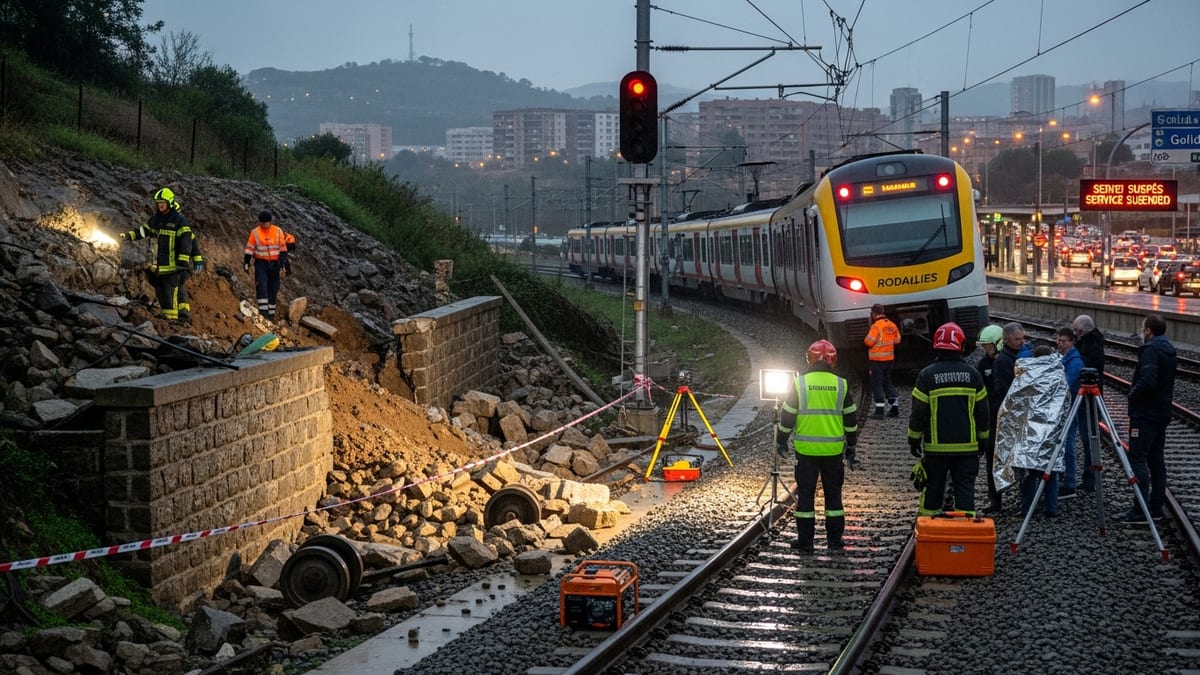
Decree-led rail emergency reshapes a troubled network
The Argentinian government formally declared a public railway emergency in June 2024, setting a 24‑month window to tackle critical safety and infrastructure failures across the national network. Publicly available information on Decree 525/2024 describes a system weakened by years of underinvestment, rising operating costs and mounting accident risks, particularly on busy metropolitan and intercity corridors.
The emergency measure directs substantial extra funding into the system, with official documentation citing more than 1.29 trillion pesos in additional resources earmarked for rail. The move is framed as a response to what government texts describe as a delicate situation for national rail, where ageing track, signalling and rolling stock have strained safety margins and reliability for daily commuters and long‑distance travelers alike.
The emergency decree sits alongside a broader reform effort under the current administration, which has sought sweeping economic changes and a redefinition of the state’s role in transport. Rail has emerged as a key test case, highlighting tensions between fiscal tightening, the need to preserve affordable mobility and longstanding ambitions to modernize an extensive but fragile network.
For travelers, the new framework means the railway is simultaneously under repair and under review, with policy, funding and ownership arrangements all in rapid flux while the emergency clock ticks.
Safety fears sharpen after high‑profile crashes
Concerns about the state of Argentina’s railway intensified after a collision between two trains on the San Martín line in the Buenos Aires neighborhood of Palermo on 10 May 2024. A public bulletin from the national transport safety board describes how investigators were dispatched to examine the crash, which disrupted one of the capital’s key commuter routes and revived memories of earlier rail tragedies.
Local and international coverage has linked the Palermo incident with a wider pattern of operational stress, including congested corridors, ageing equipment and inconsistent maintenance standards. While accident rates remain low relative to the huge volume of daily journeys, each high‑profile crash has fueled public scrutiny of how quickly promised safety upgrades are being delivered under the emergency framework.
Historical context has added to the sense of urgency. Argentina’s rail history includes catastrophic accidents such as the Benavídez disaster of 1970, which remains one of South America’s worst rail tragedies. Today’s policymakers are under pressure to ensure that chronic infrastructure weaknesses are addressed before any new catastrophe exposes the limits of the emergency response.
For rail users, particularly in the Buenos Aires metropolitan area, the aftermath of recent accidents has meant temporary suspensions, slower services and more intensive inspections, as operators seek to balance safety assurances with the need to keep commuter and regional trains moving.
Hundreds of emergency works target critical bottlenecks
Government briefings on the emergency program indicate that more than 220 individual works have been launched across the network since mid‑2024, with a focus on operational safety and cost efficiency. These interventions span track renewals, level‑crossing upgrades, bridge and culvert repairs, signalling modernization and targeted rolling‑stock overhauls on key passenger and freight routes.
The plan is being implemented through the state infrastructure administrator and operating companies, with the emergency decree instructing agencies to reprioritize public funds toward projects that reduce accident risks and service interruptions. Documentation associated with the policy underscores the need for more efficient use of limited resources, noting steep rises in real operating costs per train and per paying passenger in recent years.
The emphasis on short‑term, high‑impact works reflects the constraints of the 24‑month emergency window. Rather than promising large‑scale new lines, the current strategy focuses on stabilizing what already exists: reinforcing bridges on heavy freight routes, renewing worn‑out track sections on metropolitan lines such as Roca, Sarmiento and Mitre, and improving signaling reliability where failure rates have been highest.
Travelers are beginning to feel the effects in the form of planned service cuts, diversion of trains around work sites and occasional bus substitutions. While disruptive in the short term, the works aim to reduce the unplanned delays and cancellations that have long plagued both daily commuters and tourists using intercity routes to destinations such as Mar del Plata, Córdoba and Mendoza.
Tariffs, subsidies and the cost of staying on track
Alongside engineering works, the government has moved to reconfigure the financial backbone of the railway. Official resolutions published in 2024 detail sharp adjustments to long‑distance passenger fares, citing the need to realign tariffs with the actual cost of providing services. For example, reference fares between Buenos Aires and major regional destinations were significantly increased, reflecting the impact of inflation and currency volatility on fuel, labor and maintenance costs.
At the same time, national transport subsidies have been recalibrated, with particular debate around support for services outside the Buenos Aires metropolitan region. According to economic analyses and parliamentary discussions, the reduction of certain subsidy schemes has strained provincial bus and rail systems, placing extra pressure on travelers in smaller cities who rely on affordable public transport for work, education and health care.
The emergency decree itself highlights the gap between fare revenues and operating costs, pointing to what official explanations describe as an excessive technical tariff when compared with international benchmarks. The challenge for policymakers is to narrow that gap without pricing passengers off the network entirely, especially in a context of falling real incomes and rising living costs.
For visitors from abroad, the rapid adjustment of fares and the fluctuating exchange rate have created a moving target. What looks like a very inexpensive sleeper ticket in dollar terms may be unaffordable for many local passengers, underscoring the social stakes in any further tariff reforms under the emergency regime.
Privatization pressures and the future of passenger services
While the emergency framework is framed around safety and stabilization, it is unfolding alongside a wider restructuring of Argentina’s state‑owned enterprises. International financial reports and congressional analyses describe how the government’s flagship reform law and related decrees identify the main passenger operator and freight companies as candidates for privatization or concession.
Under this approach, the state could retain ownership of core infrastructure while granting private firms long‑term operating rights over specific passenger or freight corridors. Supporters of this model argue that concessions could unlock investment and impose stricter performance targets, drawing on earlier experiences with freight concessions in the 1990s. Critics counter that poorly regulated privatization could result in service cuts on less profitable routes, higher fares and uneven safety standards.
The emergency decree and its regulatory companion text acknowledge that existing public operators have struggled with efficiency, citing rising real costs per train‑kilometer and per passenger. However, the same documents also stress the public interest in maintaining an integrated national rail system that supports regional development, employment and territorial cohesion.
For both domestic and international travelers, the coming months will be decisive. As emergency works accelerate and concession proposals advance, the shape of Argentina’s rail offer may change substantially by mid‑2026, affecting everything from daily commuter patterns in Buenos Aires to the viability of long‑distance tourist routes connecting the capital with the Andes, the Pampas and the Atlantic coast.