

Arizona’s airports are the main gateways to desert road trips, national parks, golf resorts, and fast‑growing cities. Whether you are landing in Phoenix, Tucson, or Mesa for the first time or returning for another winter escape, knowing how arrivals, transfers, and car rentals work can save valuable time at the start of your journey. This guide breaks down the essentials at Arizona’s key commercial airports so you can step off the plane and get on the road with confidence.
Understanding Arizona’s Major Airports
Most visitors to Arizona arrive through one of three main commercial airports: Phoenix Sky Harbor International Airport, Tucson International Airport, and Phoenix‑Mesa Gateway Airport. Each serves different parts of the state and offers its own mix of domestic routes, seasonal services, and ground transportation options. Before you book flights or reserve a car, it helps to understand which airport best fits your itinerary and driving plans.
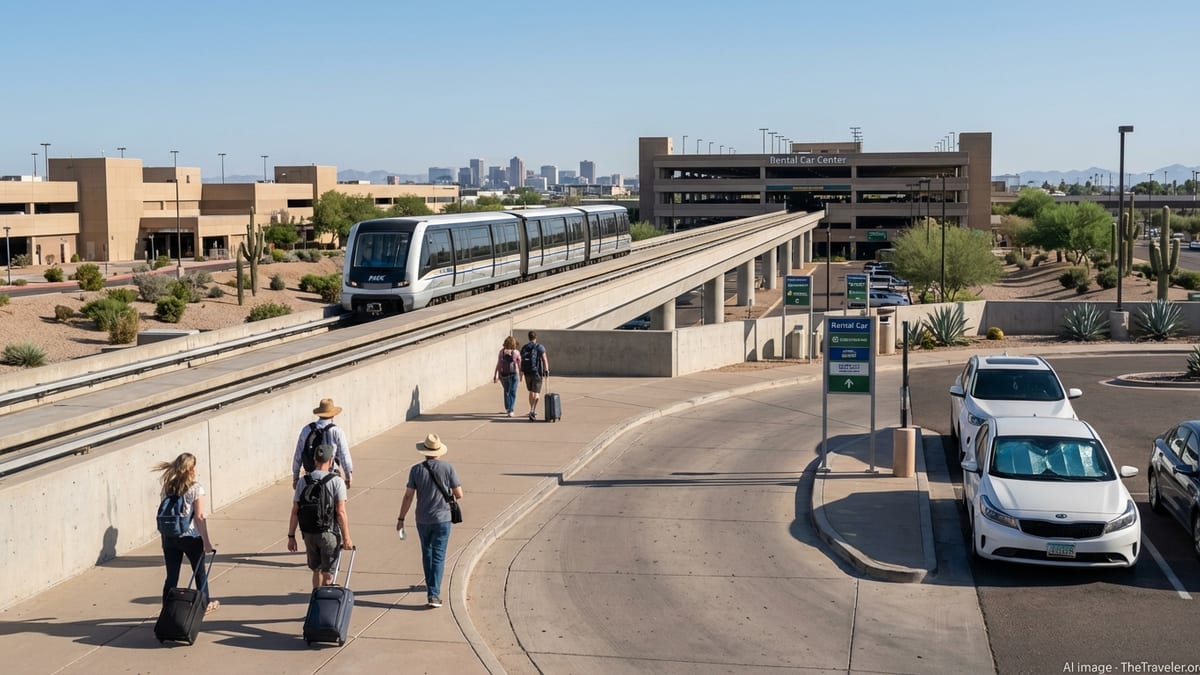
Phoenix Sky Harbor International Airport, located a short drive from downtown Phoenix, is by far the busiest hub in the state and one of the larger airports in the United States by passenger volume. It is the main gateway for trips across Greater Phoenix, Scottsdale, the Sonoran Desert, and interstate drives toward California, Nevada, and northern Arizona. With two primary passenger terminals and a dedicated Rental Car Center linked by an automated train, it is designed for high traffic and relatively efficient connections.
Tucson International Airport serves southern Arizona, including the city of Tucson, surrounding desert communities, and destinations closer to the Mexican border. It is smaller and easier to navigate than Phoenix Sky Harbor, with a single main terminal building and a compact on‑site Rental Car Center a short walk from baggage claim. For travelers heading to Saguaro National Park, the Sky Islands, or southeastern wine regions, starting in Tucson can significantly cut driving times.
Phoenix‑Mesa Gateway Airport sits in the southeast of the Phoenix metropolitan area and caters heavily to low‑cost and seasonal carriers. It is especially convenient for travelers staying in Mesa, Gilbert, Queen Creek, or the far east Valley. Although smaller than Sky Harbor, it still offers on‑airport rental car services and straightforward ground transport. For visitors whose accommodation or family is based in the East Valley, arriving at Mesa Gateway can mean less time on freeways and a faster start to the trip.
Arriving at Phoenix Sky Harbor International Airport (PHX)
Arrivals at Phoenix Sky Harbor are spread across two passenger terminals currently in use, Terminal 3 and Terminal 4. Your airline and route determine which terminal you will use, so it is worth confirming this on your boarding pass or airline app before landing. Both terminals have multiple baggage claim carousels on the lower levels, with clear signage directing you toward ground transportation, including the PHX Sky Train, rideshare pickup areas, taxis, and hotel shuttles.
On landing, follow the overhead signs for Baggage Claim and Ground Transportation. Sky Harbor is a relatively compact airfield given its traffic levels, but walking distances between gates and baggage claim can still be significant, especially in Terminal 4. Allow extra time if you are arriving from a long‑haul or heavily delayed flight, traveling with young children, or carrying bulky hand luggage. Restrooms, water fountains, and information counters are positioned near the exits from the secure area if you need a short pause before collecting checked bags.
Luggage delivery times vary by time of day and airline, but given the airport’s size it is reasonable to expect a modest wait at the carousel during peak arrival banks. Digital displays above each carousel list incoming flights and baggage status, and any changes are announced over the public address system. If your bags are delayed or missing, airline baggage offices are typically located in the same hall or just off the main baggage claim area, so you can resolve issues before moving on to the Rental Car Center or pickup curb.
Once you have your luggage, the key decision is whether you are heading toward the PHX Sky Train for the Rental Car Center and economy parking, or directly outside to meet a rideshare, taxi, or hotel shuttle. Overhead signage is color coded and repeated frequently along the route, and airport volunteers are often present during busy periods to help direct passengers. Because the Rental Car Center is in a separate facility connected by train, it is especially important not to exit to the street level roadway if you intend to rent a car.
Using the PHX Sky Train for Transfers and Rentals
The PHX Sky Train is a free automated people mover that links Terminals 3 and 4 with the East Economy Parking areas, the 24th Street station, the 44th Street/Washington transit hub, and the airport’s consolidated Rental Car Center. Trains typically run 24 hours a day, with frequencies of a few minutes during daytime peaks and somewhat longer intervals overnight. For most travelers, it is the fastest and simplest way to move between terminals, connect to public transportation, or reach a rental vehicle without using road shuttles.
From Terminal 3, you access the PHX Sky Train from the upper levels, with escalators and elevators leading to the station platforms. From Terminal 4, the station is reached from a mid‑level concourse, again with multiple elevator and escalator options that are generally suitable for travelers with luggage or mobility needs. The ride itself is relatively short, with large windows offering views of the airfield and city skyline, and clear audio announcements before each stop. Because the system is fully automated and runs frequently, you rarely need to plan around a timetable.
For passengers connecting to car rentals, staying on the train until the Rental Car Center stop is essential. Once you arrive, follow the signs from the platform into the multi‑level center where all on‑airport rental brands maintain counters and vehicle pick‑up areas. The design consolidates what would previously have been multiple scattered locations into a single complex, so you can compare options more easily if you have not pre‑booked. For those continuing to downtown Phoenix or other cities by light rail or bus, you would instead exit at the 44th Street/Washington station, which links directly to Valley Metro services.
Passengers with tight connections, such as those arriving at one terminal and departing from another, benefit significantly from the PHX Sky Train. Rather than relying on road traffic outside the airport, you can stay within the secure airport environment and use clearly marked routes to the train station. Many airlines allow through‑checked luggage for connections at Sky Harbor, which reduces handling but does not eliminate the need to budget a sensible transfer window. During large events in Phoenix or winter peak travel, consider adding buffer time for busy platforms and elevators, even though train frequency typically remains steady.
Car Rentals at Phoenix Sky Harbor: What to Expect
Car rentals at Phoenix Sky Harbor are centralized in a dedicated Rental Car Center located on the south side of the airfield, reached directly by the PHX Sky Train. All major national brands and several smaller companies have desks and vehicle lots in this multi‑story building. Because Phoenix is a heavily car‑dependent destination, demand for rental vehicles can be high during major events, school breaks, and peak winter tourism season, so advance reservations are strongly recommended, especially if you require a specific vehicle class or extra equipment such as child seats.
Inside the Rental Car Center, you will find individual counters for each rental company, self‑service kiosks for certain brands, and separate queues for loyalty program members where available. Having your driver’s license, credit card, and reservation details ready speeds up the process considerably. If your flight has been delayed into late evening or overnight hours, most airport‑based rental locations adjust staffing to match published flight schedules, but there can still be longer waits when several flights arrive close together. Where possible, provide your flight number in advance so the rental company can monitor delays and hold your booking.
Once paperwork is completed, staff will direct you by signage or verbal instruction to the correct level or aisle for your vehicle pick‑up. At Sky Harbor’s Rental Car Center, vehicles are usually grouped by category, with keys either at the counter or already in the car depending on the company. Before leaving the garage, check fuel level, mileage, and the condition of the vehicle, and photograph any existing scratches or damage for your records. It is easier to resolve discrepancies with an agent while you are still in the structured pick‑up area than after you have driven away toward the freeway.
Returning your car at the end of your trip is generally straightforward: follow airport signs on surrounding freeways and surface streets for “Rental Car Return.” These lead directly into the same Rental Car Center, where each brand has marked return lanes and fuel stations are available along the approach roads. After dropping the vehicle, you can walk back into the building, follow signs to the PHX Sky Train platform, and ride back to your departure terminal. An additional convenience at Sky Harbor is early bag check at the Rental Car Center for participating airlines, allowing you to check luggage before taking the train back to the terminal, which can make the final leg of your trip more relaxed.
Arrivals, Transfers, and Rentals at Tucson International Airport (TUS)
Tucson International Airport offers a more compact and less crowded arrival experience than Phoenix Sky Harbor, which many travelers appreciate after a long flight. The single main terminal is arranged over two primary levels, with arrivals and baggage claim on the lower floor and departures and security screening above. Signage is straightforward, and walking distances from gates to baggage claim are typically shorter than at larger hubs, which can be a relief for passengers with tight onward schedules or mobility concerns.
After landing, follow the signs to baggage claim and ground transportation. Because TUS is smaller, the baggage hall serves a limited number of simultaneous arrivals, which can lead to relatively quick delivery of checked luggage, although timing still depends on your airline’s operations. Information screens in the hall list incoming flights and carousel assignments. If you have an issue such as lost or damaged baggage, airline offices are usually located nearby and staff are accustomed to handling connections to smaller regional destinations across the Southwest.
One key difference compared with Phoenix is that Tucson’s Rental Car Center is located just outside the east exit of the main terminal rather than in a separate off‑site facility. Once you have your bags, you simply follow clearly marked signs from either the lower level baggage claim or the upper level concourse toward the car rental building. There is no shuttle bus required for most on‑airport providers, which can save time and reduce hassle, especially during hot weather when waiting outdoors is less comfortable.
Rental counters for several major brands sit inside this nearby facility, with vehicles parked in adjacent lots. Hours of operation generally cover the airport’s main flight schedule; staff often remain on duty for delayed arrivals with reservations. For off‑airport rental providers, such as certain value‑focused companies, separate shuttle or courtesy vehicles may pick up outside the terminal or Rental Car Center. If you are using one of these providers, confirm in advance where to meet the shuttle and how frequently it runs, as service levels can vary by time of day.
Arrivals and Car Rentals at Phoenix‑Mesa Gateway Airport (AZA)
Phoenix‑Mesa Gateway Airport serves a mix of domestic and seasonal flights, often with a focus on leisure travelers and visitors from colder regions seeking winter sun. The terminal complex is smaller than both Phoenix Sky Harbor and Tucson, which gives arrivals a more relaxed feel. Because there are fewer gates, aircraft often park close to the terminal and walking distances are manageable. This can be particularly helpful for families or older travelers who prefer a less hectic arrival environment.
Upon arrival, you will follow signage to baggage claim, which is typically just a short walk from the gates. The baggage hall is compact, with carousels serving flights as they come in rather than multiple overlapping banks of arrivals. This setup, combined with lower overall passenger volumes compared with major hubs, can mean relatively quick access to checked bags under normal conditions. That said, seasonal peaks can still create waits, so it remains wise to keep any time‑sensitive plans flexible immediately after landing.
Car rentals at Phoenix‑Mesa Gateway are handled by several well‑known national brands operating on or near the airport grounds. Rental counters are generally located close to baggage claim or in an adjacent facility, and vehicles are parked within walking distance. Some companies may provide short shuttle rides to nearby lots, but distances tend to be modest compared with the larger Phoenix Sky Harbor Rental Car Center. Pre‑booked reservations are strongly advised during winter high season when many visitors arrive on clustered flights from northern cities.
For onward travel by car, Phoenix‑Mesa Gateway offers good access to the East Valley freeway network, with common routes leading toward Mesa, Gilbert, Chandler, Queen Creek, and the Superstition Mountains. Driving west into central Phoenix or Scottsdale is certainly possible but may add significant time compared with arriving at Sky Harbor. When planning your trip and choosing flights, weigh airfare savings against the additional driving and fuel costs from Mesa Gateway to your final destination, particularly during rush‑hour periods when traffic can be heavy.
Planning and Booking the Right Rental Car in Arizona
Arizona’s geography and climate make rental cars especially useful for visitors, but selecting the right vehicle and timing your booking well can greatly improve your experience. The state’s major airports support a full range of vehicle categories, from compact cars and sedans to SUVs, pickup trucks, and specialty vehicles. Think first about your route: city‑focused visitors staying primarily in Phoenix or Tucson may be comfortable with a compact or midsize sedan, while those heading to mountain towns, rural areas, or national parks often prefer SUVs for comfort, ground clearance, and luggage capacity.
Seasonality is another critical factor. Arizona experiences pronounced peaks in travel demand, particularly in late winter and early spring when visitors arrive for warm weather, baseball spring training, golf trips, and major events. During these times, popular rental categories and lower‑cost inventory can sell out, and walk‑up customers may face higher prices or limited choices. Booking well in advance, monitoring rates, and joining rental company loyalty programs can offer more flexibility and sometimes smoother pick‑up experiences at the Rental Car Centers in Phoenix, Tucson, and Mesa.
Insurance and fuel policies deserve careful attention at the counter. Many visitors rely on coverage from personal auto insurance or credit card benefits, but terms can vary and may not apply to all vehicle types or all renters. Before travel, clarify with your insurer or card provider which protections extend to rental cars in Arizona, including liability, collision, and loss of use. At the counter, agents may offer optional waivers and add‑ons; choose based on your actual risk tolerance and existing coverage rather than pressure at the desk. Similarly, understand whether you are expected to return the vehicle with a full tank, prepay fuel, or accept a refuel service at a premium rate.
Finally, consider practicalities specific to the desert environment. In hotter months, vehicles with strong air conditioning and light‑colored interiors are more comfortable, and remote start features can be helpful where available. If you plan to drive to higher elevations, such as Flagstaff or the White Mountains in winter, all‑season or appropriate tires and a vehicle with modern stability systems can provide added confidence. Most major rental brands in Arizona rotate fleets frequently, so vehicles are generally modern, but confirming details such as seating configuration, USB ports, and navigation options in advance can make long drives more pleasant.
Ground Transportation Alternatives to Car Rentals
While renting a car remains the most flexible option for exploring much of Arizona, it is not the only way to leave the airport. At Phoenix Sky Harbor, a robust mix of rideshare services, taxis, hotel courtesy shuttles, and public transit provides alternatives for travelers who prefer not to drive. Designated rideshare pick‑up zones are clearly signposted from the baggage claim areas at both major terminals, and app‑based services operate throughout the day and night, subject to demand. Metered taxis and pre‑arranged shuttle vans line up at curbside stands, serving both downtown Phoenix and more distant suburbs.
Public transportation links are anchored by the connection between the PHX Sky Train and the Valley Metro Rail and bus network. By riding the PHX Sky Train to the 44th Street/Washington station, travelers can transfer directly to light rail trains running into downtown Phoenix, Tempe, and Mesa, or to intersecting bus routes that extend further into the metropolitan area. This option is particularly useful for budget‑minded solo travelers or those staying near rail‑accessible neighborhoods and hotels. It does, however, require more time and luggage handling than door‑to‑door car rentals or rideshares.
At Tucson International Airport, ground transportation alternatives include local taxis, app‑based rides, regional shuttle services to nearby communities, and city buses operated by the local transit system. Bus routes serving the airport connect to central Tucson and, indirectly, to the city’s main rail station. Fares tend to be modest, making this a cost‑effective choice for travelers with light luggage and flexible schedules. In contrast, taxis and rideshares offer faster point‑to‑point travel across Tucson’s sprawling metropolitan area, including resort corridors and residential neighborhoods.
Phoenix‑Mesa Gateway Airport also provides access to taxi services, limited public transit connections, and pre‑arranged private shuttles and car services that cater to resort areas and residential communities in the East Valley. Because service frequencies and coverage may be more limited than at Sky Harbor, it is wise to confirm transit schedules or make shuttle bookings in advance, particularly if you arrive late at night or on a less frequent flight. For extended stays or itineraries that include multiple destinations across the Phoenix region, however, many visitors still find that renting a car from the airport remains the most convenient option.
The Takeaway
Navigating arrivals, transfers, and car rentals at Arizona’s major airports is largely a matter of understanding each facility’s layout and transportation options. Phoenix Sky Harbor’s PHX Sky Train and consolidated Rental Car Center create an efficient system for handling large volumes of visitors, while Tucson International and Phoenix‑Mesa Gateway offer smaller scale, easier‑to‑navigate alternatives. Across all three, clear signage and a mix of rental and non‑rental ground transport give travelers multiple ways to begin their journey.
When planning your trip, match the airport and rental car type to your actual itinerary rather than focusing solely on airfare. Consider where you are staying, what kind of driving you will be doing, and whether alternatives such as public transit or rideshares might cover portions of your stay. Booking car rentals early, especially during peak seasons, and understanding insurance, fuel, and return policies can prevent last‑minute surprises. With a bit of preparation, stepping off the plane in Arizona can be the easy start of a memorable road trip through deserts, mountains, and vibrant cities.
FAQ
Q1. Which Arizona airport is best for visiting Phoenix and Scottsdale?
Phoenix Sky Harbor International Airport is usually the most convenient choice for Phoenix and Scottsdale because it sits close to downtown and connects quickly to major freeways.
Q2. Do I need to take a shuttle bus to the Rental Car Center at Phoenix Sky Harbor?
No. The Rental Car Center is linked to the terminals by the free PHX Sky Train, which runs around the clock and replaces traditional rental car shuttle buses.
Q3. Is it necessary to reserve a rental car in advance at Arizona airports?
While some walk‑up rentals may be available, advance reservations are strongly recommended, especially during winter and spring peaks when demand and prices are higher.
Q4. Can I connect between terminals at Phoenix Sky Harbor without exiting the airport grounds?
Yes. You can use the PHX Sky Train to move between Terminals 3 and 4 and other airport facilities, which is typically faster and more predictable than using roadway traffic.
Q5. How close is the Rental Car Center to the terminal at Tucson International Airport?
At Tucson International, the Rental Car Center is just outside the east side of the main terminal, within a short walk from baggage claim, so no shuttle is needed for most renters.
Q6. Is renting a car essential for visiting Arizona’s national parks?
For most visitors, yes. Public transport to many national parks and rural areas is limited, so a rental car offers the greatest flexibility for exploring beyond the cities.
Q7. Are there public transit options from Phoenix Sky Harbor into the city?
Yes. By taking the PHX Sky Train to the 44th Street/Washington station, you can connect to Valley Metro Rail and bus routes that serve central Phoenix, Tempe, and Mesa.
Q8. What type of rental car is best for Arizona’s desert and mountain drives?
For city stays, compact or midsize cars work well. For longer trips, mountain routes, or group travel, many visitors prefer SUVs for comfort, space, and ground clearance.
Q9. Are rental cars at Arizona airports equipped for very hot weather?
Most late‑model rental vehicles in Arizona have strong air conditioning, but it is still wise to test the system before leaving the lot and to park in shade where possible.
Q10. Can I return a rental car to a different Arizona airport from where I picked it up?
Many rental companies allow one‑way returns between Arizona airports, though availability and surcharges vary, so you should confirm terms and fees at booking time.