

More news on this day
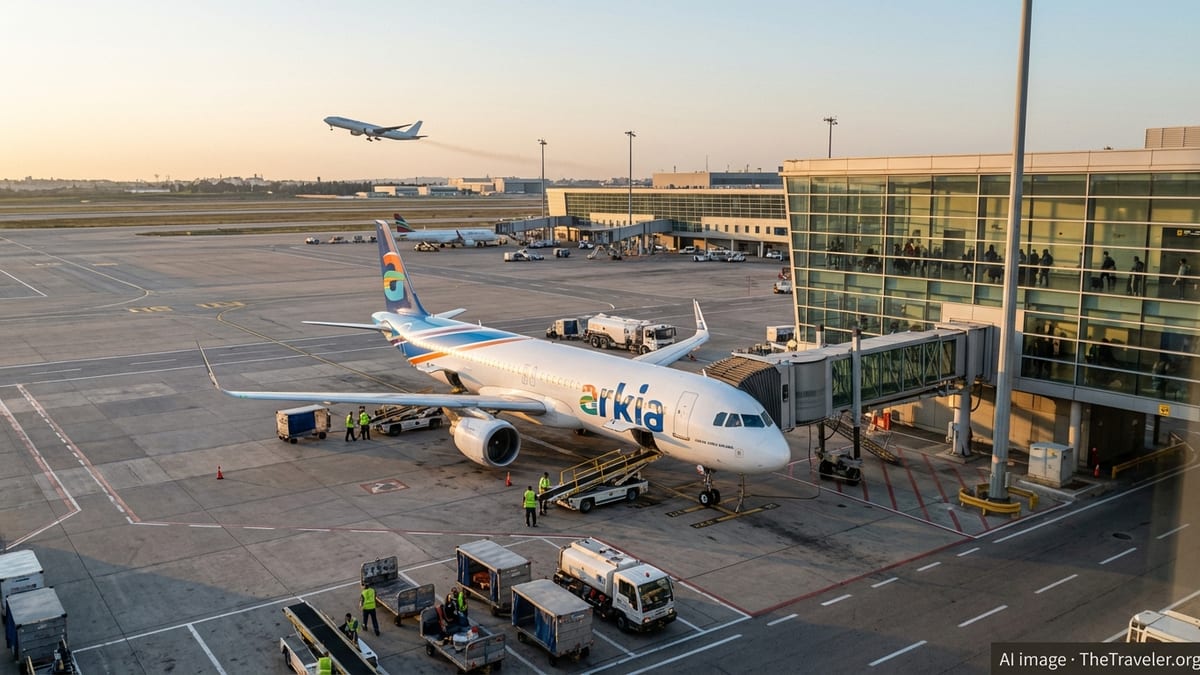
Arkia Israeli Airlines’ much-anticipated plan to launch a new direct route between Tel Aviv and Minsk in February 2026, heralded as a fresh channel for tourism and business growth between Israel and Belarus, has run into unexpected turbulence, with the carrier suspending ticket sales and putting the service on hold just as flights were due to begin.
Launch Plans Marked a Symbolic Reconnection
When Arkia first announced in December 2025 that it would restart direct flights between Tel Aviv and Minsk in early February 2026, the news was welcomed as a symbolic step toward normalizing air links between Israel and Belarus after years of disruption. The route, scheduled twice weekly on Mondays and Fridays, was marketed as a convenient bridge for tourists, business travelers and members of the Belarusian diaspora in Israel.
The plan followed a broader trend of restoration in the region’s aviation network. Belarusian flag carrier Belavia confirmed it would resume its Minsk–Tel Aviv service on January 8, 2026, ending an almost four-year suspension brought on by sanctions and political tensions. With Arkia set to join Belavia on the corridor only weeks later, stakeholders on both sides anticipated robust competition, more capacity and easier point-to-point connectivity.
Beyond its operational significance, the new Arkia route was seen as part of the airline’s regional expansion strategy. After adding long-haul services from Tel Aviv to New York and strengthening key European links, a renewed presence in Eastern Europe fit into the carrier’s effort to diversify markets and tap into emerging demand patterns.
For tourism officials and travel agents, the February launch date was especially timely. It allowed packaging city breaks and winter escapes around Ben Gurion and Minsk National airports, feeding into spring and summer booking cycles and positioning both capitals as gateways for wider regional exploration.
Insurance and Sanctions Complicate the Takeoff
Yet as the inaugural date approached, warning signs emerged. Flights scheduled from February 2, 2026 onward failed to appear in the live departure boards at Minsk National Airport, and travelers reported that Arkia’s website no longer displayed Minsk as a bookable destination. By early February, it became clear the service had been effectively shelved, despite earlier assurances and ongoing promotion on third-party booking platforms.
Industry sources in Israel and Belarus pointed to a key stumbling block: flight insurance. Against the backdrop of ongoing geopolitical tensions and European sanctions targeting Belarus, major European insurers reportedly refused to underwrite commercial operations to Minsk. Without comprehensive insurance, Arkia could not safely or legally operate the planned route, regardless of demand or scheduling commitments.
According to reports in regional aviation media, Arkia appealed to Israeli authorities for state-backed insurance coverage, mirroring arrangements used to support flights into other higher-risk destinations. However, those talks did not yield a swift solution ahead of the planned February start date. With no viable insurance framework in place, the airline had little choice but to halt ticket sales and pause implementation.
The episode underscores how non-commercial factors, particularly sanctions-related risk assessments by financial and insurance institutions, can exert decisive influence over air connectivity. Even where regulatory permissions and bilateral air service agreements exist, lack of insurability can ground routes that are otherwise operationally and commercially attractive.
Tourism and Business Hopes Put on Hold
The abrupt standstill is a setback for stakeholders who had banked on renewed Israeli–Belarusian air links to catalyze visitor flows and investment. Tour operators had looked to bundle Minsk with other regional city destinations for Israeli travelers, promoting its Soviet-era architecture, cultural festivals and proximity to national parks as differentiating draws compared with more crowded European capitals.
On the Belarusian side, the route promised better access to Israel’s vibrant tech ecosystem, medical tourism sector and religious heritage sites. Business chambers had highlighted opportunities in pharmaceuticals, agricultural technology and IT services as sectors that could benefit from faster, direct travel between the two countries’ commercial centers.
Belavia’s resumed Tel Aviv flights partially restore capacity on the corridor, but the absence of Arkia’s planned service reduces competition, frequency and schedule flexibility for passengers. For corporate travelers who value redundancy and choice in carriers, the single-operator scenario may dampen enthusiasm for building new ties or expanding existing ones.
In practical terms, many travelers are once again reliant on one-stop itineraries via third countries when Belavia schedules do not match their needs, adding time and uncertainty to trips that were expected to become straightforward nonstops from early 2026.
Arkia’s Broader Network Strategy Remains in Focus
Despite the setback in Minsk, Arkia continues to push ahead with a broader network strategy that has seen the airline expand well beyond its traditional domestic and short-haul Mediterranean focus. In 2025 the carrier inaugurated direct long-haul flights between Tel Aviv and New York, progressively upgrading aircraft and introducing a dedicated business-class cabin to compete on comfort and service.
At the same time, Arkia remains active on core European routes and popular leisure destinations, while reinforcing domestic connectivity between Ben Gurion Airport and Eilat’s Ramon Airport. The airline’s ability to flex capacity across different markets has been crucial as Israel’s aviation sector adjusts to shifting demand patterns and security concerns.
Industry analysts note that the Minsk experience may encourage Arkia and other Israeli carriers to evaluate political risk and insurability more intensively when planning new destinations, particularly in regions affected by sanctions or rapidly evolving diplomatic dynamics. This does not necessarily preclude future service to Belarus, but it may push airlines to seek firmer governmental guarantees and multilateral solutions before publicly announcing launch dates.
For now, Arkia’s focus appears to be on consolidating growth where operational conditions are more predictable, even as it keeps a watching brief on emerging opportunities in Eastern Europe and the post-Soviet space.
Prospects for Restoring Full Connectivity
Looking ahead, the key question for travelers and businesses is whether full, multi-carrier connectivity between Israel and Belarus can still be achieved. Belavia’s early 2026 restart of Minsk–Tel Aviv flights represents an important foundation, but the original vision was of at least two airlines sharing the route, anchoring regular traffic and stabilizing fares.
Any revival of Arkia’s Minsk ambitions is likely to depend on progress in two areas: an improved geopolitical climate that eases sanctions pressure on Belarus, and a workable insurance mechanism that satisfies both regulators and underwriters. Israeli government support, whether through direct guarantees or participation in risk-sharing pools, could prove decisive if policymakers judge the route to be of strategic value for diaspora ties and economic cooperation.
In the meantime, businesses and leisure travelers will continue to navigate a more fragmented landscape, weighing the convenience of Belavia’s nonstops against the flexibility and alliance benefits of connecting itineraries through other hubs. Travel advisors are recommending that passengers build additional time into their journeys and monitor schedule changes closely as the situation evolves.
While Arkia’s February 2026 launch window has closed for now, the strong underlying demand for travel between Israel and Belarus, coupled with longstanding cultural and economic links, suggests that the idea of a robust Tel Aviv–Minsk air bridge is paused rather than permanently cancelled. How quickly it can be revived will depend less on market appetite and more on whether politics, policy and insurance frameworks can align in the skies above Eastern Europe.