

More news on this day
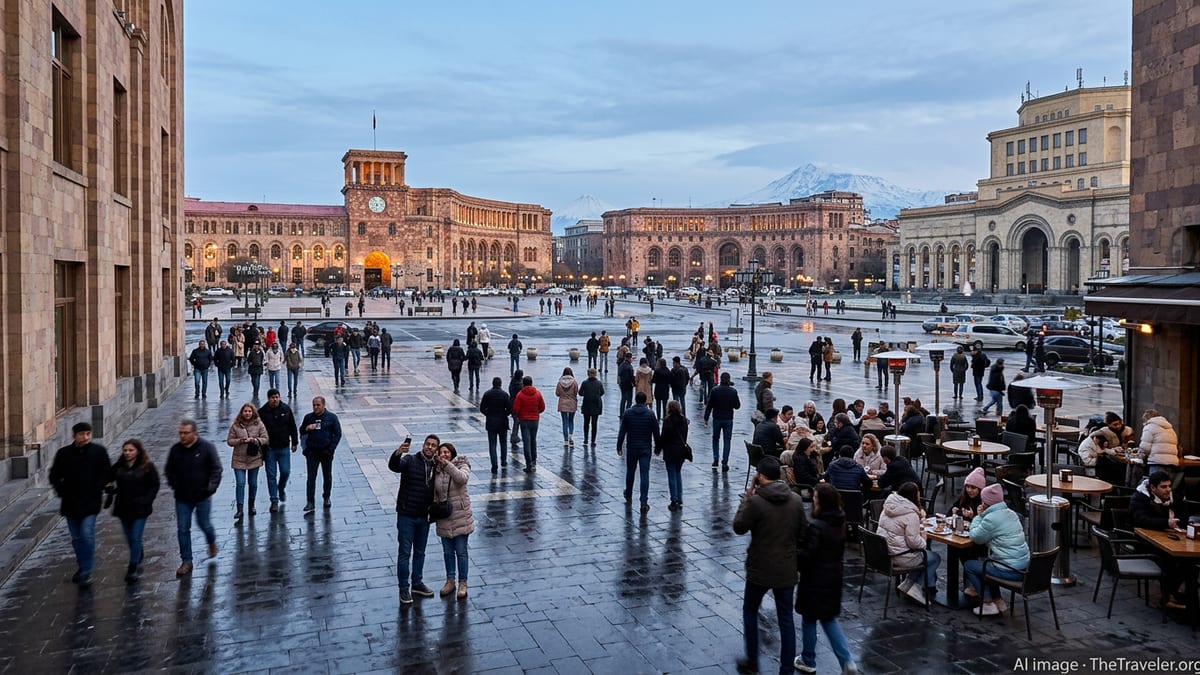
Tourist arrivals to Armenia in February 2026 increased by more than three percent compared with the same month a year earlier, according to early estimates from officials and industry sources, providing a timely boost to a tourism sector that has become one of the country’s most dynamic engines of growth.
Modest Growth After a Volatile Two Years
The February uptick follows a period of volatility in Armenia’s visitor numbers, with a sharp rebound in 2023, a pullback in 2024 and a more measured recovery in 2025. Provisional data for 2025 show just over 2.26 million tourist arrivals, up around 2.5 percent from 2024 but still slightly below the 2023 peak. Against that backdrop, a mid-winter gain in 2026, even in the low single digits, is being interpreted by officials as a sign that the market is stabilizing.
While full official statistics for February 2026 have yet to be released, tourism and economic briefings point to year-on-year growth slightly above three percent for international arrivals. That pace is more moderate than some of the double-digit jumps seen immediately after the pandemic and during the early stages of regional upheavals, but analysts note that it reflects healthier, more sustainable demand driven by leisure and business travel rather than one-off surges.
Industry observers say the composition of visitors is also gradually shifting. Russia, Georgia and Iran remain core source markets, but arrivals from Western Europe, the Gulf and North America have been inching upward as new routes open and Armenia’s profile rises on international travel platforms. The February figures suggest that this diversification trend is continuing into 2026.
Seasonal factors also play a role. February is traditionally one of the quieter months for Armenia’s tourism industry, dominated by city breaks in Yerevan, winter sports in resorts such as Tsaghkadzor, and pilgrimage or cultural trips. A measurable rise in visitor numbers at this time of year can help smooth cash flow for operators who otherwise rely heavily on the late-spring and summer high season.
Policy Moves and Easier Access Driving Demand
The latest increase comes as the Armenian government pushes a strategy centered on easier access and targeted promotion. In February 2026, authorities temporarily waived visa requirements for certain travelers, including visitors from the United States, in a bid to stimulate arrivals. The policy, highlighted by the Tourism Committee chair, is framed as an effort to encourage more spontaneous trips, from short city escapes to longer exploratory journeys across the country.
Officials have also emphasized air connectivity as a critical lever for growth. Talks are under way to expand the long-haul network from Yerevan, with tourism authorities confirming negotiations around future nonstop links to major hubs such as Los Angeles. While any such route would take time to materialize, industry stakeholders say the signal is clear: Armenia aims to plug more directly into long-haul markets that can deliver higher-spending visitors and more diversified source countries.
At the same time, the government has been investing in Armenia’s brand abroad. Campaigns in regional markets underscore the country’s mix of historic monasteries, mountainous landscapes and evolving food and wine scene, while efforts in Europe and North America highlight Armenia as an emerging destination for cultural discovery and soft adventure. The incremental rise in February arrivals is being read as early feedback that these messages are resonating.
Behind the scenes, policy planners are monitoring capacity and infrastructure. Yerevan’s Zvartnots airport has been handling a steadily growing flow of passengers, and authorities are under pressure to ensure that border formalities, ground transport and accommodation keep pace. A smoother arrival experience, tour operators say, will be essential if the current 3 percent monthly gains are to be scaled into the more ambitious targets laid out for the end of the decade.
Economic Impact on Hotels, Hospitality and Regions
Tourism has become a central pillar of Armenia’s wider economic strategy, contributing to foreign exchange earnings, job creation and investment in services. A more than three percent improvement in arrivals for February, while modest in percentage terms, translates into thousands of additional visitors spending on hotels, restaurants, transport and excursions at a traditionally slower time of year.
Hotel operators in Yerevan report slightly higher occupancy compared with February 2025, particularly among midrange and boutique properties that appeal to independent travelers. Guesthouses and smaller family-run accommodations in regional centers such as Dilijan, Gyumri and Goris also say they are seeing a gradual increase in winter bookings, helped by domestic events and growing international interest in off-season travel.
Restaurants and cafes in the capital have benefited from this trend, with longer weekend stays and a noticeable rise in spending on gastronomic experiences. Armenia’s positioning as a wine and culinary destination, reinforced by events like Yerevan Wine Days and regional food festivals, is feeding into demand even outside peak months, as visitors seek cellar tours, tastings and farm-to-table dining.
For rural communities, even marginal increases in February tourism can be meaningful. Local guides, drivers, craftspeople and small tour agencies often operate on slim margins, and an extended season brings more stable income. Regional authorities are watching the latest data closely as they lobby for improved road infrastructure, signage and digital connectivity, all seen as necessary to turn isolated villages and historic sites into viable year-round attractions.
Regional Competition and the Push for Differentiation
Armenia’s February performance is being scrutinized in the context of a broader tourism rebound across the wider region. Nearby destinations in the Caucasus and the Middle East have reported solid gains in early 2026, with several recording higher growth rates than Armenia’s three-plus percent. That competitive backdrop is sharpening the focus in Yerevan on how to differentiate the country’s offer.
Tourism experts argue that Armenia cannot compete purely on volume or beach tourism, and instead must lean into its strengths: deep historical heritage, compact geography, year-round mountain landscapes and a growing reputation for hospitality and safety. The February numbers, they say, are encouraging to the extent that they reflect a rising share of visitors who stay longer, travel beyond the capital and seek immersive experiences in culture, nature and cuisine.
The government’s medium-term goal is to lift tourism revenue at a faster pace than raw arrival numbers, emphasizing value over volume. That implies attracting a higher proportion of travelers from markets with greater spending power, as well as encouraging repeat visits and off-season travel. The latest increase in February aligns with that strategy, as it helps fill what used to be pronounced seasonal gaps.
Analysts caution, however, that regional competition for tourists is intensifying. Countries across the Caucasus and the broader neighborhood are expanding air connections, upgrading resorts and courting the same segments of adventure and cultural travelers. Armenia’s challenge will be to maintain the current growth momentum while investing in distinctive experiences that cannot easily be replicated elsewhere.
Outlook for the 2026 Tourism Season
With the winter months showing early signs of improvement, attention is turning to how Armenia will perform in the key spring and summer seasons of 2026. Tourism and economic briefings point to a cautiously optimistic scenario, assuming regional stability, steady air capacity and continued implementation of visa facilitation and marketing measures.
Industry participants expect city tourism in Yerevan to remain a core driver, supported by conferences, business travel and a growing calendar of cultural events. Mountain and rural tourism is projected to grow as well, particularly if infrastructure upgrades move ahead and more international operators include Armenia in multi-country Caucasus itineraries. A strong second and third quarter could lift full-year arrivals meaningfully above the 2025 total.
Risks remain, ranging from geopolitical tensions to cost-of-living pressures in key source markets that could curb discretionary travel. Environmental and capacity concerns are also coming into sharper focus as Armenia seeks to scale up visitor numbers without straining fragile mountain ecosystems and heritage sites. Sector stakeholders are increasingly discussing sustainable tourism standards, carrying capacity assessments and incentives for eco-friendly practices.
For now, the more than three percent rise in February tourist arrivals offers the sector a welcome signal of resilience. If sustained, similar gains over the coming months would bring Armenia closer to its long-stated objective of turning tourism into a stable, high-value cornerstone of the national economy rather than a volatile byproduct of regional shifts.