

More news on this day
Saudi Arabia’s Aroya Cruises has paused its Arabian Gulf itinerary and suspended upcoming sailings as a fast-evolving security crisis disrupts cruise operations, airspace and port access across the region, leaving thousands of passengers in limbo from Dubai to Doha.
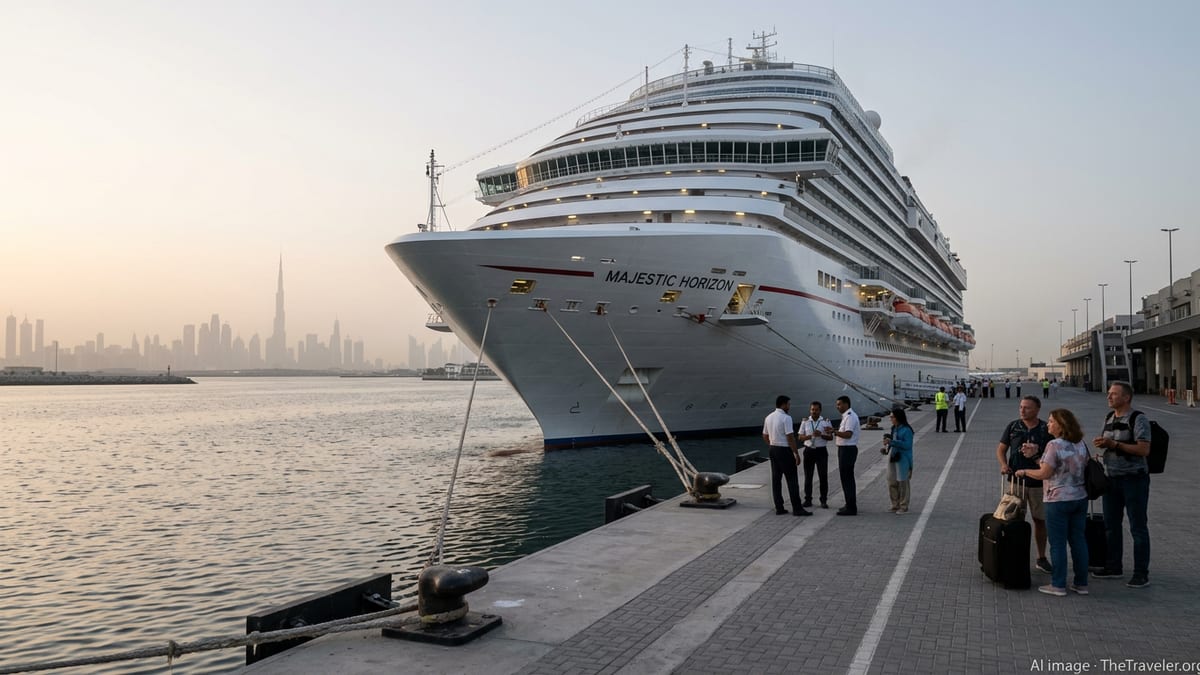
Safety Concerns Force Sudden Suspension of Gulf Program
The Saudi-backed newcomer Aroya Cruises, operated by Cruise Saudi, has halted its Arabian Gulf program after regional tensions around the Strait of Hormuz and neighboring waters intensified this week. Industry reports indicate that the line’s flagship Aroya Manara is currently docked in Dubai, where it suspended its itinerary last weekend as military activity and transport restrictions escalated.
The cruise line launched its inaugural Arabian Gulf season only in late February, offering itineraries linking the United Arab Emirates, Qatar and Saudi ports through early May. Those plans have now been upended by the security situation, with maritime authorities and international bodies urging commercial operators to avoid high-risk areas until conditions stabilize.
In a statement cited by regional trade media, Aroya reiterated that the safety, security and comfort of its guests and crew remain its highest priority. The company said onboard teams are working with guests to arrange onward travel where possible, although flight cancellations and airspace closures across parts of the Middle East are complicating those efforts.
With the Aroya Manara laid up in Dubai and the Gulf cruise season effectively on hold, the pause marks a significant setback for Saudi Arabia’s ambitions to build a homegrown cruise brand centered on the wider Gulf and Red Sea.
Regional Security Crisis Disrupts Cruise and Cargo Traffic
Aroya’s decision comes amid a broader shutdown of cruise activity in the Arabian Gulf, triggered by a spike in regional hostilities and a de facto closure of the Strait of Hormuz. Shipping advisories and carrier updates describe a volatile situation that has seen container lines and cruise operators reroute vessels, suspend transits or order ships to take shelter at port.
According to maritime industry updates, carriers such as Maersk, CMA CGM and Hapag-Lloyd have already paused or severely restricted movements through Hormuz and adjacent waters due to security threats and military operations. Cruise lines operating in the Gulf, including Celestyal Cruises, MSC Cruises and TUI Cruises, have also moved to cancel or suspend itineraries as governments and international agencies call for extreme caution.
Authorities and port agencies in the United Arab Emirates, Qatar, Bahrain and other Gulf states are reviewing operations daily as they respond to changing threat assessments. Airspace closures and flight disruptions across parts of the region, including suspensions to and from major hubs, are further complicating crew changes, passenger disembarkation and repatriation planning.
The combined impact has turned what was expected to be a growth season for Gulf cruising into one of the most serious operational crises the regional cruise sector has faced, affecting not only leisure travel but the wider logistics chain that supports it.
Passengers Face Uncertainty as Lines Coordinate Repatriation
For passengers, the suspension of Gulf itineraries has translated into an abrupt end to holidays and considerable uncertainty about how and when they will be able to travel home. Reports from ports such as Dubai, Abu Dhabi and Doha describe ships remaining alongside with guests kept on board while cruise lines work with local authorities and airlines to arrange departures.
Industry sources say lines are exploring a mix of options, including securing limited seats on commercial flights, coordinating charter services and staggering disembarkations to align with whatever air capacity is available. In some cases, guests have been advised that they may need to remain on board longer than planned while safe and practical routes are identified.
Aroya Cruises has indicated that its crew on the Aroya Manara are providing support to guests with rebooking and communications, although specific compensation policies for cancelled sailings have yet to be detailed publicly. Other operators in the region have begun offering refunds or future cruise credits to affected customers, setting expectations that Aroya may adopt similar measures as its response evolves.
Travel advisors are urging passengers booked on upcoming Gulf departures to stay in close contact with their cruise line or agent, monitor official travel advisories and avoid making nonrefundable onward arrangements until more clarity emerges.
Blow to Gulf Cruise Growth and Saudi Tourism Ambitions
The pause in Aroya’s Arabian Gulf program is a sharp setback for the Middle East’s emerging cruise market, which has invested heavily in new terminals and infrastructure to position the region as a winter-sun alternative to the Caribbean and Mediterranean. Ports such as Dubai, Abu Dhabi and Doha have spent years courting major brands, while Saudi Arabia has cast cruising as a pillar of its broader tourism diversification plans.
Aroya Cruises, backed by the Public Investment Fund through Cruise Saudi, was designed as a flagship for that strategy, tailored to appeal to both domestic and regional travelers with itineraries centered on Gulf cities and Saudi coastal destinations. Its inaugural season in the Gulf was meant to showcase the brand before expanding to additional routes in the Red Sea and beyond.
The current security crisis, however, underscores the vulnerability of cruise deployment to geopolitical events, particularly in choke points such as the Strait of Hormuz. While operators emphasize that such measures are precautionary and that ships and ports themselves are not direct targets, the perception of risk is enough to derail carefully laid growth plans.
Analysts note that rebuilding confidence will take time even after restrictions ease. Cruise lines will likely demand clear, sustained improvements in the security environment and assurances from maritime and aviation authorities before restoring full seasonal schedules in the Gulf.
What the Pause Means for Future Arabian Gulf Sailings
In the short term, Aroya’s pause effectively removes one of the newest players from the Arabian Gulf market just as the season was ramping up. Prospective guests for late spring sailings now face either cancellations or rebookings on alternative itineraries outside the region, if available.
Looking ahead, industry observers expect cruise lines to rethink deployment strategies in and around the Gulf, possibly shortening seasons, diversifying embarkation ports or shifting capacity to less volatile regions until the risk profile improves. New entrants like Aroya may prioritize Red Sea or Mediterranean programs over Gulf itineraries in the near term, depending on how long restrictions on Hormuz and regional airspace remain in place.
For travelers, the episode is likely to reinforce the importance of flexible booking conditions, comprehensive travel insurance and close attention to geopolitical developments when planning itineraries in politically sensitive regions. Although cruise contracts typically reserve broad rights to alter or cancel sailings for safety reasons, passengers increasingly expect transparent communication, timely updates and fair compensation when plans change so dramatically.
For now, Aroya Cruises and its peers are signaling that caution will prevail. With safety and security placed above commercial considerations, the resumption of Arabian Gulf sailings will depend on a sustained improvement in the regional situation rather than on any fixed timetable.