

Landing in India for the first time can feel intense: the heat, the crowds, the swirl of languages and signs. Yet the country’s major international airports are steadily becoming more user friendly, with clearer procedures for immigration, better options for getting cash and mobile data, and a growing mix of official taxis and app based rides. Knowing what to expect in the first 90 minutes after you step off the plane will make your arrival calmer, safer, and far less confusing.
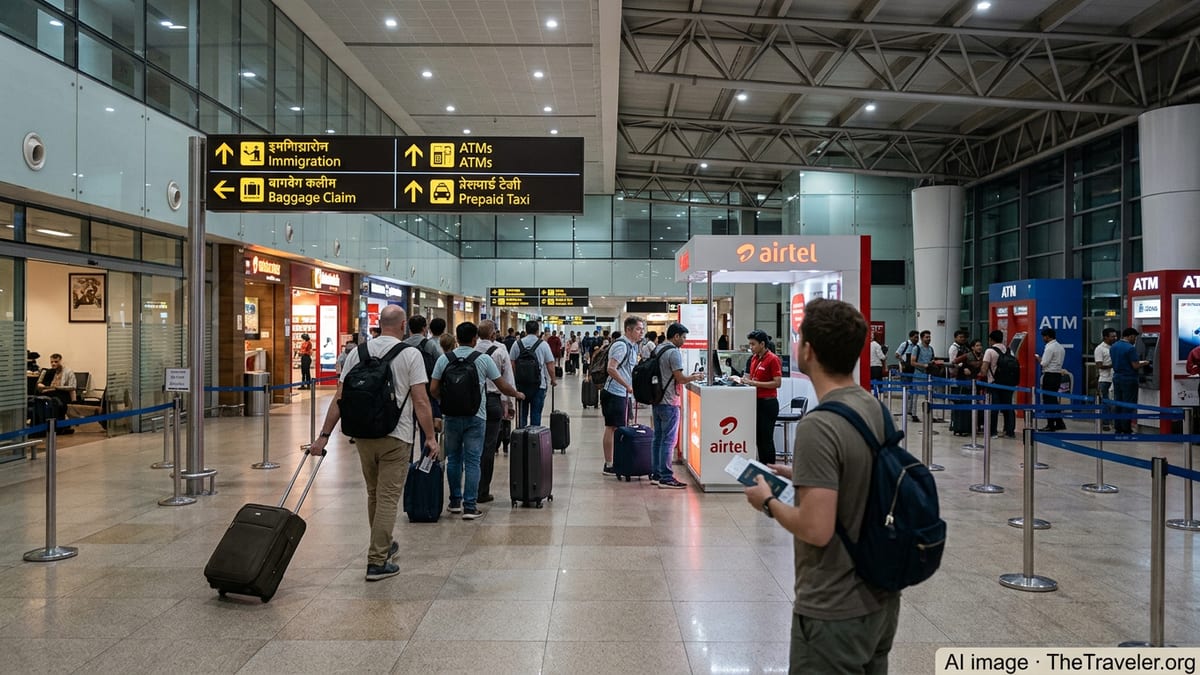
Understanding Immigration Formalities on Arrival
Every international passenger arriving in India must clear immigration before collecting baggage. The exact process you follow depends on your passport, visa type, and whether you have pre registered for any fast track programs. Most visitors enter on an electronic visa, but traditional stamped visas and visa on arrival arrangements for certain nationalities also exist. Make sure you know which visa you hold and that its details match your passport and flight dates before boarding your plane, because any mismatch is usually handled at the airline check in desk, not at Indian immigration.
On arrival, you will be directed to separate lines for Indian passport holders and foreign nationals. Automated e gates are gradually being introduced at major hubs such as Delhi, Mumbai, Bengaluru, and others, primarily for Indian citizens and certain trusted traveler categories, but most foreign tourists still use staffed counters. Officers typically ask a few standard questions about the length and purpose of your stay, where you plan to stay first, and your onward travel plans. Have your accommodation address, return or onward ticket, and a rough outline of your itinerary ready to explain in simple terms.
Biometric collection is a routine part of the process for many categories of foreign visitors. Fingerprints, a facial photograph, or both may be captured directly at the counter using electronic scanners. This can take a little extra time if there are technical issues, so stay patient, follow the officer’s instructions, and keep your hands clean and dry to avoid repeated scans. Children may sometimes be exempted from fingerprints but normally still have a photograph taken.
If you are arriving on a long term visa, such as employment or study, you may receive an additional entry stamp or instructions related to foreigner registration, which is usually completed later at a local office in your city of residence. For ordinary tourists on a short stay this is not required, and you can proceed directly to baggage claim once your passport has been stamped and handed back.
The New e Arrival Card and Other Entry Forms
India has been phasing out traditional paper disembarkation forms in favor of a digital e arrival card for most non Indian nationals. This online form typically asks for your personal details, passport number, flight information, address in India, and a few basic customs and health declarations. Airlines and consulates increasingly advise passengers to complete it before flying, sometimes up to 72 hours before departure. Doing it in advance will usually speed your progress through immigration and reduce the risk of being pulled aside to complete details at kiosks in the arrivals hall.
If you forget to complete the e arrival card, you are generally not denied boarding, but you should expect longer processing times on arrival. Airport staff may direct you to terminals in the immigration area where you can fill out the form online, often using the same details you would previously have written on paper. Lines for passengers who have not completed the form can move significantly slower, so it is wise to treat the e arrival card as part of your pre departure checklist alongside printing your visa confirmation and hotel booking.
Indian citizens and some categories of Overseas Citizen of India cardholders may be exempt from the e arrival requirement, in line with the government’s effort to treat them similarly to nationals for immigration clearance. However, rules can change and may vary slightly between airports, so check the latest guidance from the nearest Indian consulate or from your airline shortly before you travel. When in doubt, completing the form seldom hurts and can only help avoid delay.
Regardless of whether you complete an e arrival card, you should still carry printed copies or easily accessible digital versions of key documents: your visa or visa approval email, travel insurance confirmation, hotel reservations for at least your first few nights, and onward or return tickets. Having these ready to show an immigration officer on a phone or on paper can quickly resolve most routine questions.
Customs, Health Declarations, and What You Can Bring In
After immigration and baggage claim, you will pass through customs. Many travelers choose the green channel marked for passengers with nothing to declare, while those carrying dutiable goods or large quantities of cash must use the red channel. India maintains relatively standard personal allowances on items such as alcohol, cigarettes, and gifts, and these can change periodically. If you are carrying high value electronics beyond your own personal devices, professional camera equipment, or new items that appear to be for resale, you may be asked for invoices or may need to pay duty.
Currency rules are important if you are carrying substantial cash. Travelers bringing in large amounts of foreign currency or Indian rupees may be required to declare this at customs and complete an additional form. The exact thresholds can vary over time, so if you are transporting several thousand dollars’ worth of cash or equivalent in another currency, treat it as something you may need to declare. In practice, most tourists carrying ordinary holiday cash and personal electronics pass through the green channel without any questions.
Occasionally you may be asked about food items, plant products, or animal products in your luggage. India, like many countries, applies restrictions to certain agricultural and animal based products to protect local ecosystems and public health. Commercial quantities or items in unlabelled packaging can attract scrutiny, whereas sealed, branded snacks for personal consumption are much less likely to be an issue. If you are carrying medication, especially prescription drugs, keep them in original packaging and carry a doctor’s note or prescription if possible.
Health declarations, when in force, are usually completed electronically or on a simple card and can involve questions about recent illness, vaccinations, or visits to particular regions. While India no longer uses the intensive health screening associated with the peak of the pandemic, health controls can resurface temporarily during outbreaks of particular diseases. Travelers transiting via multiple countries in a short period should be prepared to answer basic questions about their route.
Getting Cash on Arrival: ATMs, Currency Exchange, and Digital Payments
Once you exit customs, your first practical hurdle is often money. Major Indian airports typically offer a mixture of bank ATMs inside or just outside the customs area and several currency exchange counters near the arrivals exit. Airport exchange rates are usually less favorable than those in city centers, and commissions can be high, so many travelers choose to exchange only a modest amount at the airport to cover immediate expenses such as a taxi, snacks, and a local SIM, and then withdraw or exchange more money later in town.
ATMs in arrival halls are operated by both Indian and international banks, but reliability can vary. Machines occasionally run out of cash, decline foreign cards, or reject certain networks. It is wise to carry at least two different cards from different issuers if possible, and to keep a small reserve of widely accepted cash such as euros or US dollars in case the first ATM fails. If your card is declined at one machine, try another from a different bank rather than repeatedly retrying the same terminal.
India’s domestic digital payment systems have grown rapidly. Unified Payments Interface, commonly known as UPI, is widely used for small transactions, taxis, and shops, and there is a slow but steady expansion of options for foreign visitors to link international cards to local payment apps. Adoption and ease of use vary between airports and cities, and some solutions require a local phone number, but the trend is clearly toward making cashless payments easier for short term visitors. Still, you should not assume that you can rely exclusively on digital wallets the moment you land.
For a smoother first day, plan to have three layers of payment methods: a small amount of home currency that you can exchange if needed, at least one debit or credit card that works at international ATMs, and the ability to set up a local compatible digital payment app once you have a SIM and data. This layered approach reduces your exposure to problems with any single method and lets you choose the best available rate at each step of your journey.
Buying a Local SIM Card or eSIM at the Airport
Staying connected from the moment you step out of the terminal makes everything else easier, from ordering a ride to confirming your hotel pickup. At large Indian airports, you will often find telecom kiosks in the arrivals area offering prepaid tourist SIM cards or, increasingly, eSIM activation. Availability, opening hours, and documentation requirements, however, can differ sharply between airports and operators, and they have changed significantly in recent years as regulations have been updated and mobile registration has moved online.
In many cases, you will be asked to provide your passport, visa details, and a local address, usually your first hotel or guesthouse. Staff at official telecom counters are used to assisting foreign travelers and can help you complete digital registration forms and upload scans of your documents. Activation times vary: some SIMs become active within minutes, while others may take several hours to register fully on the network, particularly if manual verification is required. For this reason, it is a good idea to arrange a basic transfer to your first hotel in advance so that you are not entirely dependent on having an active local number immediately.
Some airports participate in tourism initiatives that offer complimentary or discounted SIM cards to visitors arriving on certain visa types, particularly e tourist visas. These offers typically include a small initial bundle of data and calls and may require you to visit a specific counter near the arrivals exit with proof of your visa category. Because such schemes can change quickly, consider any free SIM offer a welcome bonus rather than something to rely on, and have a backup plan to purchase a regular prepaid plan if necessary.
If you cannot obtain a physical SIM at the airport, look into eSIM options from major Indian operators or international roaming eSIM providers that sell India specific packages. Travelers who have recently reported difficulty getting a SIM in person at some airports have sometimes found that buying an eSIM from an official kiosk in the terminal or from a reputable digital provider before departure provides a smoother experience. Whatever route you choose, ensure your phone is unlocked and compatible with Indian mobile bands, and keep your home number reachable through Wi Fi calling or messaging apps when needed.
Airport Transfers: Taxis, App Cabs, and Hotel Pickups
Getting safely from the airport to your first accommodation is one of the most important parts of your arrival. Indian airports typically offer three broad categories of transfers: official prepaid taxis, app based cabs such as Ola and Uber or regional services, and private hotel or travel agency pickups. Each has advantages and potential drawbacks, and the mix of services can vary between cities as airports renegotiate their agreements with ride hailing companies and local taxi unions.
Prepaid taxi counters are a longstanding option and are usually located in or just outside the arrivals hall. You tell the clerk your destination, pay a fixed fare in advance, and receive a slip that you hand to the driver waiting at a designated rank. This system reduces the scope for haggling and surprise surcharges, and it can be particularly useful if you have not yet obtained local currency or a SIM card, as some counters accept card payment. Vehicles range from older basic taxis to air conditioned sedans; quality and comfort can vary, but the process is relatively simple and visible.
App based cabs offer more transparency on fares and routes but are subject to changing airport rules. At some hubs, ride hailing pickups are allowed directly outside arrivals at marked zones; at others, passengers must walk or take a shuttle to specific parking areas or multi level car parks. Airports may charge ride hailing companies an additional pickup fee that is passed on to the passenger, making app rides more expensive from the airport than from elsewhere in the city. Furthermore, peak arrivals in the late evening or early morning often see higher surge pricing and longer wait times.
Hotel and tour operator transfers can be convenient, especially after a long flight. Many mid range and high end hotels in major cities offer either complimentary or paid airport pickups, with a driver holding a sign in the arrivals area. These services tend to be more expensive than a standard taxi but can be worth the premium if you are arriving very late, are unfamiliar with the city, or are traveling with several bags or children. If you choose this option, confirm the price, vehicle type, and meeting point in advance and make sure you have the hotel phone number handy in case of delays.
Staying Safe and Avoiding Common Scams on Arrival
Most international arrivals in India pass without incident, but first timers are especially vulnerable to minor scams and aggressive touting in the vulnerable period between leaving customs and finding a reliable ride. The most common issues involve unofficial taxi drivers or touts who approach you directly inside or just outside the terminal, offering rides at inflated prices or claiming that official counters are closed. In almost all circumstances you are better off declining unsolicited offers politely and walking directly to an official prepaid taxi counter, a clearly marked app cab pickup zone, or a pre arranged hotel representative.
Be cautious if anyone tells you that your hotel is closed, fully booked, or in a dangerous area and suggests that you change to a different property on the spot. This is a long running scam in several countries, including India, and is often linked to commissions paid by budget hotels or guesthouses. Instead, insist on being driven to your original booking unless you can independently confirm a problem via a phone call or a message from the property itself. Keeping printed or offline copies of your reservation with the address in both English and, where possible, in the local script will help you and your driver locate it more easily.
Inside the airport, keep a close eye on your valuables, especially while juggling forms, bags, and new SIM cards. Pickpocketing is uncommon within the secure zones but can occur in crowded arrival halls and taxi queues. Use bags that close securely, avoid displaying large amounts of cash, and if possible, use a money belt or interior pocket for passports and primary cards. When paying for taxis or SIM cards, count your change and resist pressure to rush through a transaction if something does not add up.
Finally, consider your physical well being. After long flights, dehydration, fatigue, and the shock of a new climate can leave you more susceptible to stress and poor decisions. Before leaving the terminal, take a few minutes to drink water, visit a restroom, and orient yourself using the airport’s wayfinding signs and maps. A few small pauses inside the controlled environment of the airport can pay off in a smoother, safer transition into the city beyond.
The Takeaway
Arriving at an airport in India no longer needs to feel like an ordeal. With immigration systems moving online, more reliable options for getting cash and data, and a richer mix of official and app based transport, the first stage of your trip is easier to navigate than ever. Yet the experience still rewards preparation: completing the necessary forms in advance, carrying backup payment methods, understanding how to obtain a SIM card, and knowing where to find official taxis will help you avoid the small frictions that can sour a long awaited arrival.
Think of your first ninety minutes as a sequence of manageable steps rather than a single overwhelming blur. Clear immigration with the right documents ready, pick up your bags and walk calmly through customs, obtain only the money and connectivity you need to reach your first stop, and choose a transfer that balances cost, safety, and comfort. By approaching your arrival in this structured way, you create the mental space to appreciate your first real glimpses of the country beyond the terminal doors.
India’s airports are still evolving, and conditions differ between cities and over time, so it pays to double check the most recent guidance from your airline or consulate before departure. However, the core principles of a smooth arrival remain stable: prepare early, keep documents and essentials easily accessible, resist pressure from unsolicited helpers, and give yourself time to adjust. Follow these basics, and you will step into India with confidence, ready for the journey ahead.
FAQ
Q1. Do I need to fill out an arrival card when flying into India?
Most non Indian nationals are now expected to complete a digital e arrival card before travel rather than a paper form. Rules can vary slightly, so check your airline’s latest guidance, but filling it in online in advance is strongly recommended.
Q2. How long does immigration usually take on arrival?
At major airports, immigration can take anywhere from 20 minutes to over an hour, depending on time of day, number of arriving flights, and how many counters or e gates are open. Completing the e arrival card early and having documents ready typically shortens the wait.
Q3. Will my fingerprints and photo be taken at Indian immigration?
Many foreign visitors have biometric data such as fingerprints and a facial photograph collected on arrival as part of standard border procedures. This is normal and usually adds only a few minutes to the process unless there are technical delays.
Q4. Can I get cash from ATMs at the airport using a foreign card?
Most large airports have ATMs that accept major international cards, but occasional outages or network issues occur. It is sensible to try more than one bank’s machine if you have trouble and to carry a backup card or small amount of exchangeable cash.
Q5. Is it easy to buy a local SIM card when I land?
Telecom kiosks at many airports sell prepaid SIMs or eSIMs to foreign travelers, but opening hours, stock, and documentation requirements vary. Having your passport, visa details, and hotel address ready will make registration smoother.
Q6. Should I book a taxi in advance or use an app when I arrive?
If you prefer certainty after a long flight, arranging a hotel transfer or car through a trusted provider can be reassuring. Otherwise, official prepaid taxis and app cabs from marked pickup zones both work well, provided you avoid unlicensed drivers who approach you directly.
Q7. Are ride hailing apps allowed to pick up at all Indian airports?
Most major airports allow some form of app based pickup, but the exact rules, pickup locations, and surcharges differ between cities and can change. On arrival, follow airport signage or ask staff where the official app cab pickup point is located.
Q8. How much cash should I carry on arrival?
Carrying the equivalent of a modest amount in local currency or easily exchanged cash is usually enough for a taxi, SIM card, and small expenses on day one. You can then withdraw larger amounts from ATMs or use digital payments after settling into your accommodation.
Q9. What should I do if someone at the airport tells me my hotel is closed?
Remain cautious. Politely insist on contacting the hotel directly using the phone number or email on your booking before changing plans. This situation is often linked to scams that steer travelers toward other properties paying commissions.
Q10. Is it safe to arrive late at night at an Indian airport?
Indian international airports operate around the clock and are generally busy and well lit even late at night. As long as you use official taxis, app cabs from marked zones, or pre arranged hotel transfers, and keep normal travel precautions in mind, a late arrival is usually manageable.