

More news on this day
Wembley Stadium stages a major chapter in European football on Sunday 22 March 2026, as Arsenal and Manchester City collide in the Carabao Cup final in a matchup that has gripped supporters from England to Italy, Spain and Germany.
Get the latest news straight to your inbox!
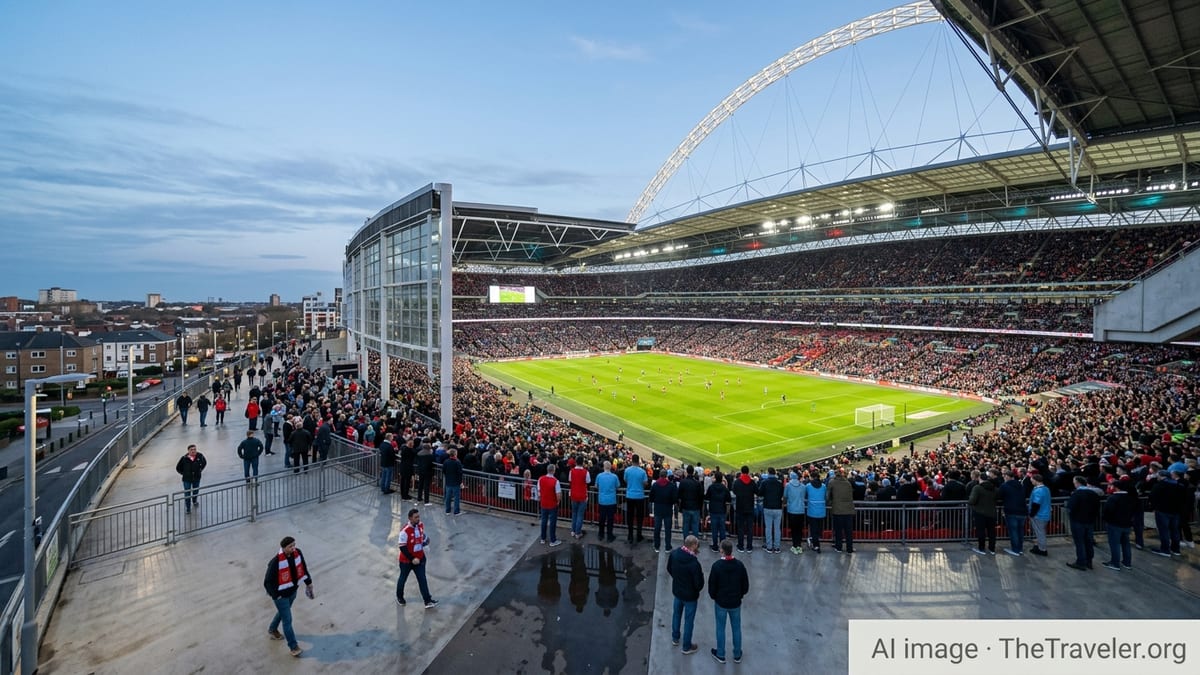
A Wembley Final Set Against a Fierce Premier League Title Race
The 2026 Carabao Cup final arrives at a moment when Arsenal and Manchester City are not only contesting silverware but are also deeply entwined in the Premier League title race. The meeting at Wembley feels less like a standalone cup tie and more like the latest installment in an ongoing struggle for domestic supremacy.
Publicly available information shows that both clubs have navigated demanding domestic and European schedules to reach this stage. Arsenal’s progress has run in parallel with a strong league campaign and deep runs in other competitions, while City are seeking to underline their status as a modern powerhouse by adding another trophy to an already crowded cabinet.
The setting amplifies the stakes. Wembley’s 90,000-seat bowl, familiar to both sets of supporters from previous finals and semi finals, offers a neutral yet highly symbolic stage. For Arsenal, it is another chance to end a long wait for League Cup success. For City, it is an opportunity to reinforce a record of sustained success in the competition and to send a message that they remain the team to beat in English football.
With kick off scheduled in the late afternoon local time, the match sits in a primetime window for audiences across Europe. That timing, combined with the profile of the clubs and the implications for the wider season, helps explain why the fixture is being treated as one of the standout events of the 2025 26 campaign.
Global Broadcast Window for Fans in England, Italy, Spain and Germany
The Carabao Cup has traditionally been rooted in the English domestic calendar, but the 2026 final demonstrates how far its reach now extends. Broadcast arrangements and streaming platforms mean that supporters in England, Italy, Spain and Germany can follow Arsenal against Manchester City in real time, turning the Wembley showpiece into a wider European event.
In England, the match sits alongside Premier League and FA Cup fixtures as one of the season’s marquee live broadcasts. Reports indicate that major sports channels continue to treat the League Cup final as a flagship occasion, with extensive build up programming, analysis and post match reaction.
Across continental Europe, the fixture benefits from long running rights deals that bundle English domestic competitions together. In Italy, Spain and Germany, the availability of dedicated football channels and on demand services has made it easier for supporters to track English clubs throughout the season, reinforcing interest when those same clubs meet in a high profile final.
For traveling supporters, Wembley remains a practical and symbolic destination. The stadium is well connected to London’s transport network and sits within reach of major airports that receive regular flights from Rome, Milan, Madrid, Barcelona, Munich and Berlin. As a result, the final is expected to attract not only local fans but also international visitors who plan a weekend around the match, further underlining its role as a global football occasion.
Arsenal’s Quest to Turn Promise into Silverware
Arsenal approach the 2026 Carabao Cup final with a clear sense of opportunity. The club’s recent seasons have been characterized by a resurgence in league performance and more consistent runs in European competition. Turning that progress into tangible silverware in a major domestic final at Wembley would mark a significant step.
Published coverage highlights how Arsenal’s route to the final has underlined both their attacking depth and their tactical flexibility. They have negotiated ties against Premier League opposition while managing a congested fixture list, rotating intelligently but still relying on a core group of players who have carried form across multiple competitions.
The narrative around Arsenal focuses on whether they can convert momentum into trophies. The League Cup has often been seen as a platform for emerging teams and managers to make a statement about their readiness to compete for the biggest prizes. For Arsenal, success at Wembley would reinforce the idea that their current project is reaching maturity and that the squad can handle the pressure of knockout football on the biggest domestic stage.
Defeat, by contrast, would add to the sense that the team still has a final step to take in order to match its performance levels with decisive results in key matches. That tension only increases the intrigue for neutral observers, particularly those following the club’s evolving story from abroad.
Manchester City’s Bid to Extend an Era of Dominance
For Manchester City, the 2026 Carabao Cup final represents another chance to secure silverware in a period defined by regular visits to Wembley. Publicly available information shows that City have made a habit of reaching and winning domestic cup finals over the past decade, and this season’s run continues that pattern.
The League Cup has often been a competition where City’s squad depth becomes most apparent. The club has been able to rotate without a significant drop in quality, using the tournament both to maintain rhythm for established players and to give opportunities to emerging talents. That balance has frequently proved decisive in the later rounds, where intensive schedules test the resilience of every squad.
City’s style of play, based on long spells of possession and coordinated pressing, can be particularly effective in one off matches at Wembley, where the wide pitch rewards teams that can stretch opponents and sustain pressure over 90 minutes. Their familiarity with the stadium and its surroundings also adds a layer of comfort that newer finalists might lack.
Another triumph in the Carabao Cup would further extend a cycle of success across domestic competitions. It would also serve as a response to any setbacks elsewhere in the season, offering a tangible reminder of the team’s capacity to deliver trophies even in campaigns where every objective cannot be met.
A Matchup with European Resonance
Although the Carabao Cup is a domestic tournament, the 2026 final between Arsenal and Manchester City carries clear European resonance. Both clubs feature regularly in the knockout stages of the Champions League and have strong followings in Italy, Spain and Germany, where English football retains a significant audience.
The tactical contrast between the sides is one of the elements that intrigues observers across the continent. Arsenal’s high tempo attacking patterns and willingness to commit numbers forward are often set against City’s more measured control of possession. The way these philosophies collide at Wembley provides a focal point for analysts and supporters who follow tactical trends closely.
The personalities on the touchline add another dimension. The long running relationship between the two managers and their shared background in modern European coaching continues to draw interest, particularly in countries where their work has already shaped perceptions of how top level football should be played.
For neutral fans in major footballing nations, the Carabao Cup final offers an additional opportunity to watch two elite squads compete outside the Champions League framework. The result will not only decide a trophy but may also influence the psychological balance ahead of further meetings in league and European competition later in the season, ensuring that this Wembley occasion will be closely watched far beyond England’s borders.