

More news on this day
Aruba is the latest Caribbean destination to spotlight Canada’s faster, lighter-touch travel system, aligning itself with regional neighbors that are courting Canadian visitors while quietly distancing their tourism strategies from lengthier U.S. visa queues and more complex entry procedures.
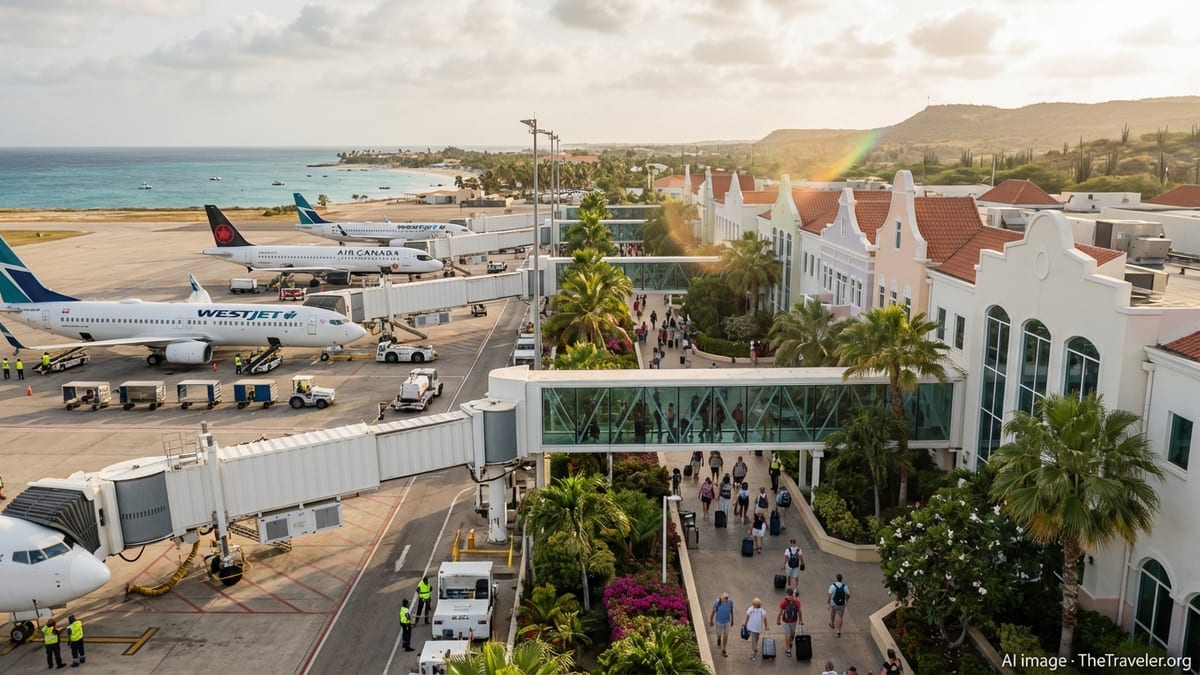
Aruba Taps Into Canada’s Growing Caribbean Travel Market
As Canadian travelers look beyond the United States for winter escapes, Aruba is positioning itself alongside Saint Lucia, the Bahamas, Barbados, Dominica, Jamaica, and the Dominican Republic as part of a Caribbean bloc that sees Canada as a strategic, relatively low-friction source market. These destinations already welcome Canadian passport holders visa-free for short stays, and tourism officials in the region say the ease of entry is increasingly central to how they market themselves in Canada.
Tourism data from 2024 and early 2025 show Canadians accounting for a steadily rising share of Caribbean arrivals, helped by frequent nonstop flights from cities such as Toronto and Montreal and the absence of advance visa paperwork. For Aruba and its neighbors, that combination means they can offer a seamless “book and go” experience at a time when many Canadian families are wary of the cost, paperwork, and uncertainty associated with U.S. immigration procedures.
Industry analysts note that this pivot does not represent an outright break with U.S. tourism, which remains vital for much of the region. Instead, Caribbean governments are layering in a more deliberate Canada strategy, betting that predictable entry rules, minimal red tape, and competitive airfares will keep Canadian visitor numbers rising, particularly during peak winter seasons.
Canada’s eTA Expansion Signals Trust in Select Caribbean States
Ottawa’s own moves have reinforced that trend. In recent years Canada has expanded the use of its electronic travel authorization, or eTA, to a wider group of “known traveller” countries, including several in the Caribbean. Citizens from eligible nations such as Saint Lucia, Saint Kitts and Nevis, Saint Vincent and the Grenadines, Trinidad and Tobago, and Antigua and Barbuda can now apply online for an eTA if they either hold a valid U.S. nonimmigrant visa or have held a Canadian visa within the past decade.
The eTA, which usually costs less than a standard visitor visa and can be approved within minutes, allows multiple short stays in Canada over several years when traveling by air. For Caribbean states, being admitted into this category is seen as a mark of confidence in their document security, border cooperation, and overall risk profile. It also creates a more balanced, two-way travel corridor between Canada and select island nations, with simpler processes on both sides.
Regional observers say Aruba and other tourism-heavy economies are closely watching these developments. While Aruba is not yet among the eTA-eligible visa-required states, its long-standing visa-free access for Canadians and its reputation as a stable, well-regulated destination align it with the broader Caribbean push to sit on the “trusted partner” side of Canada’s constantly evolving travel architecture.
Contrasting Canada’s Streamlined System With U.S. Backlogs
For many would-be visitors, the practical contrast between Canadian and U.S. travel requirements has become stark. Canada relies heavily on electronic pre-screening and a mix of visa-free access and light-touch eTA checks for low-risk travelers, which keeps costs and processing times relatively contained. The United States, by comparison, continues to depend on traditional consular interviews in many markets, where appointment backlogs can stretch for months and applicants must assemble extensive documentation.
Travel agents working in Toronto, Vancouver, and Calgary report that some clients who previously defaulted to U.S. vacations are now asking for Caribbean alternatives in part to avoid the unpredictability of U.S. visa processes for family members who are not Canadian citizens. In multi-generational households that include recent immigrants or permanent residents, securing U.S. entry permission for everyone can be challenging, while a Caribbean trip often involves no advance visa steps at all.
This shift is particularly visible in destinations such as Jamaica, the Dominican Republic, Barbados, and the Bahamas, where robust airlift from Canada and straightforward entry rules allow families to plan and book at much shorter notice. Aruba’s tourism board has been intensifying its own Canada-facing campaigns, leaning on the message that Canadians can arrive with just a valid passport and proof of onward travel, bypassing the sort of lengthy security interviews and in-person consulate visits associated with U.S. travel for many non-Canadian relatives.
Regional Coordination Strengthens the Caribbean’s Value Proposition
Aruba’s move comes as parts of the Caribbean experiment with deeper integration to streamline movement across their own borders. In late 2025, Barbados, Belize, Dominica, and Saint Vincent and the Grenadines implemented a landmark agreement granting their citizens the right to live and work indefinitely in one another’s territories without visas or work permits, echoing elements of the European Union’s free movement model.
While that accord is focused on intra-Caribbean mobility rather than Canadian tourists, it underscores a broader philosophy now shaping regional policy: that easier movement of people is an economic asset rather than a risk to be contained. For visitors from Canada, the message is simple. The more Caribbean states work together on coherent, predictable entry rules, the more attractive the region becomes as a whole, whether travelers are headed to Aruba, Saint Lucia, Jamaica, or beyond.
Some governments are also coordinating air service development and marketing campaigns targeting Canada, pooling resources to negotiate with major airlines and tour operators. That approach enables smaller destinations, including Dominica and Grenada, to ride the same wave of demand that has traditionally favored larger hubs like Montego Bay or Punta Cana, while still highlighting their own distinct landscapes and cultures.
Balancing Security, Growth, and Competition for Canadian Visitors
Behind the headlines about visa facilitation is a quiet competition for Canadian spending. Aruba, Barbados, the Bahamas, Saint Lucia, Jamaica, and the Dominican Republic are all vying to lock in repeat visitors at a time when global travel options are expanding again and inflation is squeezing household budgets. Visa-free entry is one lever among many, but Caribbean officials insist it is a crucial first impression that signals openness and trust.
Security agencies in the region stress that easier entry does not mean lax controls. Modern passenger data systems, advance risk screening, and closer cooperation with Canadian authorities allow island states to maintain tight watch lists while keeping the front-end experience easy for the vast majority of law-abiding vacationers. In policy terms, the goal is to filter out high-risk travelers before departure, rather than at the airport immigration desk.
For Canada, whose own eTA framework is designed around a similar philosophy, Caribbean partners such as Aruba are natural allies. As U.S. travel remains entangled in debates over border security and immigration enforcement, this emerging Canada–Caribbean alignment built on efficient, digital-first visa policies is reshaping the winter travel map for millions of Canadians, nudging more of them toward turquoise waters and away from the traditional pull of south-of-the-border getaways.