

More news on this day
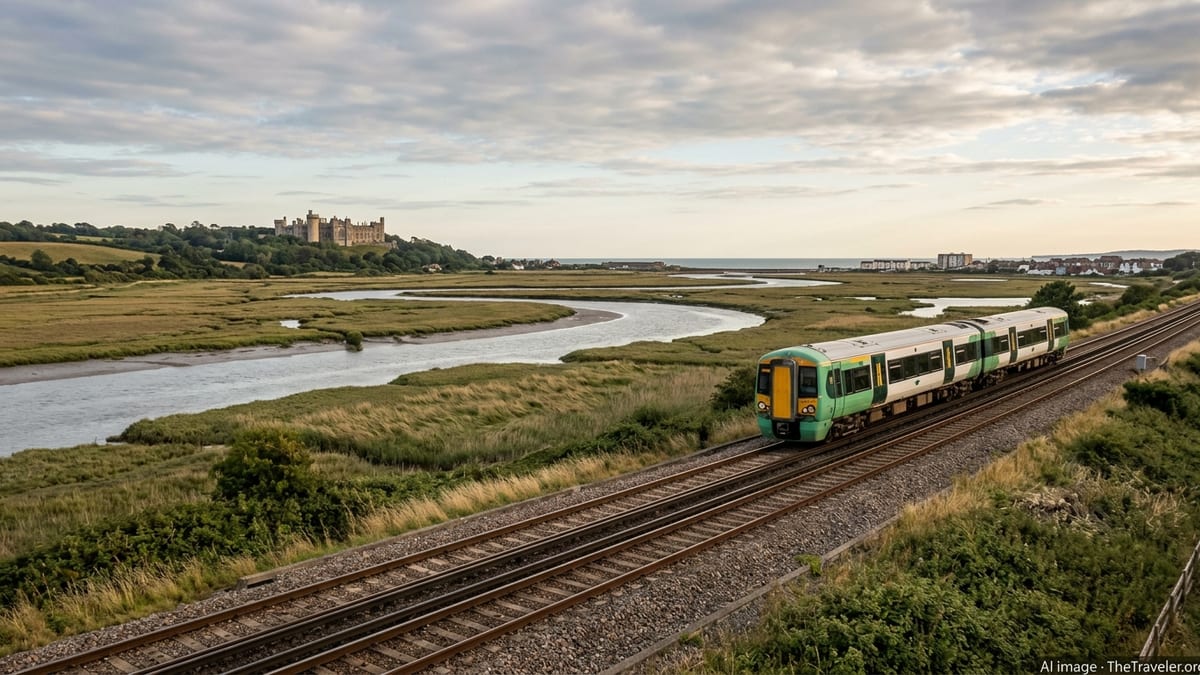
Along England’s south coast, the Arun Valley Heritage Rail Project is gaining attention as a testbed for sustainable coastal tourism, using an existing rail corridor to shift visitors from cars to trains while strengthening local heritage and landscapes.
Get the latest news straight to your inbox!
Expanding a Coastal Rail Corridor with Sustainability in Focus
Publicly available information shows that the Arun Valley Line, running from Gatwick Airport through West Sussex to coastal destinations such as Littlehampton and Bognor Regis, is at the center of a growing cluster of community and tourism initiatives. Community rail groups and local councils have been working along the route to position the line as a gateway to the South Downs and the English Channel coast, reducing car dependency for both residents and visitors.
Recent guidance and promotional material linked to the Arun Valley highlight the route’s role in enabling low-carbon access to riverside landscapes, nature reserves and historic towns close to the coast. Updated days-out guides and travel campaigns emphasize linear walks between stations, easy access to the sea and connections to local bus services, creating a more integrated “car-free” visitor offer.
Although the line itself remains part of the national rail network rather than a standalone heritage railway, the wider Arun Valley Heritage Rail Project increasingly resembles a heritage-focused regeneration scheme. Station artwork, interpretation panels and curated walking trails are being used to foreground local history, from medieval castles to traditional riverside industries, tying the rail experience to the broader story of the Arun estuary and coastal plain.
Heritage Storytelling Meets Modern Climate Goals
Reports indicate that cultural projects along the Arun Valley corridor are helping to reframe rail travel as an experience in its own right, rather than simply a way to reach the coast. Community art displays at stations, heritage-themed exhibitions and locally produced guides are drawing attention to the area’s layered history, including the evolution of seaside tourism and the longstanding relationship between railways and resort development.
Recent initiatives such as arts-led interpretation in station waiting rooms and community awards for rail-based projects in Arundel and neighbouring towns show how heritage is being used to promote contemporary sustainability objectives. These efforts aim to encourage visitors to slow down, spend more time exploring local centres on foot and support small businesses that cluster around the railway.
The approach aligns with wider climate strategies adopted by local authorities, which seek to cut transport emissions by shifting more leisure trips from private cars to public transport and active travel. By framing the Arun Valley as a heritage landscape that is best discovered by train, walking and cycling, promoters of the project are positioning climate action as an attractive part of the visitor experience rather than a constraint.
Linking Rail, Walking and Coastal Landscapes
Coastal tourism along the south coast has long depended on road access, but current planning and transport strategies for West Sussex increasingly prioritise multimodal journeys. Documentation related to active travel programmes in the county references the importance of improving walking and cycling links to stations, including those on the Arun Valley Line, to make it easier for residents and visitors to complete trips without a car.
In practice, this has translated into work on local paths, signage and crossing points that connect stations with seafronts, riverbanks and village centres. Visitor information produced for the Arun Valley promotes station-to-station itineraries that follow the river towards the coast or climb onto the South Downs before dropping back to seaside towns, allowing travellers to combine rural and coastal scenery in a single, rail-based day out.
This focus on rail-to-trail connectivity is particularly significant for the fragile landscapes of the Arun floodplain and nearby coastal habitats. By funnelling visitors along clearly identified walking routes from stations, the project seeks to reduce pressure on narrow country lanes and informal parking spots near sensitive sites, while still maintaining visitor spending in local economies that rely on tourism.
Economic Opportunities for Coastal Communities
According to recent community rail coverage, the Arun Valley corridor is being promoted as a way for coastal and near-coastal towns to capture more value from tourism without expanding road capacity or building large new parking facilities. Rail-led travel packages and themed campaigns encourage visitors to stop at multiple towns along the line, rather than driving directly to a single well-known resort and back again.
Businesses close to stations are well placed to benefit from this pattern of dispersed visitation. Cafes, independent shops, guesthouses and activity providers near the rail route can market themselves as “car-free friendly,” highlighting secure cycle storage, proximity to waymarked paths and flexible opening hours geared to train timetables. Public information suggests that this positioning is increasingly visible in local marketing materials.
The heritage dimension also opens up opportunities for specialist tours and events, such as guided walks that trace the history of the rail line, photography workshops focusing on estuary and coastal views from bridges and embankments, and seasonal festivals that coordinate with rail timetables. By anchoring these activities in the existing rail network, organisers aim to spread visitor numbers more evenly across the year and across different communities.
Challenges and Future Prospects for Sustainable Coastal Rail Tourism
Despite its potential, the Arun Valley Heritage Rail Project faces structural and environmental challenges that are common to many coastal and near-coastal lines. Capacity constraints on sections shared with long-distance services, vulnerability to extreme weather and the need for ongoing investment in stations and trackside infrastructure all influence how far the route can expand its tourism role.
Climate adaptation is a growing concern, with national rail strategies highlighting the need to increase resilience against flooding, heatwaves and coastal weather systems. For a route that threads between river and sea, planning for future-proofed embankments, drainage and vegetation management is likely to be essential if rail is to remain a reliable alternative to car travel for visitors.
Looking ahead, observers of community rail policy suggest that the Arun Valley could become a reference case for integrating heritage interpretation, biodiversity projects and sustainable visitor access along an operational main line. If funding continues to support station improvements, active travel links and community-led storytelling, the project may offer a replicable model for other coastal regions seeking to balance tourism growth with climate and conservation goals.