

More news on this day
South Korea has joined Japan, China and eight Southeast Asian destinations in adopting the ASEAN Plus Three Tourism Cooperation Work Plan 2026–2030, a new roadmap that aims to link heritage conservation with sustainable, higher-value travel across one of the world’s fastest-growing tourism regions.
Get the latest news straight to your inbox!
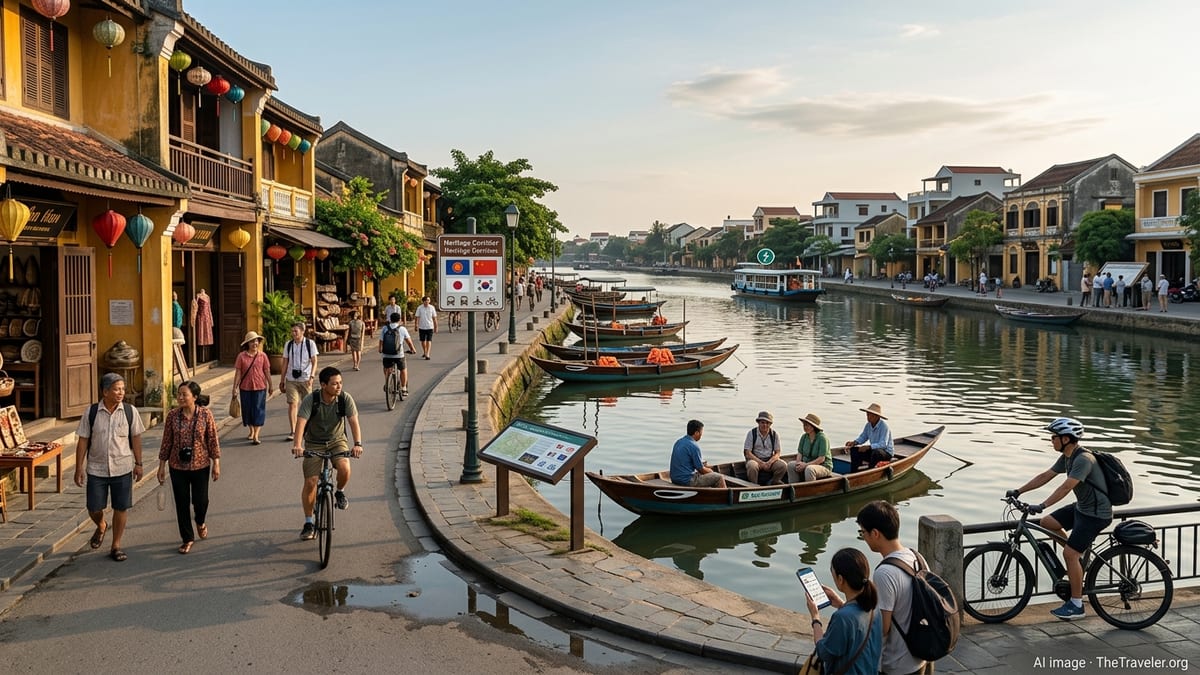
New Work Plan Anchors the Next Phase of Regional Tourism Growth
The ASEAN Plus Three Tourism Cooperation Work Plan 2026–2030 was adopted at the 25th Meeting of ASEAN Plus Three Tourism Ministers in Cebu, Philippines, following several years of recovery-focused collaboration under the 2021–2025 plan. Publicly available information on the meeting indicates that the new framework is designed to complement the ASEAN Tourism Sectoral Plan 2026–2030, aligning priorities between the ten ASEAN members and their three Northeast Asian partners.
The work plan sets out shared objectives for Brunei, Cambodia, Indonesia, Laos, Malaysia, Myanmar, the Philippines, Singapore, Thailand and Vietnam, together with China, Japan, South Korea and Plus Three partners. Reports on the ministerial discussions highlight a common push to move beyond volume-driven tourism toward experiences that protect cultural assets, natural landscapes and local livelihoods while still supporting robust visitor growth.
Regional tourism has rebounded strongly, with recent ministerial statements noting that ASEAN and its Plus Three partners attracted well over 190 million international visitors in 2024. That rebound has given governments in the bloc greater room to shift focus from short-term recovery measures to longer-term structural reforms built around quality, resilience and sustainability.
The 2026–2030 tourism work plan sits within a broader ASEAN Plus Three cooperation framework that also covers finance, energy, agriculture and people-to-people exchanges. Tourism has been identified as a key driver in that architecture, both for its economic impact and for its role in reinforcing cultural ties between Southeast Asia, China, Japan and South Korea.
Heritage and Culture Move to the Center of the Agenda
The new tourism work plan places cultural and natural heritage at the heart of regional cooperation. Public documents on ASEAN heritage initiatives show a growing emphasis on safeguarding historic townscapes, temple complexes, vernacular architecture and intangible traditions such as festivals, crafts and culinary practices as tourism demand increases.
Across ASEAN, destinations from Indonesia’s Borobudur and Prambanan to Vietnam’s Hoi An and Hue, Thailand’s Ayutthaya, Malaysia’s George Town and Melaka, and South Korea’s historic quarters in cities such as Gyeongju and Jeonju are under pressure from rising visitor numbers. The 2026–2030 framework encourages coordinated approaches to visitor management, interpretation, certification and community participation, aiming to avoid overtourism while enhancing the visitor experience.
The plan is also expected to deepen linkages with existing regional heritage mechanisms, including the ASEAN Heritage Parks network and cross-border cultural routes. In mainland Southeast Asia, this could translate into integrated itineraries that link UNESCO-listed sites in Vietnam, Laos, Cambodia and Thailand with cultural destinations in southern China. In maritime Southeast Asia, Brunei, Malaysia, Indonesia and the Philippines are likely to be spotlighted through shared narratives on maritime trade, Islamic heritage and indigenous cultures.
For South Korea, participation in the work plan provides an additional platform to showcase its own heritage destinations to Southeast Asian travelers while collaborating on standards for preservation, interpretation and creative industries. Joint festivals, museum partnerships and co-branded campaigns around traditional performing arts, food and design are among the types of initiatives observers expect to see highlighted under the new framework.
Sustainability, Low-Carbon Travel and Inclusive Development
The ASEAN Tourism Sectoral Plan 2026–2030, presented during the ASEAN Tourism Forum in Cebu, set sustainability and innovation as core guiding principles for the coming five years. The ASEAN Plus Three tourism work plan mirrors this orientation, emphasizing climate resilience, green investment and inclusive, community-based tourism models.
Publicly available summaries of recent ministerial meetings indicate that cooperation will focus on expanding standards for responsible tourism, including eco-certification for accommodations, guidelines for nature-based tourism in sensitive ecosystems, and better integration of local communities into tourism value chains. Brunei’s exploration of eco-tourism and cultural village concepts, Indonesia’s community-based tourism networks and Thailand’s long-running village tourism programs are seen as reference points for scaling up best practices across the region.
Low-carbon mobility is another priority. Governments in Japan, South Korea, China and ASEAN states have highlighted the importance of cleaner transport options, from more efficient aviation and greener airports to expanded rail, electric bus services and cycling infrastructure in urban and resort areas. The work plan encourages information sharing and pilot projects that can reduce emissions per visitor while maintaining accessibility to remote destinations.
Inclusive development is embedded through provisions that support micro, small and medium-sized enterprises in the tourism supply chain. Initiatives flagged in recent ASEAN and ASEAN Plus Three documents include training programs on digital marketing, sustainable operations and product diversification, particularly geared toward women-led and youth-led enterprises in rural areas.
Toward Seamless Multi-Country Journeys Across East and Southeast Asia
Another central pillar of the 2026–2030 cooperation work plan is the ambition to position ASEAN and the Plus Three markets as a more seamless, multi-country destination for international travelers. Public briefings on the Cebu meetings highlight the long-standing aspiration to create more “single trip” experiences that combine several countries in one itinerary, supported by easier border crossings and integrated marketing.
Visa facilitation and digital travel processes are areas where closer coordination is expected. Individual countries have already experimented with unilateral visa waivers and electronic travel authorizations for key source markets. The new plan provides a platform to explore how these national schemes can better align, creating smoother travel corridors between, for example, Japan and Thailand, South Korea and Vietnam, or China and Indonesia through connecting hubs in Singapore and Malaysia.
Air connectivity remains a critical enabler. Airlines in the region have been steadily rebuilding networks, and governments are using the ASEAN Plus Three platform to support new routes into secondary cities, diversifying flows away from overstretched gateways. This could benefit destinations such as Da Nang and Hue in Vietnam, Surabaya and Lombok in Indonesia, Kota Kinabalu and Kuching in Malaysia, and emerging cultural and nature destinations in Brunei and Thailand’s secondary provinces.
Marketing collaboration will also intensify. Joint roadshows, cross-border festival calendars and co-produced digital content campaigns are expected to promote multi-country circuits that combine urban culture with nature, wellness and coastal experiences. For travelers, this may translate into more integrated packages and easier planning tools that span several countries within the ASEAN Plus Three geography.
Implications for Travelers and the Global Tourism Market
For international visitors, the adoption of the ASEAN Plus Three Tourism Cooperation Work Plan 2026–2030 signals that Asia’s key destinations are moving in a coordinated direction on sustainability and quality. While the immediate impact may be most visible in policy alignment and institutional cooperation, travelers can expect gradual improvements in areas such as destination stewardship, product diversity and digital services.
Heritage travelers, in particular, stand to gain from expanded thematic routes, better-curated museums and heritage districts, and more opportunities to engage with local communities through workshops, homestays and cultural exchanges. As cross-border partnerships deepen, itineraries that once required complex logistics could become easier to arrange, supported by harmonized information and marketing.
From a global market perspective, the combined pull of ASEAN, China, Japan and South Korea gives the region considerable influence over how tourism develops through 2030. By formally linking tourism growth to heritage protection, inclusivity and low-carbon principles, the new work plan positions the ASEAN Plus Three grouping as a testbed for post-pandemic tourism models that other regions may watch closely.
For South Korea, joining regional partners in endorsing the 2026–2030 plan reinforces its role as both a major outbound market and a destination seeking higher-spending, longer-stay visitors interested in culture, food and nature. Together with Japan, China and the ASEAN members, it now shares a common blueprint for building a more sustainable, heritage-focused tourism landscape across East and Southeast Asia in the second half of the decade.