

More news on this day
Asia and Africa are emerging as the big winners in a reshaped global air network, as airlines including Lufthansa respond to conflict and airspace closures in the Middle East by redeploying capacity to faster‑growing markets across the two continents.
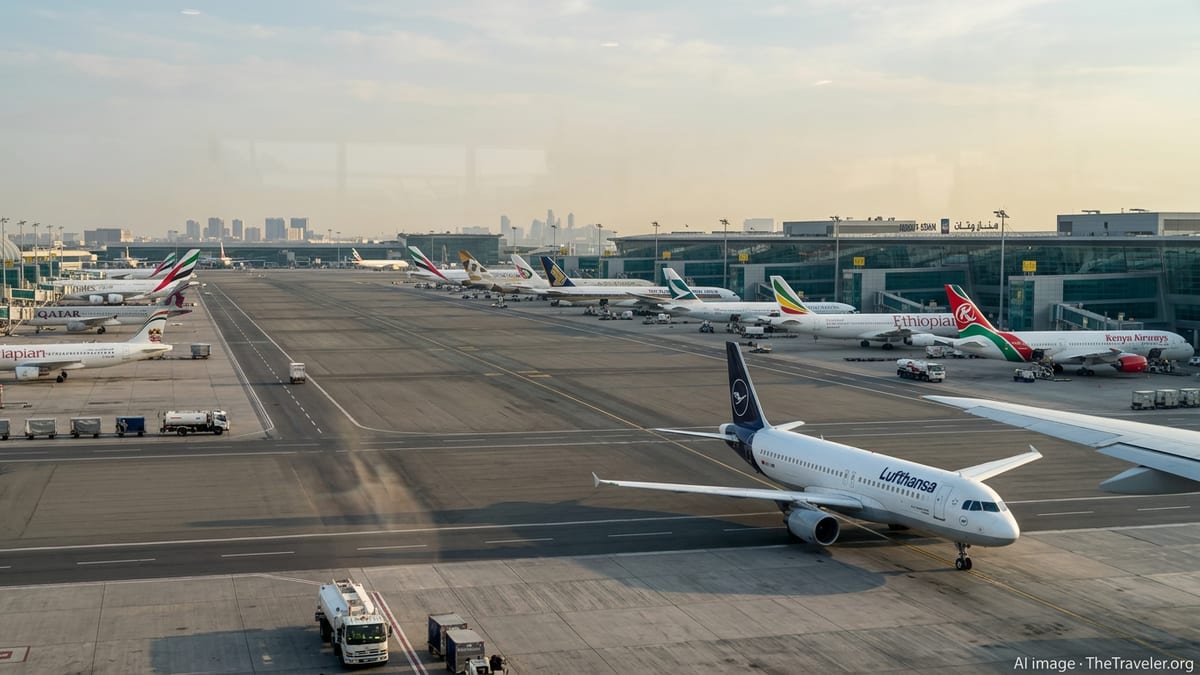
Lufthansa Extends Middle East Suspensions Amid Security Fears
Lufthansa Group is keeping a growing list of Middle Eastern destinations off its timetable as regional conflict and recurrent airspace closures raise operational and insurance risks. The group has extended suspensions on routes to Tel Aviv, Beirut and Tehran, among others, and continues to review services that rely on congested or contested air corridors.
The carrier is also making selective adjustments around the Eastern Mediterranean, where some routes are resuming but remain subject to rapid change depending on military activity and airspace advisories. Industry analysts say the pattern reflects a broader European hesitation about committing capacity to the region while security agencies flag elevated risks to commercial aircraft.
For passengers, the result is a shrinking set of direct options between many European hubs and traditional Middle East gateways, and a growing reliance on longer connections via alternative hubs in Asia, Africa and Southern Europe.
Capacity Follows Demand Toward Asia and Africa
With conflict weighing on parts of the Middle East, Lufthansa and other European carriers are redirecting aircraft to markets where demand is surging and operational conditions are more predictable. Asia Pacific has been the standout growth engine, with International Air Transport Association data showing double‑digit increases in international traffic through 2025 as Chinese, Japanese, Indian and Southeast Asian markets continue to scale up.
Africa has quietly become another bright spot. IATA and Airports Council International data for 2024 and 2025 show some of the fastest growth globally on Africa–Asia routes, supported by new long‑haul links from hubs such as Addis Ababa, Nairobi, Cairo and Johannesburg. Northern Africa in particular has led regional growth as both European leisure travelers and intra‑African business traffic rebound.
By shifting aircraft from suspended Middle East services into these high‑growth corridors, Lufthansa can keep fleet utilization high while tapping into structurally rising demand. Additional frequencies to major cities in India, China, Japan and key African economic centers are expected to feature prominently in the group’s next schedule updates.
Rerouted Traffic Reshapes Global Flight Patterns
The conflict has already forced widespread rerouting of flights that once crossed Middle Eastern airspace on the most direct tracks between Europe, Asia and Africa. When multiple states closed their skies following recent strikes, hundreds of thousands of travelers were stranded or diverted as services through major Gulf hubs were suspended or heavily curtailed.
As closures and military advisories persist, airlines are increasingly choosing to route long‑haul flights either north of the region or around the African continent, adding time, fuel burn and cost. This has knock‑on effects for fares and schedules, but it also amplifies traffic through alternative hubs in South and East Asia and across Africa’s rising gateway airports.
European carriers redeploying capacity into Asia and Africa reinforce this shift. As more point‑to‑point links bypass the traditional Middle East stopovers, secondary cities in Asia and Africa gain direct connectivity to Europe that would have been harder to justify before the current crisis.
Emerging Hubs Across Two Continents
The redrawing of air routes is accelerating the rise of new hubs across Asia and Africa. In Asia, established giants such as Singapore, Bangkok and major Chinese coastal airports continue to absorb additional long‑haul flights, while growing secondary gateways in India and Southeast Asia capture spillover demand from crowded hubs.
In Africa, investment in airport capacity and national carriers is beginning to pay off. Data from airport operators and IATA highlight sustained growth in international traffic through East African and North African gateways, with several carriers expanding widebody fleets to serve Europe and Asia directly. Routes linking African capitals with destinations in India, China and the wider Asia Pacific region have posted some of the strongest growth rates worldwide.
For Lufthansa, this network evolution creates more options for partnerships and code‑shares with African and Asian airlines, enabling the group to offer broader coverage without committing its own metal to every route. Passengers benefit from more single‑stop itineraries between secondary cities that previously required two or three connections.
What Travelers Need to Know Now
For travelers planning trips that would normally route via the Middle East, the most immediate consequence is reduced choice and higher volatility. With Lufthansa and other European airlines suspending or curtailing services to several Middle Eastern destinations, schedules can change at short notice, and routings may involve longer flight times via Asia or Africa.
Experts advise passengers to build extra buffer time into connections, especially when itineraries rely on regions adjacent to active conflict zones or on carriers operating tight turnaround schedules. Flexible tickets and comprehensive travel insurance have become more valuable as airlines juggle reroutes and last‑minute cancellations driven by security assessments.
At the same time, the surge in Asia and Africa demand is creating new opportunities for travelers willing to explore alternative gateways. Expanded links between Europe and fast‑growing cities in Asia and Africa mean more one‑stop options to reach secondary destinations, often with competitive fares outside the traditional Middle East hub model.
As the conflict’s trajectory remains uncertain, airlines such as Lufthansa are expected to continue prioritizing capacity where demand is strongest and security is most stable. For the foreseeable future, that means Asia and Africa will sit at the center of global air travel growth, while the Middle East works through one of the most challenging periods for aviation in its modern history.