

More news on this day
Asian economies that rely heavily on Middle Eastern crude, including Japan, China, India and South Korea, are bracing for a prolonged spike in energy costs as the Strait of Hormuz crisis constrains exports from key Gulf suppliers such as Saudi Arabia, Iraq, Kuwait and Qatar, even as the United States signals it intends to restore safe passage "soon."
Get the latest news straight to your inbox!
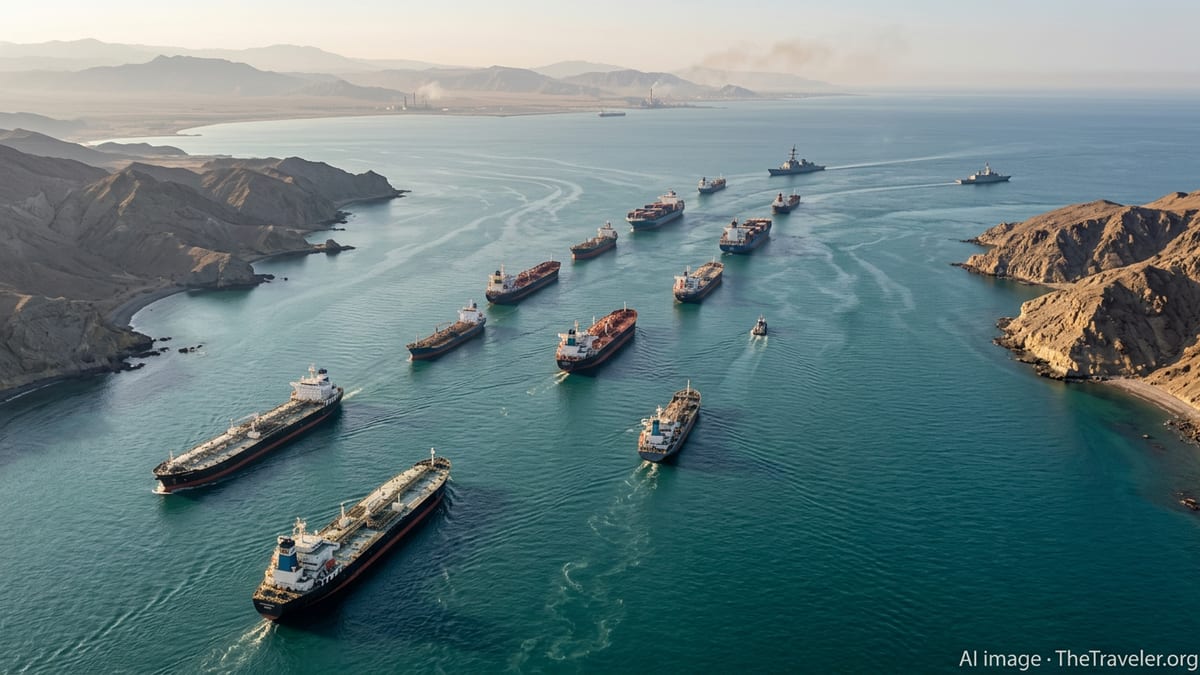
Strait of Hormuz Disruption Keeps Pressure on Oil Markets
Publicly available data on global shipping and energy markets indicate that commercial traffic through the Strait of Hormuz has collapsed in recent weeks as conflict around Iran escalates and new military moves further complicate the picture. Analysts describe the disruption as one of the most severe shocks to seaborne oil supply in modern history, with only a trickle of Iran-linked or specially protected vessels navigating the narrow waterway.
Benchmark crude prices have climbed sharply in response, erasing earlier declines that followed brief ceasefire announcements and diplomatic overtures. Market commentary from banks and commodity research firms points to a combination of constrained exports from Gulf producers and high geopolitical risk premiums as traders factor in the possibility of further escalation. Volatility has become the defining characteristic of daily trading, leaving refiners and fuel distributors in Asia struggling to plan ahead.
Major oil exporters on the Gulf, including Saudi Arabia, Iraq, Kuwait and Qatar, are reported to be rerouting some volumes via alternative terminals and pipelines where available, but capacity there is limited compared with normal flows through Hormuz. Storage facilities on land and at sea are absorbing part of the shock, yet observers note that these buffers are finite and cannot fully compensate for a chokepoint that typically handles a large share of global crude and liquefied natural gas shipments.
Statements from the United States about plans to enforce freedom of navigation and reopen the passage have so far failed to restore confidence. Reports from maritime tracking services and shipowners suggest that most commercial operators remain wary of sending tankers into a heavily militarized zone, given elevated insurance costs and the risk of miscalculation among armed forces in close proximity.
Japan, China, India and South Korea Face Cost Surge
Energy-import profiles published by international agencies show that Asia is the primary destination for crude and gas moving out of the Gulf, with China, India, Japan and South Korea together accounting for a substantial share of pre-crisis exports. The effective closure of Hormuz has therefore landed hardest on these economies, which depend on steady seaborne supplies to keep industry, transport and households running.
In Japan, which relies on imports for nearly all of its oil needs, refiners are reported to be paying higher premiums to secure spot cargoes from alternative sources such as West Africa and the Americas. This reshuffling of trade routes increases voyage times and freight costs, compounding the impact of elevated crude benchmarks. Early estimates from local think tanks suggest that if current price levels persist, Japan’s annual fuel import bill could swell by billions of dollars, putting renewed pressure on a currency already weakened by previous interest-rate differentials.
China and India, the world’s third and fourth largest oil importers, are similarly exposed. Public figures on refinery utilization and import patterns indicate that both countries are tapping strategic reserves to smooth short-term disruptions while negotiating additional supplies under long-term contracts where possible. However, these measures only partially shield domestic markets. Local media coverage in both countries has already highlighted increases in pump prices and cooking gas tariffs, prompting debates about targeted subsidies and temporary tax relief to cushion lower-income households.
South Korea’s energy-intensive manufacturing sector, from petrochemicals to shipbuilding and electronics, is also vulnerable to the sustained cost shock. Business groups there have warned that a prolonged period of high input prices could erode export competitiveness just as global demand shows signs of slowing. Some large industrial consumers are reportedly exploring short-term fuel switching and hedging strategies, but the scope for substitution remains limited in sectors that are structurally geared to imported crude.
Travel and Tourism Hit by Airfare and Fuel Surcharges
The travel and aviation sectors across Asia are already feeling the strain of higher fuel prices. Jet fuel typically tracks crude benchmarks closely, and the recent surge has translated into increased operating costs for airlines that were only beginning to recover from the financial scars of the pandemic and subsequent economic volatility. According to airline filings and public fare data, several carriers in Japan, South Korea and India have started to reintroduce or raise fuel surcharges on both international and domestic routes.
For leisure travelers, these surcharges are gradually pushing up ticket prices, particularly on long-haul routes that consume more fuel. Travel agents in major cities such as Tokyo, Seoul, Beijing and Mumbai are reporting a renewed wave of price-sensitive behavior, with customers delaying bookings, shortening trip durations or opting for closer regional destinations to keep overall budgets in check. Dynamic pricing models used by airlines mean that the full impact on fares may unfold over several months as hedging contracts roll off and higher spot prices filter through.
Budget carriers, which operate on thinner margins and rely heavily on volume, appear especially exposed. Publicly available financial statements show that many low-cost airlines in Asia entered 2026 with already-elevated debt loads and limited cash buffers. The sudden jump in fuel costs could force capacity reductions, route cuts or fare hikes that would challenge efforts to maintain affordability. Industry analysts note that consolidation pressures in the sector may intensify if the Hormuz disruption persists.
Tourism-dependent economies in the wider Asia Pacific region are watching these developments closely. Countries that rely on visitors from Japan, China and South Korea could see fewer arrivals or lower per-trip spending if outbound travelers face higher transport costs and weaker currencies at home. Tourism boards are likely to respond with promotional campaigns and discounted packages, but these incentives may only partly offset the drag from more expensive air travel.
Household Budgets and Inflation Under Renewed Strain
Rising energy prices are feeding into broader inflation dynamics across Asia, complicating the task for central banks that had hoped to shift away from aggressive tightening cycles. Public data on consumer price indices in Japan, India and South Korea show that transport and utilities represent a significant share of household expenses, meaning that fuel and electricity costs quickly influence headline inflation and expectations.
Higher diesel and gasoline prices raise logistics and distribution costs for food and consumer goods, while increased electricity tariffs affect everything from home cooling to manufacturing overheads. In densely populated urban areas, where many residents rely on public transport, operators face a choice between absorbing higher fuel bills or increasing fares. Recent statements and local press coverage in several cities suggest that limited fare hikes, peak-hour surcharges or reduced service frequencies are being weighed as short-term responses.
Governments in the region have some policy tools to soften the blow, including temporary tax cuts on fuels, direct subsidies to transport operators, or targeted cash transfers to vulnerable households. However, fiscal space is constrained in many countries after years of pandemic-related spending and ongoing investments in energy transition. Economists warn that large-scale subsidies for fossil fuels, if sustained, could delay decarbonization efforts and lock in higher emissions, even as they provide near-term relief from the Hormuz-driven shock.
Consumers, meanwhile, are adjusting behavior in ways that could outlast the immediate crisis. Surveys and retail data cited in local media point to increased interest in energy-efficient appliances, smaller vehicles and public transit options where available. While these shifts may modestly reduce oil demand at the margin, they cannot fully offset the systemic dependency that has built up over decades of reliance on Gulf crude.
Uncertain Timeline for Relief as Diplomacy and Security Efforts Continue
Despite repeated assurances from Washington that the Strait of Hormuz will reopen soon, the timeline for restoring normal shipping remains unclear. Reports from international organizations, think tanks and maritime risk consultancies describe a complex mix of military deployments, ceasefire talks and sanctions negotiations that could take weeks or months to translate into sustained commercial confidence.
Even if transit restrictions ease, several analyses emphasize that tanker flows are unlikely to snap back to pre-crisis levels overnight. Shipowners will still need clarity on insurance coverage, deconfliction mechanisms and rules of engagement in the congested waterway. Some energy companies may diversify away from Hormuz-linked routes over the medium term, investing in alternative pipelines or expanding capacity at Red Sea and Mediterranean terminals to reduce exposure to a single chokepoint.
For Asian importers such as Japan, China, India and South Korea, this suggests that the current episode is not just a temporary price spike but a strategic warning about concentration risk in their energy supply chains. Policy debates in these countries are increasingly focused on accelerating diversification through a combination of more varied crude sources, expanded storage, enhanced efficiency and faster deployment of renewables and nuclear capacity.
Until those longer-term adjustments bear fruit at scale, households, travelers and businesses across the region are likely to live with elevated and volatile energy costs linked to developments thousands of kilometers away in the narrow waters of the Strait of Hormuz.