

More news on this day
Asia is moving rapidly from the periphery of cruise shipbuilding to its center, as regional yards scale up, new cruise ships debut from Chinese docks and specialized advisors in Singapore and Shanghai position themselves as critical partners for global operators planning their next generation of vessels.
Get the latest news straight to your inbox!
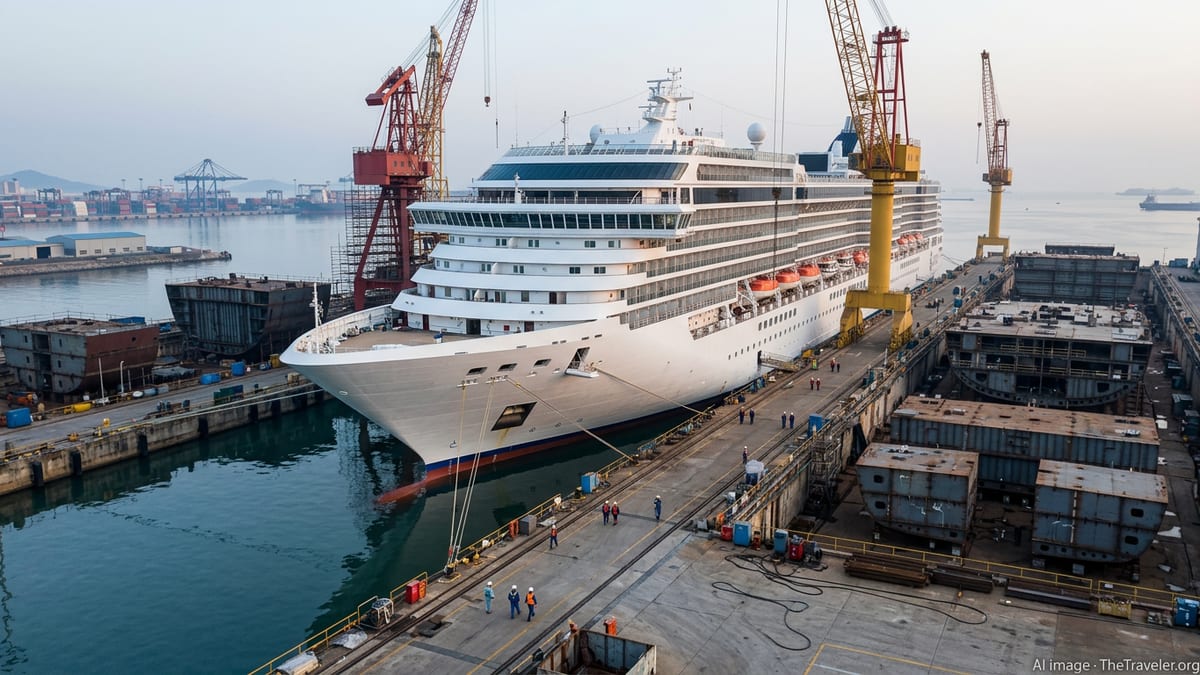
Asia’s Shipbuilding Dominance Reaches a New Phase
Publicly available data on the global orderbook shows shipbuilding has decisively shifted toward Asia, with China, South Korea and Japan accounting for the vast majority of newbuild capacity. Analysts tracking commercial shipbuilding report that China alone has held more than 60 percent of the world’s orderbook in recent years, with South Korea and Japan bringing the regional total to well over 90 percent of global output across multiple vessel types.
While much of this activity is concentrated in bulk carriers, tankers and container ships, cruise ships are increasingly part of the story. Industry reviews of the 2024 and 2025 orderbooks indicate a modest but notable rise in cruise orders following the pandemic slump, with around 70 to 75 vessels now on the books worldwide. European yards still hold many of the largest and most complex cruise contracts, but Asian yards are gaining experience through targeted projects, refits and smaller passenger ships.
Observers describe this moment as a transition phase. China’s capacity expansion and competitive pricing have made its shipyards a default choice for many commercial ship types, and cruise projects are starting to follow. At the same time, South Korean and Japanese yards are marketing themselves as high-tech partners for energy-efficient and alternative-fuel vessels, a priority for cruise brands seeking to align with tightening environmental regulations.
For cruise operators, the shift means more choice and potentially better negotiating leverage. However, it also requires navigating a complex mix of technical standards, regulatory expectations and cultural practices that vary significantly between European and Asian shipbuilding hubs. That is where regional advisory firms see a growing opportunity.
China’s First Large Cruise Ships Signal a Strategic Shift
China’s cruise shipbuilding ambitions moved from concept to reality with the delivery of the Adora Magic City, the country’s first large domestically built cruise ship. The vessel, constructed at Shanghai Waigaoqiao Shipbuilding for China-based brand Adora Cruises, has been cited in industry coverage as a milestone that demonstrates Chinese yards can now execute complex passenger-ship projects traditionally associated with Europe’s Fincantieri, Meyer Werft and Chantiers de l’Atlantique.
Reports from shipbuilding forums in Shanghai indicate that China’s state-backed groups are treating cruise ships as a strategic segment, alongside container ships and tankers. The Adora program is described as a platform for building local design expertise, supply chains and lifecycle service capability that can eventually support exports and joint ventures with international cruise brands.
Additional ships are in the pipeline. Chinese media and trade publications have referenced a second large Adora vessel and multiple design studies for future cruise concepts tailored to Asian source markets. In parallel, other Chinese yards have been linked to tenders for ro-pax ferries and expedition-style ships, projects that provide further passenger-ship experience even if they are not mainstream ocean-going cruise liners.
Industry analysts note that capacity constraints in China’s busiest commercial yards could slow the near-term expansion of cruise output. Orderbooks for container ships and bulk carriers are heavily booked into the late 2020s, limiting available slots for the most complex passenger projects. However, as more Chinese yards complete upgrades for high-spec builds, cruise operators are expected to revisit the region when planning long-term fleet additions.
South Korea and Japan Compete on Technology and Efficiency
South Korean and Japanese shipyards, long established in LNG carriers and advanced commercial vessels, are positioning their capabilities to capture more cruise-related work. Trade press coverage highlights Korean yards’ focus on alternative fuels, digital ship systems and high-automation construction methods, all of which are increasingly relevant to cruise lines facing decarbonization targets.
Although these countries have not yet matched Europe’s volume in large cruise ships, they play a significant role in ferries, expedition vessels and highly specialized passenger ships. These segments share many of the safety, comfort and environmental requirements of cruise ships and are often seen as stepping stones toward larger contracts. Passenger-ferry orders from European and Asian operators placed with Japanese and Korean yards underscore this trend.
Operators exploring an Asian build strategy are paying close attention to this technological edge. LNG-ready and hybrid-propulsion designs, advanced hull forms and digital twin integration for operations and maintenance are increasingly part of tender documents. In public comments and marketing materials, yards in Busan, Ulsan and Nagasaki emphasize their experience in integrating complex hotel loads, passenger-safety systems and noise-and-vibration standards comparable to those in the cruise sector.
As environmental rules tighten and fuel costs remain volatile, this capability is likely to become a central factor in any decision to move high-value cruise projects from Europe to Asia. Advisors tracking the space note that some operators may opt for a hybrid approach, commissioning prototypes or first-in-class ships in Europe while evaluating Asian yards for follow-on units, retrofits and regional deployment vessels.
Ocean Ventures Advisory and the Rise of Regional Specialists
Within this shifting landscape, Ocean Ventures Advisory, a Singapore-based cruise and maritime consulting firm, has emerged as a visible player connecting operators, investors and shipyards across Asia. According to the company’s public materials and recent conference programs, it focuses on strategy, market development and project advisory for clients looking to navigate the region’s expanding cruise ecosystem.
Event programs from major maritime gatherings in China and Southeast Asia list Ocean Ventures Advisory among session leaders on topics such as “Cruise Shipbuilding 101” and regional cruise development. These appearances highlight a niche that sits between traditional naval architecture firms, global management consultancies and shipbrokers, with an emphasis on translating local shipyard capabilities and regulatory frameworks into actionable options for cruise brands.
Advisory activity spans multiple fronts. Regional specialists work with investors assessing the viability of new cruise terminals or homeports, while also helping operators evaluate shipyard shortlists across China, South Korea and Japan. They analyze issues such as yard track record, subcontractor depth, financing support and local incentives, which can vary sharply not only between countries but even between provinces and port cities.
For cruise operators that have historically relied on European yards and Western advisors, this localized insight can shorten decision timelines and reduce risk. Firms like Ocean Ventures Advisory effectively act as translators and integrators, aligning the expectations of global brands with the realities of Asian industrial policy, labor markets and supply chains.
What Cruise Operators Need to Know Now
For operators weighing Asia-focused shipbuilding strategies, several themes stand out from recent reports and market commentary. First, Asia’s dominance in global shipbuilding is structural rather than cyclical. Deep industrial ecosystems, government backing and a steady flow of commercial orders give the region’s yards both scale and staying power, making them difficult to ignore for long-term cruise-fleet planning.
Second, capacity and specialization still matter. European yards retain strong advantages in very large, highly customized cruise ships, and current orderbooks suggest many will remain busy into the late 2020s. At the same time, Chinese, Korean and Japanese yards are investing in passenger-ship know-how, with early projects in China in particular serving as proofs of concept. Operators may find the near-term sweet spot in smaller ocean ships, expedition vessels, ferries and regionally tailored hardware rather than immediately shifting their largest flagships to Asia.
Third, advisory support is becoming more important. The complexity of cross-border financing, export-credit arrangements, environmental compliance and technology choices makes it harder for operators to navigate the landscape alone. Independent consultancies and regional specialists such as Ocean Ventures Advisory are positioning themselves to guide decisions on where to build, how to structure partnerships and when to time orders within crowded yard schedules.
Finally, the broader geopolitical and trade environment will shape outcomes. Policy debates around shipbuilding dominance, potential fees on Chinese-built vessels and local content rules in various markets introduce uncertainties that operators must factor into long-term plans. As Asia’s role in cruise shipbuilding grows, cruise brands are likely to diversify their yard relationships, combine European and Asian capacity, and rely more heavily on nuanced local insight to balance cost, capability and risk.