

More news on this day
Asia–Europe air travel is entering a new phase in 2026, as airlines on both continents rapidly add nonstop routes and restore long-haul links that bypass traditional Gulf hubs, giving travelers faster options and reshaping how they plan their next intercontinental trip.
Get the latest news straight to your inbox!
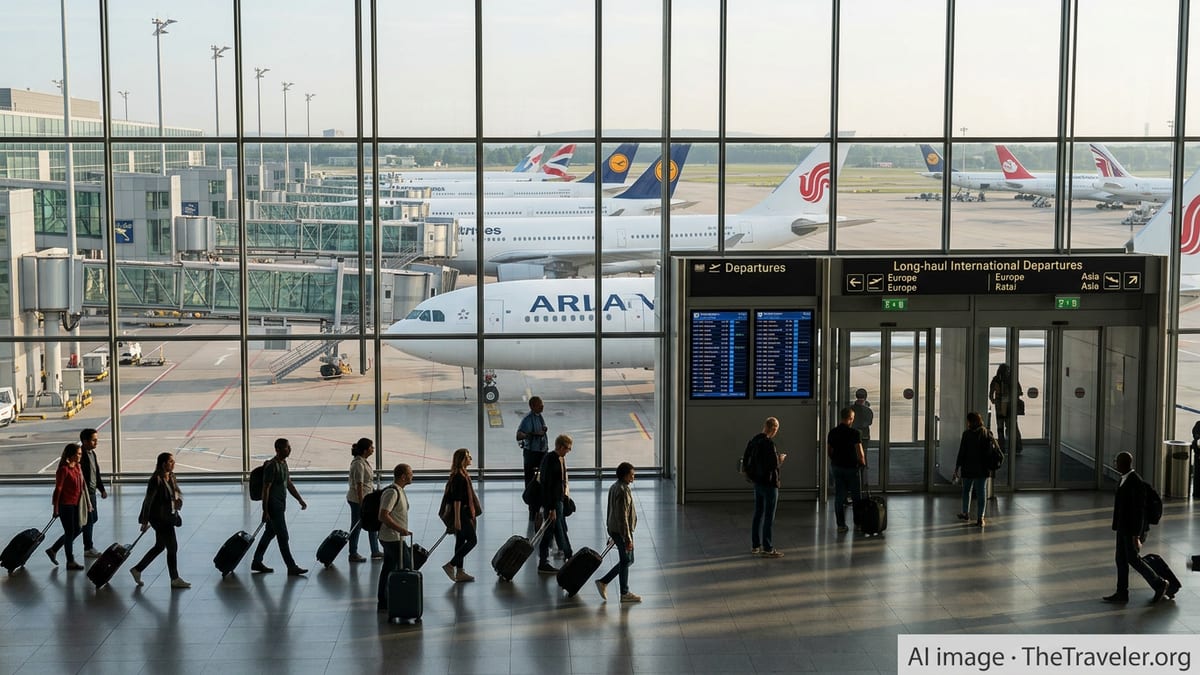
Demand Rebounds and Direct Flights Take Center Stage
Airlines are racing to add capacity between Asia and Europe in 2026 as international demand continues to climb and passengers show a clear preference for nonstop flights. The International Air Transport Association reported a 3.8 percent rise in global passenger demand at the start of the year, with Europe and Asia Pacific among the regions driving the recovery. That growing appetite for long-haul travel is encouraging carriers to reopen dormant routes and commit aircraft to city pairs that once relied on one or two connections.
At the same time, sustained disruptions and airspace restrictions around parts of West Asia have nudged both travelers and airlines to rethink their dependence on Gulf hubs as automatic stopovers. With some carriers forced to reroute around sensitive areas, European and Asian airlines are seizing the chance to offer nonstop alternatives that keep passengers on their metal from origin to destination. The result for consumers is a map that increasingly privileges point-to-point connectivity over multi-stop itineraries.
For travelers, the shift means that trips which once demanded a change of planes in Doha, Dubai or Abu Dhabi can now often be flown in a single hop. The growth of these nonstop services is particularly noticeable on leisure-heavy routes linking major European capitals with tourism and business centers in India, Southeast Asia and East Asia, compressing travel times and simplifying complex journeys.
New Asia–Europe Nonstops Redraw the Route Map
One of the clearest signs of this changing landscape is the wave of new or restored nonstop routes linking Asian gateways directly to European hubs. Lufthansa has confirmed that it will relaunch year-round nonstop flights between Frankfurt and Kuala Lumpur in late October, a route that has been dormant since 2016. Operated by Boeing 787-9 aircraft, the service will run five times weekly and is aimed squarely at tapping renewed corporate and leisure demand between continental Europe and Southeast Asia.
Network expansions in Asia tell a similar story. Southeast and East Asian carriers are adding frequencies and new city pairs into Europe to capture demand that might previously have connected via the Middle East. Industry reports highlight growing direct connectivity from capitals like Bangkok, Singapore and Kuala Lumpur into major European hubs, as airlines look to secure their share of the lucrative Europe–Asia corridor while diversifying away from routings that skirt disrupted airspace.
In South Asia, Indian carriers are particularly active. IndiGo has laid out plans to introduce nonstop flights to multiple European cities in the 2025–26 financial year, including destinations such as Manchester, London, Amsterdam and Copenhagen. The airline’s leadership has been explicit that Indian carriers still underperform on traffic to Europe and that filling this gap with point-to-point flying is a strategic priority. For travelers across India’s metros, that translates into a greater chance of catching a direct service to Europe without backtracking via a Gulf or Southeast Asian hub.
Fares Spike Even as Capacity Grows
More nonstop flights do not yet mean cheaper tickets on every route. New analysis from a UK-based flight search platform this week found that travelers on certain direct Europe–Asia routes are paying up to 298 percent more than before, with fares as much as 1,766 pounds higher than comparable journeys a year earlier. Tight capacity, strong pent-up demand and higher fuel prices are all contributing to the spike, particularly on high-demand city pairs popular with both tourists and business travelers.
The pricing picture is complicated further by the uneven pace at which capacity is returning across markets. While some airlines are aggressively restoring or expanding their pre-2020 schedules, others are taking a more cautious approach, creating bottlenecks on specific days and routes. In effect, travelers are seeing a mix of old and new networks: a growing number of nonstop options, but not always at the frequencies needed to keep prices in check during peaks and holiday seasons.
Industry forecasts still suggest that, in real terms, average airfares should trend downward over the course of 2026 as more seats come online globally. However, for those looking at high-season trips between Europe and Asia, early booking and flexible dates remain essential tools to avoid the sharpest price surges on popular nonstop flights. As airlines continue to adjust their timetables, last-minute deals on direct routes are likely to be the exception rather than the rule.
What the New Routes Mean for Your Next Trip
For travelers planning a 2026 journey between Asia and Europe, the latest wave of nonstop routes brings tangible benefits. The most obvious is time: cutting out one or two connections can shave several hours off total travel, reduce the risk of missed flights, and lessen the chances of checked bags going astray. Nonstop flights also remove the stress of tight connections at unfamiliar hubs, making the experience more predictable, especially for families or infrequent flyers.
Comfort is another factor. Many of the aircraft being deployed on revived and newly announced Asia–Europe routes are recent-generation widebodies such as the Boeing 787-9, with quieter cabins, improved air quality and upgraded seating across all classes. Airlines see long-haul nonstops as flagship services and are keen to showcase new business-class suites, refreshed premium economy cabins and enhanced inflight entertainment on these routes, which can make the journey itself a more appealing part of the trip.
Travelers will, however, need to weigh the convenience of going nonstop against the sometimes steep price premium that currently accompanies direct services. In some cases, a one-stop itinerary via a secondary hub may still undercut the nonstop by hundreds of dollars, even after recent fare increases. Those with rigid schedules or tight connection anxieties may find the premium worth paying, while price-sensitive travelers might prefer to trade time for savings by retaining one carefully chosen stop along the way.
How to Navigate a Rapidly Changing Route Network
The rapid pace of route launches and schedule adjustments means that a flight option that does not exist today may be on sale within months. Travelers eyeing trips in late 2026 should keep an eye on airline announcements, as carriers continue to refine their winter schedules and respond to evolving geopolitical and economic conditions. This is particularly true on corridors affected by West Asia airspace restrictions, where airlines are constantly evaluating whether direct Europe–Asia services can offer a reliable alternative to traditional connections.
Booking strategies also matter more in this environment. With demand strong and nonstop capacity still catching up, securing seats early on your preferred Asia–Europe route is increasingly important, especially for peak summer and holiday travel. Conversely, those with flexible dates or a willingness to try secondary gateways may benefit from monitoring fare trends and being ready to move quickly when promotional pricing appears on new or relaunched routes.
Ultimately, the surge in Asia–Europe nonstop flights in 2026 delivers more choice at a time when travelers are prioritizing both efficiency and experience. Whether you opt for a brand-new direct link between an Asian metropolis and a European hub or a reimagined one-stop itinerary, the evolving network opens up fresh possibilities for how you design and enjoy your next long-haul journey.