

More news on this day
Thousands of travelers across Asia and the Pacific are facing fresh disruption as a new wave of more than 50 flight cancellations ripples through Indonesia, Malaysia, Taiwan, Hong Kong and Laos, with knock-on effects on long haul services to Los Angeles, Honolulu and other major North American gateways.
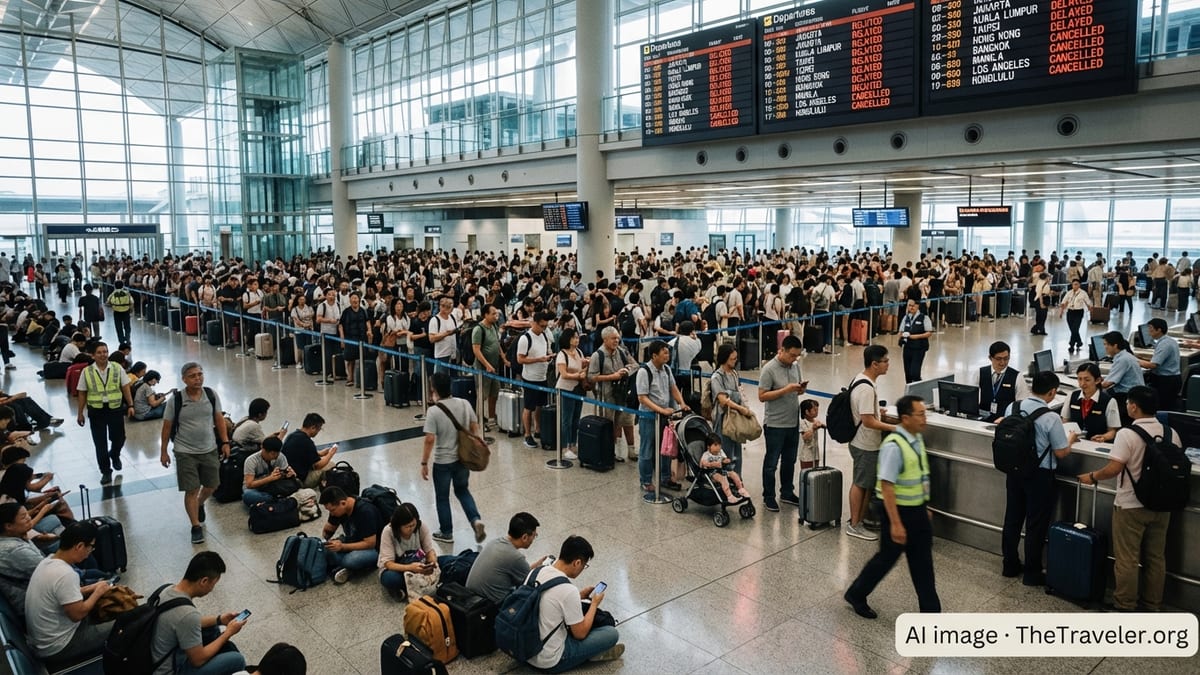
Wave of Cancellations Hits Regional and Long Haul Networks
Operational data from major Asian hubs and airline schedule trackers over the past 48 hours point to an intensifying pattern of cancellations that is now affecting both short haul and long haul traffic. In total, aviation analytics for recent days indicate more than 50 services scrubbed across Indonesia, Malaysia, Taiwan, Hong Kong and Laos, as carriers including Batik Air, Malaysia Airlines, Cathay Pacific, United Airlines and China Airlines pare back operations and recalibrate schedules.
While many of the cancellations are clustered on dense regional routes such as Jakarta to Makassar, Jakarta to Manado and Kuala Lumpur to key Southeast Asian cities, the disruption is no longer confined to domestic or intra-Asia travel. Airlines are now adjusting selected long haul rotations, including services linking Asian hubs to Los Angeles and Honolulu, as they work to absorb aircraft and crew displaced by earlier irregular operations.
The cancellation wave follows several weeks of mounting delays across Asia’s busiest airports, with Jakarta, Bali, Bangkok, Manila, Taipei and Hong Kong all reporting days when more than a thousand flights were delayed or cancelled regionwide. For passengers, the result is a travel environment where schedule changes can cascade rapidly, turning a minor delay in one city into a missed connection half a world away.
Batik Air at the Center of Indonesia’s Flight Chaos
Indonesia has emerged as one of the flashpoints of the current disruption, with Batik Air again under scrutiny after a series of cancellations and delays across its domestic network. This week, the carrier scrubbed dozens of flights and reported significant delays at Jakarta’s Soekarno Hatta International Airport, Makassar’s Sultan Hasanuddin Airport and other key provincial gateways, straining terminal capacity and ground handling resources at peak periods.
Separate figures published by industry trackers earlier in the week showed Batik Air cancelling close to 30 services in a single day while delaying nearly 40 more, primarily on high demand links such as Jakarta to Yogyakarta, Lombok and Makassar. These disruptions come on top of earlier instances in mid February when flights like Jakarta to Makassar were recorded as cancelled on busy weekday rotations, underscoring the fragility of scheduling on some of Indonesia’s most important trunk routes.
For travelers bound for leisure destinations such as Bali or onward connections through Jakarta to other Asian and Pacific cities, Batik Air’s uneven performance has created a particular headache. Late inbound aircraft arriving from secondary Indonesian cities can leave too little time for passengers to clear domestic terminals and recheck for international departures, amplifying the risk of missed flights to Kuala Lumpur, Bangkok, Singapore or further afield.
Malaysia Airlines, Cathay Pacific and China Airlines Trim Select Services
Beyond Indonesia, regional flag carriers are also implementing targeted cancellations as they respond to a mixture of staffing challenges, aircraft rotations and weather related constraints. Malaysia Airlines has withdrawn a number of departures from Kuala Lumpur in recent days, particularly on shorter regional legs where frequencies are high enough to consolidate passengers onto remaining flights. Aviation observers note that the airline is trying to preserve connectivity on key long haul and premium business routes while accepting some disruption on shorter sectors.
In Hong Kong, Cathay Pacific continues to fine tune its schedule as it rebuilds capacity across its long haul and regional networks. Recent operational days have seen a handful of Cathay services on intra-Asia routes including Taipei, Bangkok and Manila removed from departure boards, in some cases at short notice. While the overall number of cancellations remains modest compared with total daily movements, the impact on passengers with onward connections to North America and Europe can be significant when alternative flights are fully booked.
Taiwan based China Airlines has also reported a limited number of cancellations and retimed flights as it navigates a busy early year travel period. Services touching Taipei Taoyuan and linking on to major cities such as Bangkok, Hong Kong and regional secondary destinations have been affected. In practical terms, this has meant that travelers connecting through Taipei on their way to or from Los Angeles or other North American gateways face narrower windows for rebooking when something goes wrong on their feeder leg.
Transpacific Routes to Los Angeles and Honolulu Feel the Strain
Although the core of the current disruption sits within Asia, the ripple effects are increasingly visible on transpacific routes. United Airlines, which operates a web of services from the United States to hubs such as Tokyo, Hong Kong and Taipei with onward links across Southeast Asia, has been forced in recent weeks to rework a small number of rotations as aircraft and crew become misaligned due to earlier delays and cancellations in Asia.
In some cases, this has led to isolated cancellations or downguaging of equipment on routes serving Los Angeles and Honolulu when the planned aircraft is out of position or returning late from a disrupted Asian segment. While the majority of flights are still operating as scheduled, passengers relying on tight same day connections between Asian cities and West Coast departures are finding that even a one or two hour delay can be enough to miss their long haul flight.
Airline planners emphasize that they are trying to protect high yield transpacific departures wherever possible, but they acknowledge that a heavily disrupted day in Jakarta, Kuala Lumpur or Hong Kong can leave them with few good options. Where flights to Los Angeles or Honolulu must be cancelled or combined, carriers say they are prioritizing rebookings within 24 hours and offering hotel accommodation for eligible passengers, though the volume of travelers during the current high season has made this challenging at peak times.
Key Hubs from Jakarta to Taipei Under Pressure
The latest wave of cancellations highlights just how stretched Asia’s major airports have become as demand rebounds sharply. Jakarta’s Soekarno Hatta, already one of the region’s most congested hubs, has repeatedly appeared near the top of regional disruption tallies this month, with tightly banked departure waves leaving little slack in gate allocation or runway sequencing when weather or technical issues arise.
Bali’s Ngurah Rai Airport is also feeling the pressure, juggling a mix of domestic holiday traffic and international visitors from Australia, East Asia and beyond. Even when cancellations are concentrated on domestic sectors, delays in clearing backlogs of passengers and repositioning aircraft can spill over into outbound long haul flights, catching travelers off guard when they arrive expecting a routine beach departure to Kuala Lumpur, Singapore or Bangkok.
Further north, Taipei Taoyuan and Hong Kong International are managing heavy levels of connecting traffic as airlines like China Airlines, EVA Air, Cathay Pacific and others rebuild complex long haul networks. When carriers adjust a short haul feeder flight from cities such as Manila, Bangkok or Kuala Lumpur, it can quickly leave connecting passengers with limited alternatives to reach their onward services to North America or Europe the same day.
Traveler Impact: Missed Connections, Overstays and Extra Costs
For passengers, the operational statistics translate into very tangible stress. Across Jakarta, Bali, Kuala Lumpur, Taipei, Hong Kong, Bangkok, Manila and other hubs, airport terminals have seen surging crowds around airline service desks and transfer counters as travelers scramble to secure new seats, hotel rooms and updated itineraries. Social media posts from the past week show long lines forming at information desks, with some passengers reporting waits of several hours to speak with an agent.
Missed connections are a particular flashpoint. A traveler attempting to fly from a secondary Indonesian airport via Jakarta and Hong Kong to Los Angeles, for example, may find that a domestic delay of 90 minutes is enough to miss the Hong Kong connection and, in turn, the long haul flight to the United States. With many transpacific routes still operating below their pre pandemic frequencies, same day alternatives can be limited or unavailable, forcing overnight stays and unplanned expenses.
There are also cases of travelers bumping up against visa or stay limitations when forced to remain longer than planned in transit hubs such as Kuala Lumpur or Hong Kong. While airlines are generally covering accommodation and meals in instances where they are clearly at fault, passengers without travel insurance may still shoulder additional costs tied to missed hotel nights at their destination, rearranged tours or rebooked onward land transport.
How Airlines and Airports Are Responding
Airlines affected by the latest wave of cancellations say they are deploying a mix of short term and structural measures to stabilize operations. Batik Air has been consolidating lightly booked flights, prioritizing routes with the highest demand and attempting to reduce knock on delays by giving ground and flight crews slightly longer buffers between busy legs. Malaysia Airlines and other regional carriers have quietly trimmed some off peak frequencies to build additional resilience into their schedules.
Cathay Pacific and China Airlines, meanwhile, are leaning more heavily on digital notifications and rebooking tools, encouraging passengers to manage disrupted itineraries via apps rather than queuing at crowded counters. Industry executives say investments in automated reaccommodation systems made during the pandemic are now paying off, allowing a significant portion of affected travelers to receive new itineraries within minutes of a cancellation decision.
Airports are also making tactical adjustments. Jakarta and Bali have deployed additional staff to manage crowd control around check in halls and transfer zones, while Kuala Lumpur and Taipei have coordinated with immigration authorities to expedite temporary visa or transit processing in specific cases. Airport operators across the region are again stressing the importance of early arrival times and are urging airlines to share disruption forecasts as far in advance as possible.
Practical Advice for Travelers Heading Through Affected Hubs
With conditions unstable across several Asian gateways, travel planners recommend that passengers build more margin into their itineraries, especially when connecting to long haul flights bound for Los Angeles, Honolulu or other distant destinations. Where possible, travelers are advised to avoid extremely tight connections between domestic and international legs in Jakarta or Bali and to select itineraries that provide at least two to three hours between flights in complex hubs such as Hong Kong, Kuala Lumpur and Taipei.
Experts also suggest booking all segments on a single ticket with one airline or within the same alliance, so that carriers have a clearer obligation to assist with rebooking and accommodation when irregular operations occur. Separate tickets, for example one for a domestic Indonesian leg and another for a transpacific flight from Hong Kong, can leave travelers more exposed if a delay or cancellation breaks the chain of self arranged connections.
Finally, passengers should monitor their bookings closely in the 24 to 48 hours before departure, using airline apps and airport departure boards to watch for schedule changes. Given the current pattern of rolling adjustments, some cancellations are being decided on the same day as departure when airlines reassess load factors, crew availability and weather. Being alert to these shifts can provide extra time to seek alternative routes before the most popular options are snapped up.