

More news on this day
Thousands of air travelers across Asia faced unexpected chaos this week as more than 40 flights were canceled by Batik Air, Cathay Pacific, EVA Air, China Airlines, Malaysia Airlines and other carriers, stranding passengers in Indonesia, Hong Kong, Taiwan, Laos and Malaysia and disrupting a web of routes linking Jakarta, Surabaya, Hong Kong, Taipei, Singapore, Bangkok, Manila and long haul destinations such as New York and Boston.
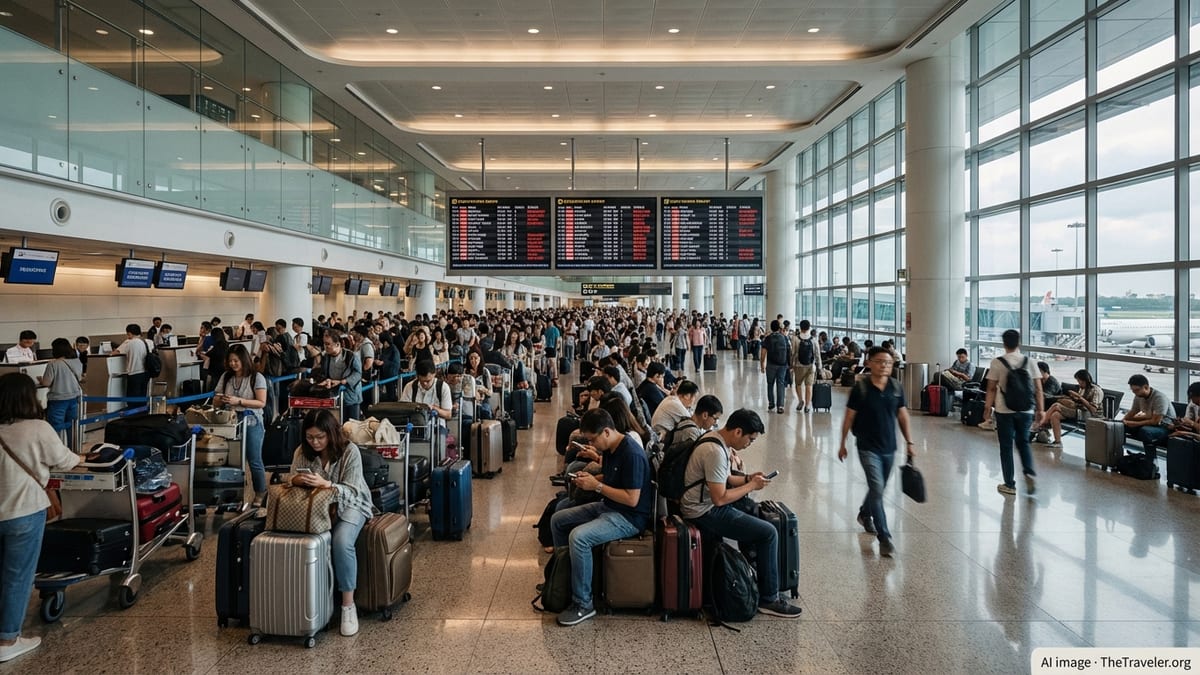
Wave of Cancellations Ripples Across Regional Hubs
The latest disruption unfolded over several consecutive days, as airlines in Indonesia, Malaysia, Taiwan, Hong Kong and Laos removed at least 40 scheduled services from their timetables. Operational data compiled by regional travel trackers shows a concentration of cancellations on short haul and medium haul routes, alongside a smaller but highly visible number of long haul services linking Asia to North America.
These cancellations followed a wider pattern of instability across Asian aviation in February, with multiple days in which dozens of flights were withdrawn at short notice. Airports in Jakarta, Bali, Surabaya, Kuala Lumpur, Taipei, Vientiane and Hong Kong all reported affected departures or arrivals, leaving passengers suddenly grounded while aircraft and crews were repositioned.
Airlines and airport officials described the decisions as targeted “schedule adjustments” rather than a single, acute operational failure. Yet for travelers, the combined effect was a system that appeared fragile, with knock on impacts on connections and onward journeys lasting well beyond the initial day of disruption.
Key Airlines Under Pressure as Capacity Is Pulled
Among the most affected carriers were Indonesia based Batik Air and Malaysia Airlines, which together accounted for a significant share of the canceled flights across Indonesian and Malaysian gateways. Services linking Jakarta, Surabaya, Makassar, Bali and Medan to Kuala Lumpur, Penang and Singapore were repeatedly flagged in airport departure boards as canceled, often just hours before scheduled departure.
In North Asia, Hong Kong based Cathay Pacific and Taiwan’s EVA Air and China Airlines also pulled services, including intra Asia flights and a clutch of long haul operations. Hong Kong and Taipei departures bound for Southeast Asian cities such as Bangkok, Manila and Singapore were affected, as were selected transpacific services to the United States.
Industry analysts note that many of these carriers are in the middle of post pandemic network rebuilding, which leaves them more vulnerable to crew shortages, maintenance bottlenecks and weather events on critical days. In this environment, operators often consolidate marginally filled flights or thin out frequency on overlapping routes, a practice that can produce sudden cancellations when demand or operations do not match planning assumptions.
Long Haul Disruptions Hit New York and Boston Links
The most high profile cancellations involved long haul flights connecting major Asian hubs with the northeastern United States. At Hong Kong International Airport, multiple Airbus A350 and Boeing 777 services to New York’s John F. Kennedy International Airport and Boston Logan International Airport were removed from schedules over a span of several days, curbing transpacific capacity on routes that had only recently been rebuilt.
Travel agents in Hong Kong reported last minute cancellations on some of these sectors, forcing passengers onto later departures or prompting costly rebookings on rival carriers. In at least one case, passengers due to connect in Hong Kong from Southeast Asia were advised en route that their onward long haul segment had been canceled, triggering overnight stays and missed meetings in the United States.
The disruption around Boston coincided with winter weather in the northeastern United States, including heavy snowfall that complicated operations and led Cathay Pacific to publish special ticketing guidelines and fee waivers for affected customers. While weather was only one part of the picture, it underscored how vulnerable global itineraries remain to a convergence of local and regional pressures.
Regional Routes to Southeast Asia and Domestic Indonesia Hardest Hit
Beyond the headline grabbing long haul cancellations, the most heavily affected routes were short and medium haul services within Southeast Asia and domestic Indonesia. Airports in Jakarta and Surabaya saw repeated cancellations of flights operated by Batik Air and other carriers, often on trunk routes that normally carry business travelers, migrant workers and tourists between provincial cities and key international gateways.
In Malaysia, Kuala Lumpur International Airport reported withdrawn services to Indonesian cities and to regional leisure destinations including Bali, Singapore and Bangkok. Several Penang flights were also canceled, narrowing options for travelers relying on that northern Malaysian gateway for business and medical travel.
Further north, Taipei and Hong Kong experienced interruptions on routes to Singapore, Bangkok and Manila. While many of these sectors still operated at reduced frequency, the removal of even one or two daily rotations narrowed flexibility for travelers seeking to reroute on the same day, particularly during busy evening departure banks.
Passengers Stranded in Multiple Cities as Options Run Out
The human impact of the cancellations was evident at terminals across the region, where lines formed at airline service counters and passengers sat with luggage stacked around them, waiting for information. At Jakarta’s Soekarno Hatta International Airport, travelers reported waiting hours to be rebooked after learning that flights to cities such as Surabaya, Makassar and Bali had been canceled with limited alternatives available the same day.
Similar scenes played out at Kuala Lumpur and Hong Kong, where some passengers bound for onward long haul connections were told that there were no immediate replacement flights. Those who were mid journey often faced the prospect of unplanned overnight stays, with some carriers offering hotel vouchers and meal coupons while others advised customers to arrange their own accommodation and seek reimbursement later.
In smaller markets such as Vientiane in Laos, the effect of a single cancellation was magnified, since many passengers rely on specific flights to connect to regional hubs. Travelers heading to Manila, Singapore or onward to North America from there found themselves with very limited same day options, especially when cancellations coincided with high demand periods such as weekends or school holidays.
Operational and Weather Factors Combine to Strain Networks
While airlines did not cite a single underlying cause for the wave of cancellations, several interlocking factors emerged. Persistent crew and staffing shortages, ongoing aircraft maintenance cycles, and punctuality challenges at a handful of congested airports have all weighed on operations in early 2026. Weather has added an unpredictable layer, from seasonal storms in Southeast Asia to snow and low visibility in North Asia and the northeastern United States.
Network planners are also recalibrating schedules after a rapid ramp up in capacity over the past year. Some carriers appear to be trimming underperforming flights or consolidating services where loads are weaker than expected, particularly on secondary city pairs and overnight sectors. These decisions may make sense from a cost perspective but can result in abrupt cancellations that catch passengers off guard.
Aviation observers note that Asia’s recovery has been uneven, with certain markets such as Indonesia and Malaysia seeing very strong domestic and regional demand, while long haul segments are more sensitive to macroeconomic uncertainty and corporate travel budgets. This imbalance complicates planning and leaves airlines more exposed when any link in the operational chain fails.
Airlines Offer Waivers, but Communication Gaps Persist
In response to the disruption, several carriers introduced flexible ticketing policies to help stranded passengers. Cathay Pacific issued fee waivers around its affected North American services, allowing eligible travelers to rebook or reroute without additional service charges, subject to specific travel windows. Other airlines quietly extended similar flexibility for customers whose flights were among the more than 40 cancellations recorded across the region.
However, passengers and agents have highlighted persistent communication gaps. In multiple cases, travelers reported learning about cancellations only upon arriving at the airport or through last minute notifications on mobile apps. Travel advisors in Jakarta and Kuala Lumpur said many of their clients received conflicting information about refund eligibility or rebooking options, particularly where tickets were purchased via third party platforms.
Industry experts argue that clearer, faster communication will be critical as Asia’s air network remains prone to short term disruptions. They urge airlines to adopt more proactive notification systems, automatically offer alternative itineraries where available and ensure that call centers and airport staff are aligned on policy in real time.
What Travelers Can Do as Cancellations Continue
With operational conditions across Asia still volatile, travel planners recommend that passengers build more resilience into their itineraries. That includes allowing longer connection times in hubs such as Jakarta, Kuala Lumpur, Hong Kong and Taipei, and avoiding last flight of the day options on routes that have seen repeated cancellations. Travelers bound for long haul destinations like New York and Boston are particularly advised to consider earlier departures or overnight stopovers to buffer against missed connections.
Frequent travelers also suggest booking directly with airlines whenever possible, which can simplify rebooking and access to waivers if flights are canceled. Those who must use online travel agencies are urged to keep close track of airline notifications and to verify any changes through official channels before heading to the airport.
For now, analysts expect intermittent cancellations to remain a feature of the Asian air travel landscape as carriers balance network growth with operational limits. The recent wave of more than 40 flight cancellations has served as a reminder that even as capacity returns and new routes are launched, reliability remains a work in progress for many of the region’s key airlines and airports.