

More news on this day
Thousands of passengers across Asia faced sudden disruptions today as airlines including Batik Air, Garuda Indonesia and Cathay Pacific scrubbed more than 60 flights, stranding travelers in Indonesia, Malaysia, Laos, Taiwan and Hong Kong and snarling connections to Jakarta, Bali, Singapore, Bangkok, New York, Boston, Sydney, Manila and other major destinations.
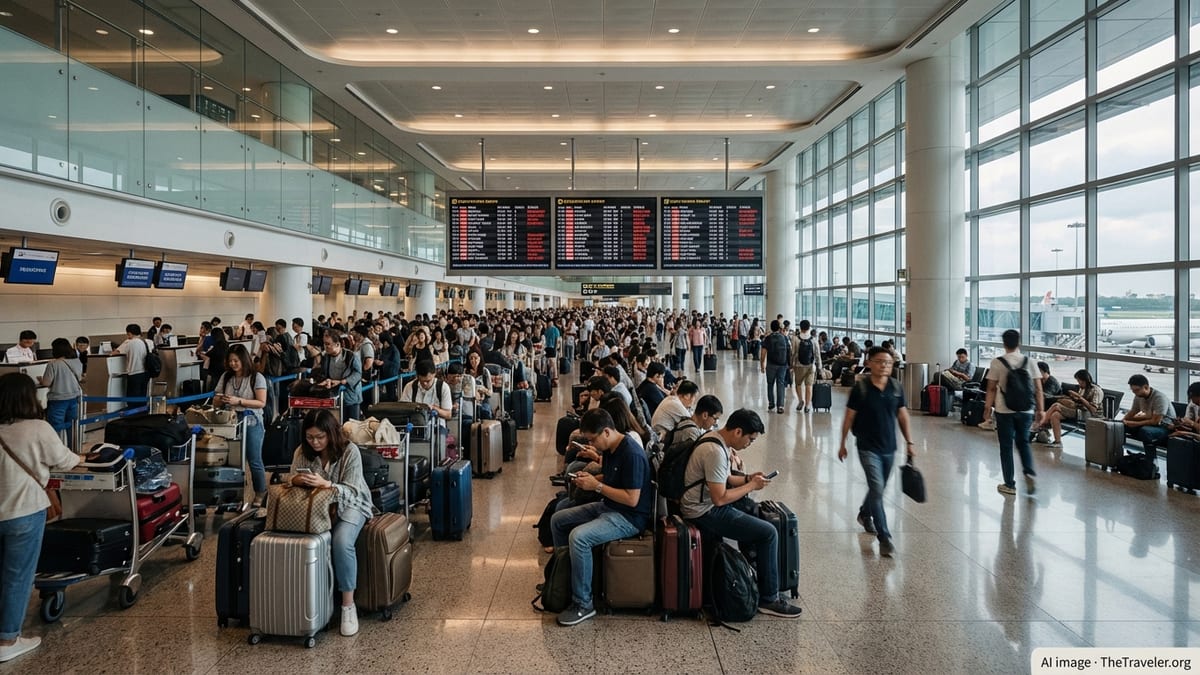
Wave of Cancellations Hits Regional and Long-Haul Networks
Operational disruptions rippled across Asian aviation networks on Tuesday as multiple carriers cancelled scores of flights from key airports in Indonesia, Malaysia, Laos, Taiwan and Hong Kong. While precise causes varied by carrier and route, the combined effect was a sharp reduction in capacity on some of the region’s busiest corridors, affecting both regional hops and long-haul links to North America and Australia.
Batik Air and Garuda Indonesia were among the hardest-hit operators in Indonesia, where services into and out of Jakarta and Bali saw multiple short-notice cancellations. In Hong Kong and Taiwan, Cathay Pacific and other international airlines trimmed schedules, with selected services to New York, Boston and Sydney removed from departure boards as the day progressed.
Travel data providers reported that, in total, more than 60 scheduled flights were pulled from operations over the course of the day, with a significant share clustered around peak morning and evening banks. That timing heightened the impact on connecting passengers using Singapore, Bangkok and Hong Kong as transit hubs for onward services to Europe, North America and Oceania.
Airports and aviation authorities across the affected countries said they were working with airlines to manage gate congestion and aircraft positioning issues, as cancellations forced last-minute stand changes, aircraft swaps and reallocation of scarce slots during peak periods.
Passengers Stranded from Jakarta and Bali to Hong Kong and Taipei
The disruption was felt most acutely by passengers already en route or mid-journey when flights were scrubbed. At Jakarta’s Soekarno Hatta International Airport, travelers bound for regional destinations such as Singapore, Kuala Lumpur and Bangkok reported long queues at rebooking counters as ground staff struggled to accommodate displaced customers on remaining services.
In Bali, where recent bouts of heavy rain and strong winds have already complicated flight operations, travelers connecting from Denpasar to long-haul services via major hubs found themselves facing missed connections and overnight stays. Several passengers described arriving in Jakarta and Singapore only to discover that onward flights to New York, Boston or Sydney had been cancelled or heavily delayed, forcing them to seek alternative routings at short notice.
Scenes were similarly tense in Hong Kong and Taipei, where Cathay Pacific and other long-haul carriers cut selected flights to North America and Australia. Families returning from holidays, business travelers and students heading back to universities in the United States and Australia were left crowding around departure screens and customer service desks as they waited for updates on replacement flights or hotel arrangements.
Reports from Vientiane and Luang Prabang in Laos, as well as secondary cities in Malaysia, indicated that smaller regional airports also felt the knock-on effects, with some feeder services cancelled outright when onward long-haul connections were withdrawn from schedules.
Airlines Cite Operational Pressures, Weather and Knock-On Delays
Airlines involved in the disruption pointed to a mix of operational pressures that converged across the network. Carriers in Indonesia and Malaysia referenced a combination of crew availability constraints, aircraft rotations affected by earlier delays and local weather issues that reduced airport capacity during key operating windows.
In Bali, airport officials confirmed that several flights had already been forced into diversions or extended holding patterns over recent days due to heavy rain and strong winds around Ngurah Rai International Airport, complicating aircraft positioning and turnaround times. Those earlier disruptions contributed to a tighter margin for error on Tuesday, when additional schedule adjustments pushed some carriers to cancel entire rotations rather than risk extensive rolling delays.
In Hong Kong and Taiwan, long-haul operators pointed to broader regional congestion, with delayed inbound aircraft and crew from other Asian gateways arriving out of sequence. That led some airlines to prioritize high-demand trunk routes while temporarily suspending or consolidating services to secondary destinations, including certain departures to North America and Australia.
Industry analysts noted that airlines across Asia are still operating with relatively lean spare capacity compared to pre-pandemic norms, leaving carriers with fewer standby aircraft and crews to absorb multiple, simultaneous disruptions across far-flung networks.
Rebooking Challenges and Limited Alternatives for Travelers
For affected passengers, the most immediate concern was securing alternative travel options. With many of the cancelled flights operating on heavily traveled routes at near-peak season demand, same-day rebooking proved difficult, particularly for those traveling in large groups or with fixed onward commitments.
Travel agents in Jakarta, Kuala Lumpur and Singapore reported a surge in last-minute inquiries as travelers sought seats on rival carriers or adjusted their itineraries to route through alternative hubs such as Seoul, Doha or Dubai. Some long-haul passengers headed for New York and Boston were rebooked via Europe, while others opted to delay their trips entirely rather than accept complex, multi-stop journeys.
At several airports, passengers described confusion about compensation policies and entitlements, with some carriers offering meal vouchers and hotel stays for overnight delays, while others focused primarily on rebooking without additional benefits. Travelers who had booked through online travel agencies faced additional hurdles, often being directed back and forth between airline call centers and third-party intermediaries.
Consumer advocates urged passengers to retain all documentation of delays and cancellations, including boarding passes, booking confirmations and receipts for out-of-pocket expenses, in order to support later claims under airline policies or local consumer protection frameworks.
Ongoing Monitoring as Airlines Work to Stabilize Schedules
Airports and carriers across the affected region signaled that they were working to normalize operations over the coming days, but warned that residual delays could persist while aircraft and crew are repositioned. Some airlines have already trimmed schedules for tomorrow’s operations, preemptively cancelling selected flights in an effort to protect the reliability of remaining services.
Aviation authorities in Indonesia, Malaysia and other impacted countries said they were in close contact with airlines about capacity management, slot use and passenger handling procedures. They urged travelers to arrive early at airports, monitor flight status closely and maintain flexibility where possible, particularly for itineraries involving tight connections through major hubs such as Jakarta, Singapore, Bangkok, Hong Kong and Taipei.
With demand for international travel across Asia continuing to climb, the latest wave of cancellations underscored the fragility of airline networks that are still rebuilding resilience. For now, stranded passengers from Jakarta and Bali to Hong Kong and Taipei face an unwelcome reminder that even in a period of renewed growth, air travel across the region can still be highly vulnerable to sudden shocks in capacity and operations.