

More news on this day
Thousands of travelers across Asia faced fresh disruption this week as more than 80 additional flights were cancelled at major airports in Indonesia, Malaysia, Laos, Taiwan, and Hong Kong, severing key links to cities including San Francisco, New York, Jakarta, Bali, Kuala Lumpur, Taipei, and Bangkok.
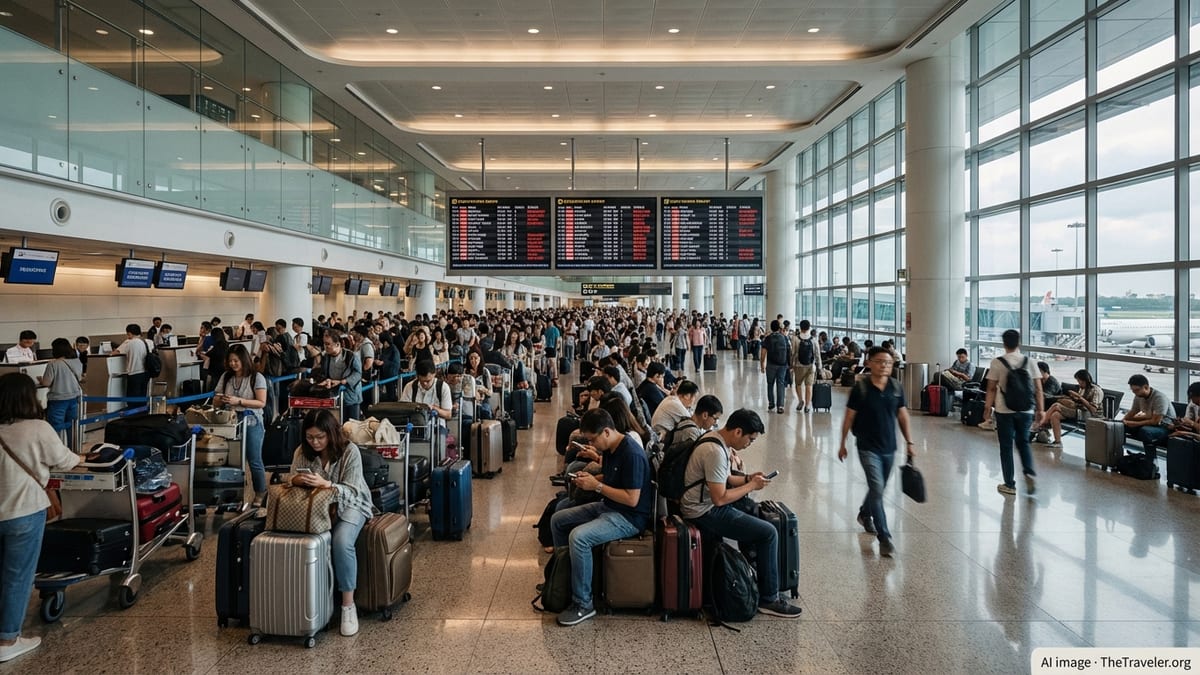
Wave of Fresh Cancellations Hits Regional Gateways
Operational data from regional aviation trackers and airport operators on February 26 indicate a new spike in cancellations layered on top of an already fragile flight schedule across Asia. The latest round affects more than 80 services, concentrated at major hubs such as Jakarta Soekarno Hatta, Kuala Lumpur International, Taiwan Taoyuan, Wattay International in Vientiane, and Hong Kong International.
The cancellations follow several days of elevated disruption across the wider region, with airlines still attempting to rebalance aircraft and crews after weather and staffing constraints rippled through schedules. The pattern now emerging shows repeated cancellations on the same trunk routes, suggesting broader network challenges rather than isolated technical issues.
Regional observers say the cancellations are disproportionately affecting connecting traffic, leaving transit passengers stranded mid‑journey as long‑haul legs to North America and onward regional services are pulled from the board with little notice.
Garuda Indonesia, Batik Air, Cathay Pacific Among Most Affected
Flag carrier Garuda Indonesia and Indonesian operator Batik Air are among the airlines most exposed to the latest disruption, with multiple departures scrubbed from Jakarta and other Indonesian gateways. Routes linking Jakarta and Bali with Kuala Lumpur, Bangkok, and Singapore are seeing repeated cancellations, squeezing capacity on some of Southeast Asia’s busiest leisure and business corridors.
In Hong Kong and Taipei, Cathay Pacific and other major regional and long‑haul carriers have pulled a series of flights serving North America, including services to San Francisco and New York. Travelers booked on connecting itineraries via these hubs reported being informed of cancellations only after arriving at the airport, forcing last‑minute searches for scarce alternative seats.
Industry data from recent days also shows low‑cost and regional airlines trimming schedules, particularly on secondary routes in Indonesia, Malaysia, and Laos. While individual carriers have cited a mix of operational constraints, the combined effect has been a noticeable thinning of frequencies on routes that typically offer multiple daily options.
Long-Haul Links to the United States and Key Cities Severed
One of the most visible impacts of the latest cancellations has been on long‑haul traffic between Asia and the United States. Services from Taipei and Hong Kong to San Francisco and New York have been among those affected, disrupting itineraries for both business travelers and leisure passengers returning from peak-season trips.
Passengers transiting through Asian hubs from destinations such as Jakarta, Bali, Kuala Lumpur, and Bangkok have been particularly vulnerable. Missed connections have led to overnight airport stays as hotels around major hubs quickly filled, while some travelers reported being rebooked on multi‑stop itineraries adding 12 hours or more to their total journey time.
Within Asia, links between major capitals including Jakarta, Kuala Lumpur, Bangkok, Taipei, and Vientiane have also been repeatedly interrupted. The cancellations are complicating regional trade and corporate travel at a time when demand had been steadily rising, and are beginning to spill over into tourism flows to island and resort destinations that rely on seamless hub connections.
Passengers Report Confusion, Long Queues and Patchy Communication
Across Indonesia, Malaysia, Laos, Taiwan, and Hong Kong, airport terminals on Tuesday and Wednesday were marked by long queues at airline service counters and crowded departure halls as passengers scrambled for information. With rolling cancellations added throughout the day, many travelers described an atmosphere of uncertainty in which flight status screens changed more quickly than ground staff could respond.
Some passengers reported receiving app notifications about cancellations only minutes before scheduled boarding times, while others said they learned of the changes only after spotting their flight disappear from departure boards. With so many services disrupted, rebooking options were limited, prompting airlines to offer meal vouchers and overnight accommodation where possible.
Travel agents and corporate travel managers said they were fielding a surge in urgent requests to reroute travelers, often via alternative hubs outside the most impacted airports. However, with recent disruptions in other regions and strong seasonal demand, the pool of available seats on alternative carriers remained tight.
Airlines Race to Reset Schedules as Travelers Weigh Options
Airlines operating across the affected markets have begun trimming schedules and adjusting rotations in an effort to restore reliability, even at the cost of temporarily reduced frequencies. Carriers are prioritizing routes with high demand and strategic importance while consolidating less profitable or more operationally complex services.
Industry analysts say the current wave of cancellations underscores how sensitive Asia’s interconnected air network remains to shocks ranging from adverse weather and crew shortages to air traffic control constraints. Once delays accumulate across several hubs simultaneously, airlines may have little choice but to proactively cancel segments to reset their operations.
For travelers planning upcoming trips through Jakarta, Bali, Kuala Lumpur, Taipei, Bangkok, Hong Kong, and surrounding hubs, experts recommend building additional connection time into itineraries and monitoring flight status closely in the 24 hours before departure. Flexible tickets and travel insurance with strong disruption coverage are also seeing renewed interest as passengers look to insulate themselves from further schedule volatility.