

More news on this day
Travelers across Asia are facing mounting disruption as a wave of cancellations and delays involving Batik Air, China Eastern, Malindo Air and several regional carriers has reportedly affected 182 flights across key hubs in Indonesia, Malaysia, China, India and Nepal.
Get the latest news straight to your inbox!
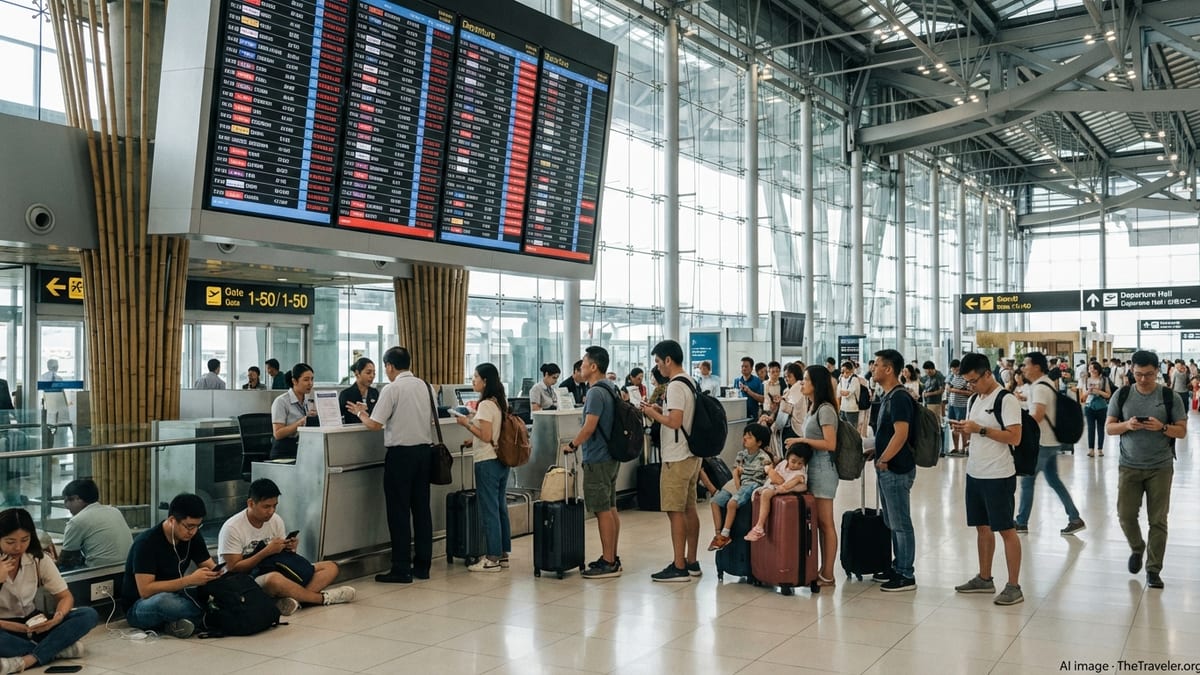
Multiple Carriers, One Regional Disruption Pattern
Recent operational data and published coverage indicate that a growing number of Asian airlines are trimming or rescheduling services as they navigate volatile demand, higher operating costs and airspace constraints linked to wider geopolitical tensions. Within this environment, Batik Air, China Eastern and Malindo Air are among the carriers experiencing clusters of cancellations and extended delays, contributing to a tally of 182 affected flights across the region.
The bulk of the disruption is concentrated on short and medium haul routes that connect major Southeast and East Asian hubs. Services linking Indonesia and Malaysia, particularly those involving Jakarta and Kuala Lumpur, have seen multiple cancellations within days, while flights touching Beijing and key cities in India and Nepal have faced rolling delays and schedule changes. Industry trackers show that the impact is uneven, with some routes operating normally while others see sudden cuts or day-of-departure disruption.
While the number of affected flights remains a small fraction of total daily movements across Asia, the concentration in a short window and on heavily used corridors has created visible pressure in terminals and at airline service counters. Passengers on multi‑segment itineraries, especially those attempting tight connections between Southeast Asia and northern Asia, have been particularly exposed to missed onward flights and overnight stays.
Publicly available timetables and route updates suggest that this disruption is unfolding alongside broader capacity adjustments, with some airlines paring back secondary routes even as they add capacity on marquee city pairs. That mix of expansion and contraction has made it harder for travelers to anticipate where reliability issues will surface next.
Indonesia and Malaysia: Jakarta and Kuala Lumpur Under Strain
Indonesia and Malaysia have emerged as focal points in the current wave of irregular operations. Flight statistics compiled over the past week show dozens of cancellations and significant delays involving carriers such as Batik Air, Garuda Indonesia, Malaysia Airlines and AirAsia on routes touching Jakarta, Bali, Makassar, Kuala Lumpur, Penang, Kota Kinabalu and Kuching. In this larger pattern, services operated by Batik Air and Malindo Air are among those drawing attention from affected travelers.
Jakarta’s Soekarno Hatta International Airport has recorded a series of short‑notice cancellations on regional services, including multiple Indonesia–Malaysia frequencies. In Kuala Lumpur, both the main international airport and the secondary city airport have seen select departures scrubbed or retimed, ranging from Indonesia‑bound flights to domestic connections. Individual flight status data shows examples of Kuala Lumpur to Jakarta services being cancelled on the day of operation, leaving passengers reliant on rebooking to later departures or on other airlines where seats are available.
Travel industry analysis notes that some of the strain in Indonesian and Malaysian operations is tied to revised fleet deployment and crew rotations as carriers respond to route viability and higher fuel costs. At the same time, airlines are still contending with intermittent weather‑related constraints and congestion at peak periods, factors that can quickly cascade into missed slots and late‑night cancellations.
Consumer reports and social media posts from the affected hubs describe long queues at check‑in and ticketing counters as travelers seek rebooking options or refunds. Although many passengers are being moved to later flights, limited spare capacity on popular routes has translated into multi‑hour or even next‑day waits for alternative departures.
China, India and Nepal See Knock‑On Effects
Beyond Southeast Asia, large aviation markets such as China and India, along with key gateways in Nepal, have reported knock‑on effects from the broader regional disruption. In China, major hubs including Beijing have seen an uptick in delayed and cancelled departures on selected Asian routes, as carriers rework schedules and respond to changing overflight conditions.
In India, domestic and international operations have already been strained this season by reroutings around restricted airspace and by periodically saturated airport infrastructure. Industry summaries for late March highlight more than two thousand delayed flights and over one hundred cancellations across Asia and the Middle East in a single day, with Indian airports among those registering elevated delay counts. Within that wider picture, selected services operated by regional partners, including those connecting to Southeast Asia, have been subject to late changes or day‑of‑travel disruption.
Nepal, which relies heavily on connections to both India and China as well as to Southeast Asia, has felt the impact indirectly. Disruptions on upstream sectors have resulted in late arrivals, retimed departures and occasional cancellations on flights serving Kathmandu and other Nepalese airports. Travelers using these routes to feed into longer‑haul itineraries have found their plans complicated by the reduced reliability of regional links.
Route planners note that even a relatively modest number of cancellations in a tight regional network can generate a chain reaction. When an inbound aircraft arrives hours late or not at all, the onward leg is delayed or cancelled, creating a ripple that can extend across multiple countries in a single day.
What Is Driving the 182 Affected Flights
The figure of 182 affected flights across Indonesia, Malaysia, China, India and Nepal reflects a confluence of operational pressures rather than a single triggering event. Airline network data indicates that some of the disruption is tied to strategic schedule reductions, as carriers such as Batik Air and Malindo Air recalibrate capacity on weaker routes or during off‑peak periods. In several cases, those adjustments have translated into last‑minute timetable changes that passengers experience as outright cancellations.
In parallel, airlines in Asia are adjusting to the ongoing closure or restriction of important air corridors over parts of the Middle East, which has added flight time and complexity to many Asia–Europe connections. To accommodate longer routings and maintain crew duty limits, some carriers have thinned out shorter regional flights or retimed them into less congested windows, a move that can temporarily reduce resilience when irregular operations occur.
Weather remains a recurring factor as well. Seasonal storms and heavy rain across parts of Southeast and South Asia have periodically forced ground stops or reduced runway capacity, triggering rolling delays that eventually spill into cancellations when aircraft and crew can no longer be kept within legal duty hours.
Analysts observing on‑time performance metrics point out that several regional airlines have been operating with limited spare aircraft, leaving little buffer when mechanical issues, air traffic control restrictions or severe weather emerge. The result is a higher likelihood that a localized problem on a single route will ultimately contribute to the broader count of affected flights.
Passengers Face Long Queues, Tight Rebooking Options
For travelers caught in the disruption, the most immediate consequences have been long queues, uncertainty over onward connections and, in some cases, unexpected overnight stays. Reports from airports in Jakarta, Kuala Lumpur and Beijing describe passengers crowding carrier service desks after learning of cancellations by Batik Air, Malindo Air, China Eastern and other airlines operating in the same terminals.
With 182 flights affected across the region, available seats on remaining services have tightened, especially on popular routes between Indonesia and Malaysia and on links connecting Southeast Asia to Chinese and Indian hubs. Some passengers have been able to secure rebooking on partner airlines or later flights, but others have turned to low‑cost competitors or entirely different routings at short notice, often at higher cost.
Consumer advocates advise that, in this environment, travelers should monitor flight status closely in the 24 hours before departure, make use of airline mobile apps where available and be prepared for potential schedule changes. Refund and compensation policies vary widely between carriers and jurisdictions, making it essential for passengers to review the conditions of carriage for their specific airline and route.
Travel planners suggest that those with critical connections, such as long‑haul departures from Beijing, Delhi or other major hubs, build additional buffer time into their itineraries. As airlines continue to fine‑tune schedules across Asia and adjust to external pressures, operational reliability may remain uneven on certain routes, keeping disruption risks elevated in the short term.