

More news on this day
Hundreds of travelers across Asia are facing missed connections and last minute itinerary changes as at least 182 flights operated by Batik Air, China Eastern, Malindo Air and other carriers have been cancelled or heavily delayed across Indonesia, Malaysia, China, India and Nepal, disrupting traffic through major hubs including Jakarta, Kuala Lumpur, Beijing and Delhi.
Get the latest news straight to your inbox!
Severe Weather and Airspace Issues Ripple Across Key Hubs
Recent days have seen a convergence of disruptive factors across Asia’s aviation network, with severe weather systems, regional airspace restrictions and congested schedules combining to push airlines into large scale schedule adjustments. Publicly available operational data and media reports indicate that Chinese carriers, including China Eastern, have cancelled dozens of services and delayed many more as storms and heavy rain swept through major cities such as Beijing, Shanghai and Guangzhou.
In Nepal, fresh snowfall and poor visibility in Himalayan regions have added further pressure. Coverage of airport operations around Kathmandu points to repeated delays and cancellations of both domestic and international services, affecting links to India and wider Southeast Asia. These weather related constraints have compounded earlier disruptions linked to changing overflight permissions and conflict related closures in parts of West Asia, forcing carriers to reroute or trim their schedules.
The cumulative effect across the region is a patchwork of cancellations and long delays that has now reached at least 182 affected flights on key routes connecting Indonesia, Malaysia, China, India and Nepal. Although precise tallies vary by airport and day, travel industry monitoring platforms show an unusually high rate of late running services and scrubbed departures at large hubs that normally function as reliable transit points.
As airlines seek to prioritize safety and compliance with evolving airspace rules, passengers are bearing the brunt in the form of extended waits, missed onward flights and last minute changes to routing. The disruption is particularly acute for travelers relying on single night connections between South and Southeast Asia and North Asia, which offer little slack when schedules unravel.
Batik Air and Malindo Legacy Operations Under Strain
Batik Air and its Malaysian affiliate, which absorbed the former Malindo Air brand, have been prominent among the carriers experiencing operational stress. The group operates dense schedules out of Jakarta and Kuala Lumpur to secondary cities in Indonesia, India and the wider region, which can be vulnerable when adverse weather or flow control measures reduce available slots.
Flight tracking summaries from recent days highlight multiple Batik Air services between Jakarta and Kuala Lumpur, as well as onward links to cities such as Delhi and Kathmandu, posting extended delays or being cancelled outright. Some of these disruptions are linked to cascading knock on effects when aircraft and crew arrive late from earlier rotations, leaving little time for recovery before the next departure window closes.
Travel forums and consumer reports have also drawn attention to recurring timetable changes and rolling delay extensions on certain Batik Air routes, particularly overnight and early morning departures. While such anecdotal accounts do not capture the full picture of the airline’s performance, they underscore the frustration felt by passengers when information on revised departure times and rebooking options is slow to materialize.
The legacy of Malindo Air’s route structure, now folded into Batik Air Malaysia, means that the carrier is heavily exposed on Kuala Lumpur centric corridors that also feed traffic to and from Australia, South Asia and the Middle East. When regional disruptions occur, these multi sector itineraries are among the first to feel the impact, amplifying the number of travelers affected by each individual cancellation.
China Eastern Cancellations Add Pressure in Beijing and Beyond
In China, China Eastern has emerged as one of the main carriers confronting a spike in schedule changes. Coverage by aviation focused outlets notes that the airline has recently cancelled dozens of flights and logged hundreds of delays in a single day as part of a wider pattern of operational challenges faced by Chinese carriers during bouts of severe weather.
Beijing’s airports, along with Shanghai and other coastal hubs, have seen waves of thunderstorms and low cloud that limit runway capacity and force air traffic managers to impose tighter flow restrictions. When these constraints coincide with peak travel periods, carriers such as China Eastern may be required to trim their timetables or consolidate services, leading to clusters of cancellations on short haul routes within China and to regional destinations in countries such as India and Nepal.
Reports shared by passengers show that some China Eastern customers have received last minute messages notifying them of cancelled flights and offering options to rebook or seek refunds through digital channels. While such tools can speed up the process of securing an alternative journey, they do little to resolve the immediate disruption faced by travelers already en route to the airport or in transit at hubs like Beijing and Shanghai.
The combination of China Eastern’s large market share on key routes and the centralized role of Beijing and Shanghai in China’s aviation network means that each burst of cancellations sends ripples far beyond the immediate region. Passengers heading for secondary cities, or making long haul connections onward to Europe and North America, are particularly exposed when east Asian sectors are scrubbed or heavily delayed.
Indian and Nepalese Corridors Hit by Knock On Effects
India and Nepal are experiencing the downstream consequences of these disruptions, both from regional weather and from broader airspace issues. Indian airports such as Delhi and other major gateways have become chokepoints for rerouted services avoiding sensitive airspace farther west, while also coping with seasonal weather patterns that can slow operations during peak hours.
Travel industry coverage points to a series of flight adjustments by carriers serving India, including regional operators and large international airlines, as they juggle alternative routings and slot limitations. This environment has made it more difficult for carriers like Batik Air and China Eastern to maintain punctual schedules on India bound routes, and has raised the likelihood that late arriving aircraft will force late night cancellations.
In Nepal, recent reports highlight how heavy snowfall and unstable mountain weather have curtailed flights in and out of Kathmandu, not only on domestic sectors but also on popular regional links to India and wider Asia. When conditions deteriorate, airlines may hold aircraft on the ground or divert them to alternative airports, further complicating the task of keeping multi leg itineraries on track.
For passengers, the impact is felt in the form of abrupt gate changes, rolling departure estimates and, in some cases, the need to arrange overnight accommodation while waiting for the next available flight. Travelers relying on tight connections between Nepal, India and Southeast Asian hubs are finding that even minor delays on one leg can now cascade into complete itinerary overhauls.
Jakarta and Kuala Lumpur Struggle to Keep Connections Flowing
As major Southeast Asian hubs, Jakarta and Kuala Lumpur play a critical role in stitching together regional and long haul networks. The recent wave of cancellations and delays involving Batik Air, Malindo’s successor operations and other regional carriers has tested the resilience of these airports, where many travelers schedule short connection times to minimize total journey duration.
Operational data suggests that a significant share of the 182 affected flights involves services touching either Soekarno Hatta International Airport in Jakarta or Kuala Lumpur International Airport. When departure banks at these hubs are disrupted, onward services to China, India and Nepal can quickly lose their carefully planned alignment, leaving passengers stranded mid journey.
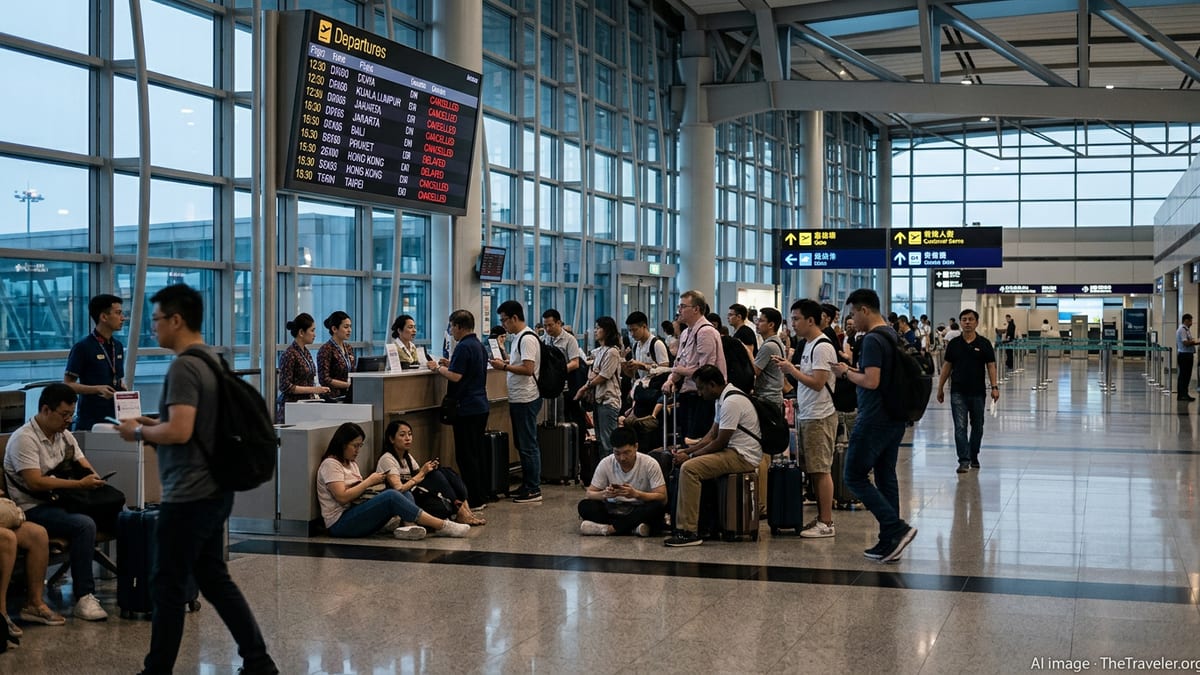
Crowded departure halls, long queues at transfer desks and competition for limited hotel rooms near the airports have become familiar scenes during recent disruption peaks. While airport operators and airlines publish advisories urging travelers to check their flight status frequently and arrive early, the fast changing nature of weather patterns and regional airspace restrictions means that conditions can deteriorate with little warning.
Industry observers note that the latest bout of disruption underscores the vulnerability of Asia’s interconnected flight network to simultaneous shocks in multiple regions. With carriers such as Batik Air, China Eastern and other regional players already running tight schedules to meet surging demand, even a single day of adverse conditions can translate into days of irregular operations as airlines attempt to reposition aircraft and crew.