

More news on this day
Thousands of travelers across Asia are facing extensive disruption after 264 flights were cancelled and 3,829 delayed across major hubs including Tokyo, Shanghai, Kolkata, Singapore and Abu Dhabi, with carriers such as Batik Air, IndiGo, Air China and FlyDubai among those affected.
Get the latest news straight to your inbox!
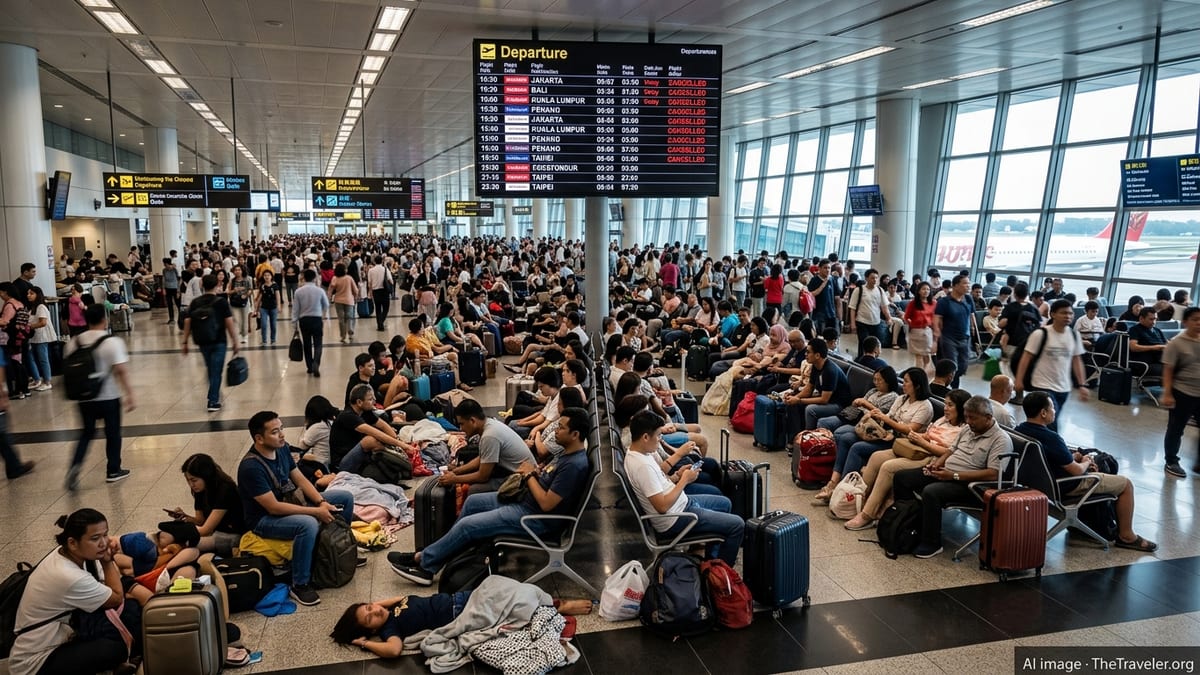
Widespread Disruptions Across Asian and Gulf Gateways
Publicly available aviation data for April 6 and 7, 2026, indicate that flight operations across Asia and parts of the Middle East have come under acute strain, with irregular schedules rippling across at least six countries. China, Japan, Singapore, India and Saudi Arabia feature prominently in the latest figures, which point to hundreds of cancellations and several thousand late departures and arrivals in under 24 hours.
The most recent tally referenced by regional travel industry coverage cites 264 cancellations and 3,829 delays across a network of airports stretching from Tokyo and Shanghai to Kolkata and Abu Dhabi. These numbers place the current disruption among the more severe single day episodes in Asia this year, following earlier waves of cancellations tied to regional conflict and bad weather in March.
Airlines bearing the brunt of the current irregular operations include low cost and full service carriers. Batik Air and IndiGo, both heavily exposed to dense intra Asian routes, are appearing frequently in delay and cancellation logs, alongside Air China, FlyDubai and several other regional and Gulf based operators. Passengers booked on connecting itineraries via major hubs are experiencing particularly long knock on delays.
While individual airports continue to process traffic, cumulative schedule changes are effectively constraining capacity. This has left many travelers stuck landside or in transit hotels while they wait for rebooked departures or final confirmation of revised timings.
Tokyo, Shanghai, Kolkata and Abu Dhabi Among Hardest Hit Hubs
Reports compiled from airport departure boards and third party tracking platforms show that the disruption is concentrated at a string of high volume gateways. Tokyo area airports have recorded elevated levels of late departures and missed slots as traffic flows are adjusted, while Shanghai Pudong and Shanghai Hongqiao are facing clusters of congested departure banks as aircraft and crews fall out of rotation.
In South Asia, Kolkata has emerged as one of the most affected Indian gateways in the latest figures, a reflection of both its role as an important regional connector and the wider strains currently visible on India’s busy domestic and international network. IndiGo and other Indian carriers are juggling schedule changes on routes linking Kolkata to Gulf and Southeast Asian cities already reshaped by earlier airspace issues.
Abu Dhabi, a critical transfer point between Asia, the Middle East and Europe, has also reported a noticeable spike in cancellations and delays. FlyDubai, Air Arabia Abu Dhabi and IndiGo services into the Emirati capital have faced a mix of outright cancellations and rolling delays in recent weeks, and the latest set of irregular operations has added further stress for passengers attempting to transit the Gulf.
Singapore Changi, though reporting fewer outright cancellations than some North Asian and Chinese counterparts, is contending with a buildup of delayed departures as late arriving aircraft from Japan, India and China disrupt carefully timed schedules. This has knock on effects for connecting itineraries across Southeast Asia and onwards to Australia and Europe.
Weather, Congestion and Geopolitics Combine to Strain Networks
The causes of the latest disruption span several interlocking factors. Industry reporting points to localized severe weather systems affecting parts of Japan and East Asia in the first week of April, forcing temporary ground stops and tighter air traffic control spacing. When combined with already busy spring travel demand, even short weather related closures have translated into hours of accumulated delay.
At the same time, operational congestion within some major Chinese hubs has added further complexity. Previous weeks saw large numbers of delayed and cancelled movements at Guangzhou, Shenzhen, Shanghai and Beijing as airlines navigated slot constraints and staffing pressures. The resulting backlogs have reduced schedule resilience, making it more difficult to absorb additional shocks elsewhere in the network.
Overlaying these local issues is the broader geopolitical backdrop, with airspace restrictions around the Gulf and wider Middle East still reshaping long haul routings. Ongoing conflict related closures and re routings have caused aircraft and crew to arrive late or out of position, particularly for carriers linking India and Southeast Asia to Saudi Arabia and neighboring states. As a result, flights operated by airlines such as FlyDubai, Saudia and other regional carriers remain vulnerable to cascading delays when upstream sectors are disrupted.
In parallel, fuel price volatility and cost containment measures have led some Asian airlines to trim marginal frequencies or consolidate flights. While these steps are designed to stabilize operations over the medium term, they can also mean fewer spare aircraft and limited backup capacity when a fresh wave of disruptions hits.
Impact on Key Carriers Including Batik Air and IndiGo
Low cost and hybrid carriers that run dense short haul schedules with high aircraft utilization are among the most exposed to the current turmoil. Batik Air, which operates an extensive network across Indonesia and into regional markets such as Malaysia, Singapore and parts of China, has been listed in multiple delay statistics for the latest disruption window. Packed timetables and tight turnarounds give operators little margin when a single aircraft or crew rotation goes off schedule.
IndiGo, India’s largest carrier by market share, continues to navigate a complex operating environment shaped by previous scheduling challenges, intense domestic demand and lingering airspace and security related constraints affecting key international routes. Recent advisories from Indian airports and Gulf hubs point to waves of IndiGo flight changes into and out of Abu Dhabi, Dubai and other Middle Eastern cities, creating uncertainty for travelers connecting onward to Europe and North America.
Air China, with its substantial presence at Beijing and Shanghai, is managing disruption both on trunk domestic sectors and on key regional links to Japan, Singapore and South Asia. Operational adjustments in response to earlier diplomatic and travel related frictions between China and Japan have already slimmed capacity on some city pairs, amplifying the impact when irregular operations spike.
FlyDubai and other Gulf based carriers are facing their own constraints as they balance demand surges, conflict driven airspace changes and staffing and maintenance windows. When slots at Dubai and Abu Dhabi are reshuffled to accommodate safety and security priorities, services into Asia are among those forced into revised timings, contributing to the wider regional picture of late night and early morning delays.
What Travelers Can Expect in the Coming Days
Publicly available forecasts from risk advisory firms and aviation trackers suggest that some level of disruption is likely to persist across parts of Asia and the Gulf through the rest of the week, even if weather conditions improve. Aircraft and crews will take time to return to normal rotations, and airports that have been operating above planned capacity may need additional schedule adjustments to stabilize.
Passengers with upcoming itineraries through Tokyo, Shanghai, Kolkata, Singapore, Abu Dhabi and other key hubs are being urged by industry advisories to monitor flight status closely in the 24 hours before departure. Same day schedule changes remain possible on routes operated by carriers such as Batik Air, IndiGo, Air China, FlyDubai and other regional airlines tied into the affected hubs.
Travel planning experts note that travelers connecting across different airlines or holding separate tickets are particularly vulnerable to missed onward flights when delays mount. Longer minimum connection times, flexible tickets and travel insurance with clear disruption coverage are being highlighted as practical ways to reduce financial risk amid an unsettled operational backdrop.
While airlines and airports are gradually working through the latest wave of irregular operations, the episode underscores the heightened fragility of Asia’s air travel ecosystem in 2026. With weather, geopolitical tensions and structural capacity constraints frequently converging, passengers across the region may need to build greater flexibility and contingency time into any journey that relies on busy hubs such as Tokyo, Shanghai, Singapore, Kolkata and Abu Dhabi.