

More news on this day
Thousands of air travelers across Asia and the Middle East are facing another weekend of turmoil as data from regional monitoring sites show 283 flights cancelled and 3,972 delayed in a single day, snarling operations at major hubs in China, Japan, India, South Korea and the United Arab Emirates and disrupting carriers including Korean Air, ANA Wings, IndiGo and Qatar Airways.
Get the latest news straight to your inbox!
Major Hubs From Beijing to Dubai Buckle Under Strain
Publicly available tracking data and aviation dashboards indicate that Beijing Capital, Tokyo Haneda and Narita, Delhi, Seoul Incheon and Dubai International are among the hardest-hit airports, with a dense web of regional and long haul services thrown off schedule. The disruption is centered on routes linking North and East Asia with South Asia and the Gulf, but the knock-on effects are now reaching secondary cities and domestic networks.
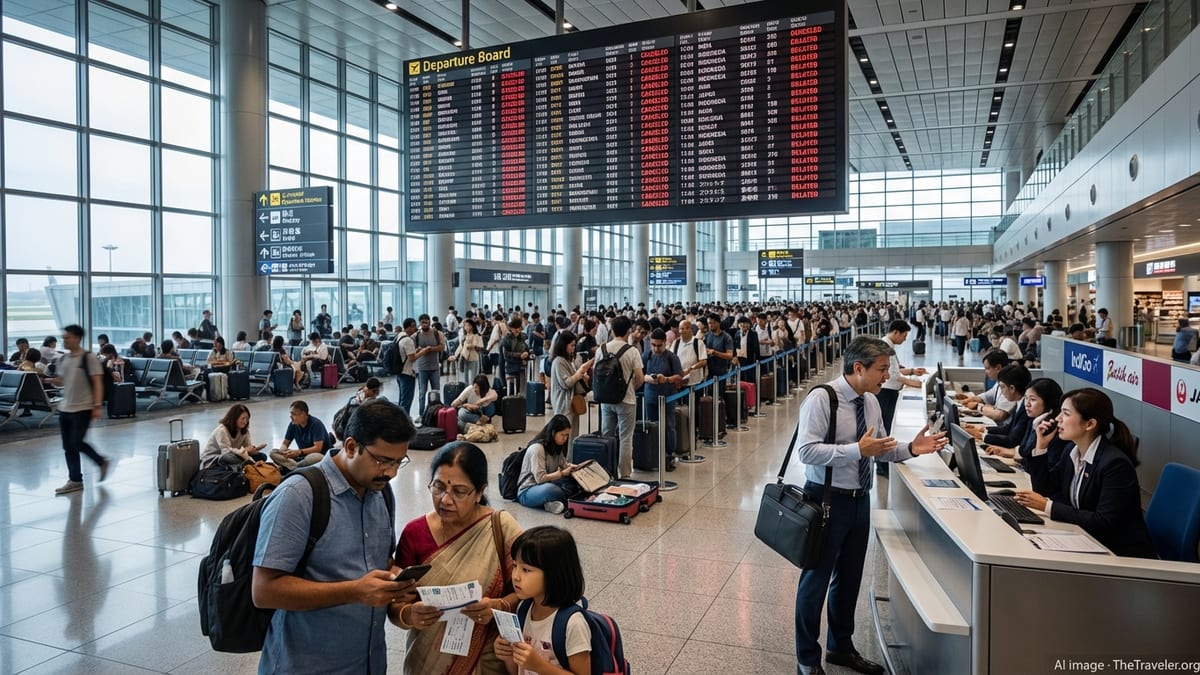
Reports from independent aviation analysis sites describe long lines at check in, congested transfer zones and departure boards dominated by “delayed” markers. At Beijing and Tokyo, high-frequency shuttles to other Asian capitals have been particularly vulnerable, amplifying missed connections for passengers attempting to reach Europe, North America and Oceania.
In Dubai, one of the world’s busiest transit hubs, scaled-back operations and rerouted flows through the Gulf region continue to pressure ground handling and crew rotations. Even where flights operate, publicly available schedules show extended block times and irregular departure waves, a pattern that complicates recovery efforts for airlines across the network.
Delhi and other Indian gateways are facing similar bottlenecks as carriers attempt to reconfigure schedules that were already tightened by earlier airspace restrictions and seasonal demand. Passengers on early morning and late night departures are reporting the longest waits as carriers consolidate lightly booked flights and reposition aircraft.
Airlines Across Asia-Pacific and Gulf Struggle to Rebuild Networks
Monitoring of published timetables shows that a mix of full service and low cost carriers are bearing the brunt of the latest disruption. Korean Air and other South Korean operators have seen schedules at Incheon and regional airports reshuffled as late arriving aircraft from Southeast Asia and the Gulf cascade into missed departure slots.
In Japan, ANA Wings and other domestic-focused carriers are contending with congestion at Tokyo’s airports and at key regional bases, where delays on trunk routes are rippling into shorter hops. Aviation-focused outlets note that airlines are increasingly turning to tactical cancellations of individual rotations to avoid wider schedule collapse, which helps stabilize operations but leaves many passengers needing rebooking.
IndiGo, which already adjusted parts of its international schedule earlier in the year in response to Middle East airspace issues, is again in the spotlight as India’s largest carrier by market share. Publicly available data and local reporting indicate that its Delhi and Mumbai operations are especially sensitive to knock-on effects from longer detours and constrained Gulf capacity, leading to clustering of delays around peak bank times.
Qatar Airways and other Gulf carriers, meanwhile, are trying to maintain skeleton long haul connectivity while navigating evolving airspace restrictions over parts of West Asia. Travel advisories and schedule updates released in recent days point to rolling adjustments in frequencies to key Asian destinations including Beijing, Tokyo and major Indian cities, with some services temporarily suspended and others operating at altered times.
Airspace Restrictions and Weather Complicate Recovery Efforts
Aviation analysts link the latest round of cancellations and delays to a combination of factors, led by ongoing airspace closures and restrictions over parts of the Middle East that continue to divert traffic between Asia and Europe. According to recent industry commentary, the loss of direct overflight options has forced airlines to lengthen many routes, absorbing aircraft and crew hours that would otherwise support additional flights.
These structural pressures are being compounded by seasonal weather systems moving across East and South Asia. Thunderstorms around the Pearl River Delta, crosswinds affecting northern Japanese airports and poor visibility episodes in parts of northern India have all been cited in recent operational summaries as triggers for localized ground stops or flow control, which then spill into broader regional networks.
Slot-constrained hubs such as Tokyo and Delhi are particularly exposed when operations are disrupted even for a few hours. Once arrival and departure banks are pushed out of their assigned times, aircraft can lose their optimal take off or landing windows, leading to queues for both runways and gates. That in turn affects subsequent rotations for the same aircraft, fueling the kind of rolling delays reflected in the latest figures.
Industry briefings also note that carriers are still working to rebuild resilience following several years of rapid capacity restoration. Lean staffing models at some airlines and ground handling partners leave little margin when multiple hubs are stressed at once, increasing the likelihood that a weather event or airspace change will translate into widespread schedule disruption.
Passenger Impact Ranges From Missed Holidays to Business Losses
The human impact of the latest wave of disruption is visible in reports from airports across the region, where stranded travelers describe missed family events, lost business opportunities and disrupted holidays. With 283 flights cancelled outright and nearly 4,000 delayed, even conservative load factor estimates suggest that tens of thousands of passengers are being pushed into rebookings, overnight stays or complex rerouting.
Consumer-focused travel advisories published in recent days recommend that passengers flying through Beijing, Tokyo, Delhi, Seoul, Dubai and other major hubs build in longer connection times and closely monitor airline apps for same day changes. Several rights organizations stress that travelers should familiarize themselves with local and international compensation rules, which can vary widely depending on carrier, routing and the cause of disruption.
In India and parts of Southeast Asia, reports highlight swelling crowds at customer service counters for low cost carriers, where rebooking capacity is often limited by smaller fleets and fewer interline agreements. Travelers on point to point tickets with separate bookings for onward legs are especially vulnerable, as missed connections in these cases are typically treated as independent disruptions rather than protected itineraries.
At Gulf and North Asian hubs, premium lounges and airport hotels are reportedly nearing capacity as airlines house long haul passengers awaiting the next available departure. Publicly available comments from airport operators and tourism boards suggest concern that repeated episodes of large scale disruption could weigh on traveler confidence and business travel planning if the pattern persists into the upcoming summer peak.
Outlook: Continued Volatility Likely as Peak Season Approaches
Aviation think tanks and regional industry bodies caution that the current episode is part of a broader pattern of volatility for Asia-Pacific and Middle East aviation, shaped by geopolitical tensions, climate-linked weather extremes and infrastructure strain at fast-growing hubs. Recent analyses emphasize that while global cancellation rates have improved compared with previous years, specific corridors remain highly exposed to sudden disruptions.
Forward schedules filed by major carriers for April and May already show trimmed frequencies on some Asia–Europe and Asia–Gulf routes, along with padded block times that acknowledge longer routings and chronic congestion. This may help reduce same day chaos but can translate into fewer available seats and higher fares on popular routes connecting cities such as Beijing, Tokyo, Delhi and Dubai.
For travelers, the near term outlook points to a need for flexibility and contingency planning. Travel experts advise booking longer connections through vulnerable hubs, avoiding tight self-connecting itineraries and considering alternative routings via less congested airports where possible. Passengers are also encouraged to keep contact details up to date with airlines to receive rapid notice of cancellations or retimings.
With the latest figures underscoring how quickly conditions can deteriorate when airspace, weather and capacity constraints intersect, the coming weeks will test how effectively airlines and airports can adapt their operations. For now, the message from publicly available flight data is clear: disruption across Asia’s skies remains a significant risk as the region moves toward its next peak travel season.