

More news on this day
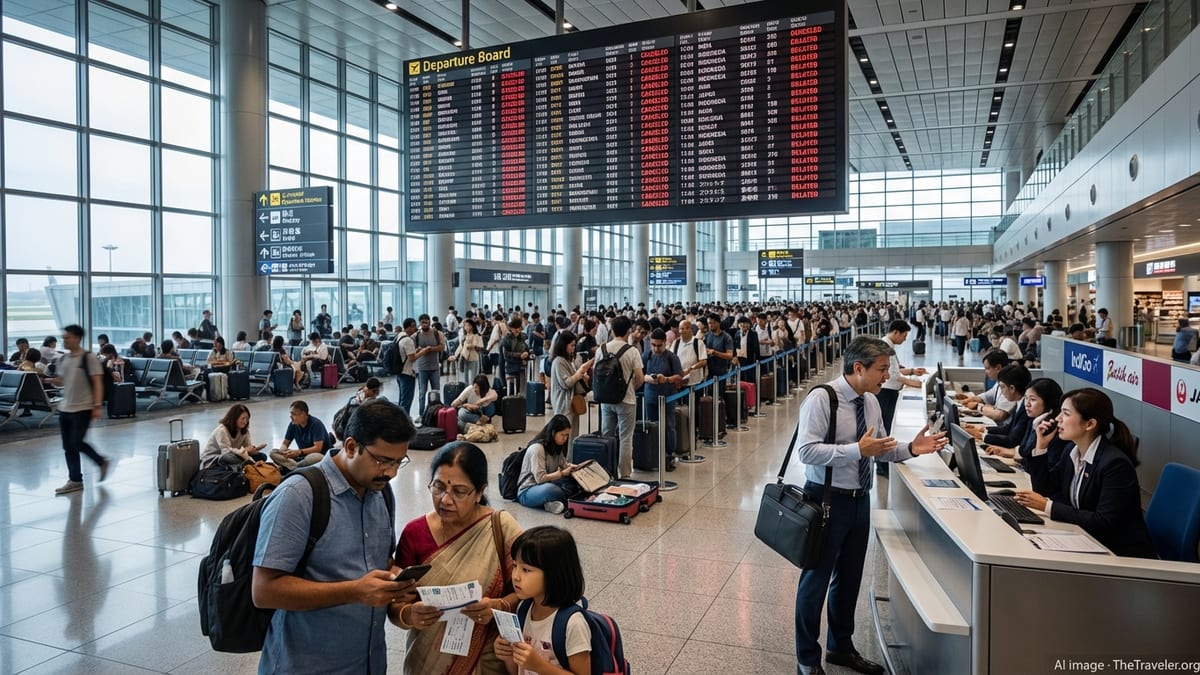
Thousands of air travelers across Asia were left stranded or severely delayed as a fresh wave of disruption hit major hubs in Thailand, Japan, Singapore, China, India, Hong Kong and Indonesia, with operational data indicating 3,251 flight delays and 134 cancellations affecting carriers such as Cathay Pacific, Japan Airlines, Air China and Air India.
Get the latest news straight to your inbox!
Ripple Effects Across Asia’s Busiest Corridors
Operational statistics compiled from flight tracking platforms and regional aviation reports show that the latest disruption concentrated on some of Asia’s most heavily trafficked corridors, including routes linking Bangkok, Beijing, Hong Kong, Singapore, and major Indian metros such as Kolkata. The majority of impacted services were short and medium haul flights, where even modest scheduling shocks can cascade quickly through the network.
Data indicates that delays far outnumbered outright cancellations, with more than 3,200 services departing late compared with 134 that were scrubbed entirely. Aviation analysts note that such a pattern typically reflects rolling operational strain rather than a single catastrophic incident, as airlines attempt to preserve as much of the schedule as possible while grappling with congested airspace, ground handling bottlenecks or technology issues.
In practical terms, staggered departures created crowding at departure gates and check in areas, particularly at regional connector airports. Travelers reported long queues at transfer desks as missed connections mounted, especially for itineraries involving multiple stops between Southeast Asia, North Asia and the Indian subcontinent.
Publicly available data also suggests that tight turnaround times at busy gateways limited airlines’ ability to recover, with inbound delays quickly propagating to onward legs. This was especially visible on routes tying together Hong Kong, Bangkok and key Chinese and Japanese cities, where aircraft and crew are often cycled through several sectors in a single operating day.
Major Carriers Struggle To Maintain Schedules
Among the airlines most visibly affected were full service and network carriers that rely heavily on Asian hubs to feed long haul and regional connections. Public schedules and live tracking boards showed Cathay Pacific facing disruptions on services into and out of Hong Kong, with knock on effects on connecting flights to Bangkok, Singapore and select cities in Japan and mainland China.
Japan Airlines and other Japan based operators experienced mounting delays on regional services linking Tokyo and Osaka with Southeast Asian destinations, including Bangkok and Jakarta. Industry observers pointed to the sensitivity of tightly banked hub operations, where a small shift in arrival patterns can quickly place pressure on runway slots and gate availability.
In mainland China, Air China saw a series of delayed departures from Beijing as turnaround operations slowed and aircraft rotations slipped behind schedule. Similar patterns were reported for Air India, particularly on flights touching Kolkata and other eastern Indian gateways, where operational buffers are often narrower than at the country’s largest hubs.
Low cost and hybrid carriers serving secondary routes in Thailand, Indonesia and around the Bay of Bengal were also drawn into the turbulence. With many of these airlines operating dense schedules using limited spare aircraft, even isolated technical or staffing issues can prompt broader schedule reshuffles, further amplifying congestion at shared airports.
Bangkok, Beijing, Singapore And Kolkata Among Hardest Hit
Regional tracking of airport level performance indicates that the worst of the disruption coalesced around a handful of strategic hubs. Bangkok’s primary international gateway recorded a high concentration of delayed departures, reflecting its role as a connecting point for flights linking Southeast Asia, India and North Asia. Ground handling capacity and crowded departure banks during peak hours left limited room to absorb irregular operations.
In Beijing, a combination of heavy traffic volumes and tightly managed airspace contributed to departure and arrival delays that rippled across domestic and international routes. With Air China and other Chinese carriers operating complex wave banks through the capital, slippage in one set of flights quickly translated into missed connection windows on subsequent sectors, including services to Japan and Southeast Asia.
Singapore’s Changi Airport, a key transit hub for Southeast Asia and long haul traffic to Europe and Australia, also reported knock on impacts as late inbound flights from neighboring countries compressed turnaround times. While outright cancellations remained limited, available information suggests that several carriers were forced to hold aircraft on the ground longer than planned to complete boarding and baggage processes, pushing back onward departures.
Kolkata emerged as one of the more significantly affected Indian gateways, in part because of its role connecting India’s east with Bangkok, Hong Kong and other nearby hubs. Publicly accessible flight status boards showed extended delays on some departures, with Air India and other regional operators adjusting timings as they worked around earlier schedule disruptions.
Technology Strains, Weather And Tight Resourcing Cited
Although no single cause has been identified for the broad regional impact, a mix of contributing factors appears to be at play. Recent aviation coverage across Asia has highlighted the growing vulnerability of airline and airport operations to technology outages, including check in and reservation system issues that can force a shift from automated to manual processing at busy terminals.
Meteorological reports in parts of East and Southeast Asia have also pointed to localized storms and adverse weather periods affecting approach and departure windows around several of the impacted airports. Even relatively short weather disruptions can create substantial backlog when runways are operating near capacity in normal conditions.
Industry analysis further points to tight staffing levels, both in the air and on the ground, as a persistent constraint. Crew duty time regulations limit how long pilots and cabin crew can legally operate without rest, and extended ground delays can quickly push flights against these thresholds. When that happens, airlines may be forced to cancel or significantly reschedule departures while new crews are assembled.
Ground support teams face similar pressures, particularly at hubs that have seen rapid traffic recovery. Baggage handling, ramp operations and security screening can all become pinch points, magnifying the effect of even relatively minor disruptions and extending recovery timelines well beyond initial expectations.
What Travelers Across The Region Are Experiencing
For passengers, the statistics translated into crowded terminals, missed connections and extended waits for updated information. Social media posts and user generated travel reports from across the region described travelers sleeping on terminal floors in Bangkok and Beijing, long queues at transfer and rebooking counters in Singapore, and anxiety among families and business travelers juggling visa rules and hotel reservations in India and Hong Kong.
Consumer advocates note that compensation and support options vary widely between jurisdictions, with some Asian countries offering more clearly defined passenger rights than others. Travelers often remain dependent on airline specific policies regarding meal vouchers, overnight accommodation and rebooking flexibility when faced with long delays or last minute cancellations.
Travel industry analysts suggest that passengers flying through Asian hubs in the coming days should anticipate potential residual delays as airlines work to reposition aircraft and crews. Many recommend building generous connection buffers, especially on itineraries involving multiple carriers or separate tickets, and monitoring flight status closely via official airline channels and airport information boards.
Despite the scale of the current disruption, aviation observers emphasize that Asia’s major hubs have demonstrated strong recovery capacities in past events. As airlines clear backlogs and adjust schedules, regular operations are expected to stabilize, although the latest episode underscores how quickly evolving pressures can spread across a tightly interconnected regional network.