

More news on this day
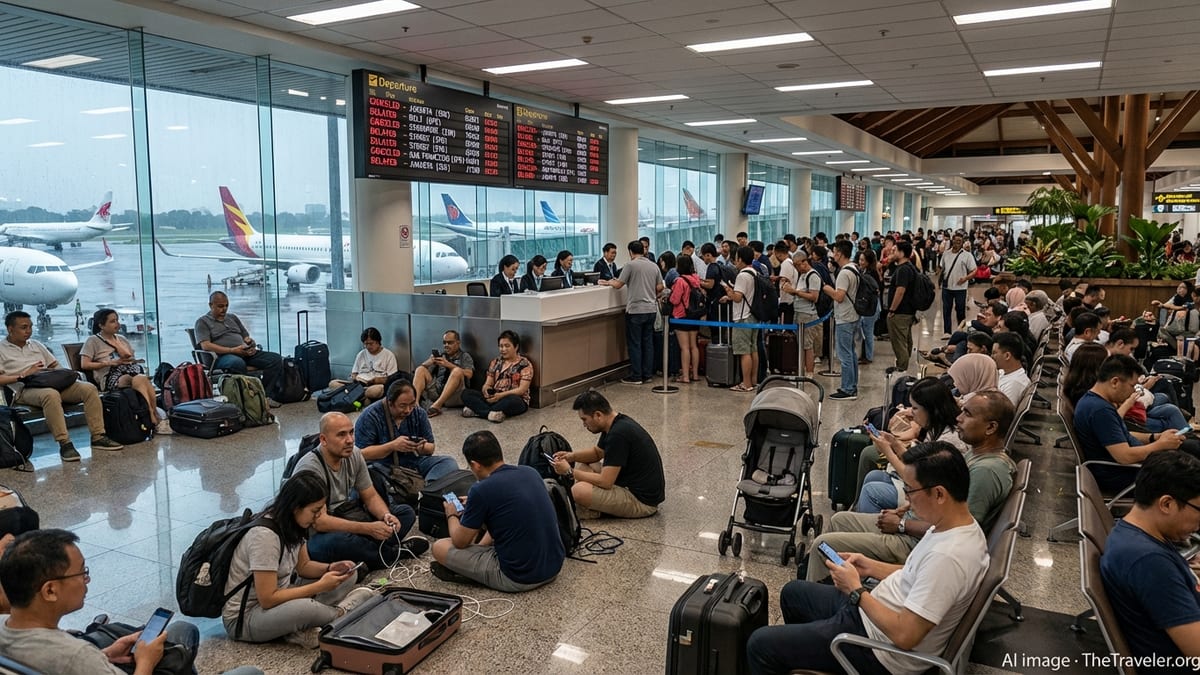
Thousands of passengers across Asia were left stranded on Thursday, March 12, as a new wave of more than 150 flight cancellations by Qatar Airways, Batik Air, Malaysia Airlines and other carriers rippled through major hubs including Jakarta, Bali, Makassar, Kuala Lumpur, Penang, Kota Kinabalu, Langkawi and Taipei.
Get the latest news straight to your inbox!
Fresh Disruptions Hit Key Asian Gateways
The latest cancellations come on top of an already volatile fortnight for regional aviation, as ongoing airspace restrictions linked to the Middle East conflict continue to destabilize schedules between Asia, the Gulf and Europe. Data compiled by aviation analysts and airport authorities show hundreds of flights across the region either grounded or subject to lengthy delays since late February, with a new spike in disruption recorded this week.
Travel and aviation outlets reported that airports from Jakarta Soekarno Hatta and Bali’s Ngurah Rai to Kuala Lumpur International and Hong Kong International logged mounting irregular operations on Thursday. While Qatar Airways, Batik Air and Malaysia Airlines were among the most heavily affected on long-haul and regional trunk routes, several other Asian and Gulf carriers also trimmed frequencies or cancelled rotations outright as they struggled to navigate airspace bottlenecks and crew scheduling limits.
Industry observers say the pattern is similar to the shock that rippled through global networks during previous large-scale airspace closures, with knock-on effects extending far beyond direct Middle East services. In practice, that has meant disruptions for purely intra-Asian itineraries that rely on Gulf hubs for connectivity, including holiday and business travel into Indonesia, Malaysia and Taiwan.
Indonesia, Malaysia and Hong Kong Bear the Brunt
Indonesia’s main international gateways were again under pressure, with passengers bound for Jakarta, Bali and Makassar among those most likely to face missed connections and last-minute cancellations. Travelers arriving from Europe and the Middle East on rerouted services reported extended journeys, unexpected overnights and rebookings via secondary hubs as Doha and other Gulf airports operated on reduced capacity.
In Malaysia, Kuala Lumpur International emerged as a major pinch point. Airlines including Qatar Airways, Malaysia Airlines and Batik Air adjusted schedules on routes feeding the capital as well as domestic and regional links onward to Penang, Langkawi and Kota Kinabalu. Airport operations data showed a build-up of delays throughout the day, with some turnarounds pushed beyond crew duty limits and forcing further cancellations.
Hong Kong and Taipei also saw their share of turmoil. Hong Kong International, a critical connecting hub for Northeast and Southeast Asia, reported a growing list of delayed and cancelled services, particularly on routes touching the Gulf and Southeast Asian leisure destinations. In Taiwan, flights to and from Taipei Taoyuan experienced disruptions as carriers recalibrated networks to avoid crowded or closed airspace corridors while still maintaining core frequencies.
Qatar Airways, Batik Air and Malaysia Airlines Trim Networks
Qatar Airways, one of the region’s largest connectors between Asia and Europe via Doha, remains on a restricted schedule after a series of temporary airspace closures forced the carrier to cut back on frequencies and consolidate services. The airline has been issuing rolling updates this week, outlining which destinations will operate on limited corridors and warning travelers that further adjustments are possible at short notice, including on popular routes to Kuala Lumpur, Hong Kong and Bali.
Regional operator Batik Air, which has rapidly expanded its network from Kuala Lumpur to secondary Indonesian and Malaysian cities, has also been compelled to pare back operations. Industry schedules show the carrier scaling down some services linking Kuala Lumpur with Makassar, Penang, Kota Kinabalu, Langkawi and Taipei as it reallocates aircraft and crew, adding to congestion for travelers who rely on these routes for business and holiday travel.
Malaysia Airlines, meanwhile, is juggling long-haul commitments with strong regional demand. The flag carrier has issued flexible rebooking policies on affected routes and has been working to consolidate lightly booked flights while preserving core connectivity to major markets such as Jakarta and Hong Kong. However, aviation analysts note that the complexity of crew rostering and aircraft rotations means that even minor timetable changes can cascade into cancellations across the broader network.
Holidaymakers and Migrant Workers Face Long Waits
The timing of the latest wave of cancellations is particularly painful for leisure travelers and migrant workers moving ahead of regional school breaks and religious holidays. In Indonesia and Malaysia, long queues formed at airline counters as families bound for Bali, Langkawi and Penang sought alternative options after overnight cancellations, often finding that remaining seats on competing carriers had already sold out.
In Hong Kong and Taipei, passengers reported spending hours in line or on customer service hotlines attempting to secure rebookings, hotel vouchers and meal assistance. While airlines have generally offered free date changes or rerouting where seats are available, limited capacity and high seasonal demand mean some travelers are being told they may not be able to depart for several days.
Migrant workers heading from Southeast Asia to the Gulf and onwards to Europe have been among the hardest hit, facing disrupted employment start dates and missed connections. Travel agents in Jakarta and Kuala Lumpur say they are scrambling to move clients onto alternative routings via South Asian or European hubs, often at significantly higher cost and with additional stopovers.
What Affected Passengers Should Do Now
Airlines and airports across the region are urging travelers to treat the disruption as a live and evolving situation. With schedules being updated multiple times a day, passengers booked to or through Doha, Jakarta, Bali, Kuala Lumpur, Hong Kong, Penang, Kota Kinabalu, Langkawi, Taipei and other affected cities in the coming days are being advised to check their flight status frequently and to ensure their contact details are up to date in airline booking systems.
Consumer advocates recommend that passengers whose flights are cancelled or significantly delayed document all communication with airlines and keep receipts for meals, accommodation and onward travel. Depending on the jurisdiction of departure and the operating carrier, travelers may be entitled to care provisions, refunds or rebooking at no extra cost, though compensation rules vary widely across Asia.
With no firm end date to the current airspace restrictions, aviation analysts expect rolling disruptions to continue into the second half of March. For now, the advice from industry experts is clear: build in extra time for connections, be flexible on routing, and be prepared for itinerary changes if you are flying to or from Jakarta, Bali, Makassar, Kuala Lumpur, Penang, Kota Kinabalu, Langkawi, Taipei, Hong Kong or other major Asian hubs in the coming days.