

More news on this day
Asia’s busiest air corridors are facing fresh disruption as more than 3,000 flight delays sweep across the region, with Tokyo, Hong Kong and Seoul emerging as focal points in a cascading network meltdown affecting travelers worldwide.
Get the latest news straight to your inbox!
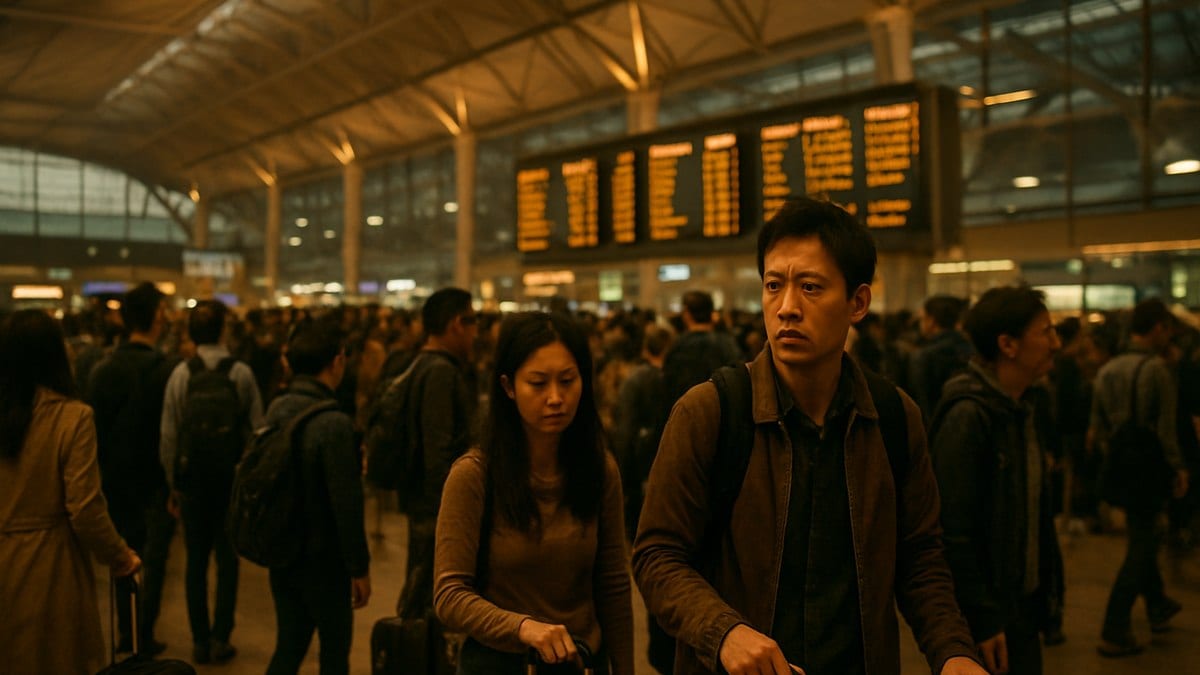
Tokyo’s Dual Airports Struggle With Heavy Backlogs
Publicly available operational data for April shows Tokyo’s twin gateways, Haneda and Narita, near the top of Asia’s disruption tables, with hundreds of delayed departures and arrivals recorded in a single day. One industry tracker counted close to 380 delays and more than 10 cancellations at Haneda alone, while Narita logged well over 150 delays as schedule pressure intensified across domestic and international routes.
Japan’s full service airlines are facing particular strain on short haul regional services that feed long haul departures later in the day. Aggregated figures cited in recent aviation coverage indicate that All Nippon Airways and Japan Airlines have been forced into rolling schedule adjustments on routes linking Tokyo with other Asian hubs, a sign that relatively small timing issues early in the morning are continuing to snowball into the evening peak.
Capacity changes around Tokyo are compounding the challenge. Low cost and hybrid brands are consolidating or exiting certain routes, while one Tokyo based mid market carrier is in the process of winding down operations altogether. Analysts note that this has reduced the buffer of spare aircraft and crews that might otherwise help absorb irregular operations, leaving little margin when weather or air traffic constraints tighten the system.
Travel industry bulletins circulating this week advise passengers using both Haneda and Narita to expect longer than usual queues at check in and security during peak banks of regional flights. With many services leaving late and arriving close to curfew windows at destination airports, even modest delays at Tokyo can now derail onward connections throughout Northeast and Southeast Asia.
Hong Kong’s Hub Status Spreads Disruption Across the Region
Hong Kong is once again acting as a powerful amplifier of regional disruption. Flight tracking summaries for the current wave of irregular operations place the airport among Asia’s hardest hit, with nearly 300 delays on some days and knock on effects spilling into neighboring markets. Airlines using the city as a primary hub are contending with a buildup of late running arrivals that leave aircraft and crews out of position for their next sectors.
Network maps published by aviation analysts underline how central Hong Kong has become to flows between North Asia, Southeast Asia and long haul routes to Europe and North America. When arrivals from Japan, mainland China or Southeast Asian gateways miss their scheduled slots, tightly timed connections for onward passengers and cargo rapidly unravel. Reports indicate that even routes that technically remain on schedule are departing with substitution aircraft or altered flight times as carriers attempt to rebalance rotations.
Travelers transiting Hong Kong in recent days have faced a mixture of rolling delays and isolated long duration disruptions. Consumer facing accounts describe instances of aircraft held at gates for extended technical checks, followed by late night departures that spill beyond originally planned arrival times by six hours or more. These events are feeding into the wider statistics on delay minutes, even when the total number of outright cancellations remains relatively modest compared with previous crises.
Regional tourism bodies are watching the situation closely as Hong Kong enters a period of heightened leisure demand. With connecting traffic from mainland China, Japan and Southeast Asia all funneled through the city, any sustained pattern of disruption threatens to weaken confidence among high value travelers who depend on predictable one stop itineraries.
Seoul Incheon Feels the Ripple Effects From Neighboring Hubs
Seoul’s Incheon airport, one of Asia’s busiest international gateways, is experiencing its own wave of irregular operations as disruptions from neighboring hubs spill across airline networks. Recent tallies of same day performance show more than 230 delays and a growing number of cancellations at Incheon during peak disruption windows, even when local weather and runway conditions are relatively favorable.
Published coverage points to a familiar pattern. Late inbound flights from Japan, China and Southeast Asia arrive in Seoul well behind schedule, leaving aircraft unavailable for onward sectors to North America, Europe and the wider Asia Pacific region. As long haul departures push up against crew duty limits and airport curfews abroad, airlines are increasingly forced to retime or consolidate services, creating further uncertainty for connecting passengers.
South Korea’s major carriers, which rely heavily on Incheon as a connecting super hub, are particularly exposed to cascading delays. Network planners must juggle aircraft allocation across densely scheduled routes linking Seoul with Tokyo, Hong Kong and other high frequency cities. When multiple partners in this triangle of hubs encounter operational challenges on the same day, recovery can take several cycles, extending the impact across an entire week of flying.
For travelers, the practical consequence at Incheon has been a surge in missed connections and involuntary overnight stays, especially for those booked on tight connections to transpacific and Europe bound flights. Airports and tourism agencies are urging passengers to build in longer connection times and to monitor flight status continuously, reflecting the reality that disruption elsewhere in Asia now routinely reverberates through Seoul.
Why Asia’s Flight Delays Are Cascading So Quickly
Industry data compiled across recent disruption events in February and early April highlights how fragile Asia’s air travel ecosystem has become at current traffic levels. One analysis of a February shock day counted more than 4,200 delays and over 60 cancellations across 17 airports, demonstrating how quickly a single weather system or air traffic control bottleneck can degrade punctuality across half a continent.
In the latest episode, a combination of adverse weather along key corridors, airspace constraints and tight aircraft utilization patterns has created the conditions for another cascade. When the first wave of morning flights out of major hubs such as Tokyo, Hong Kong and Seoul depart 30 to 40 minutes late, published performance data shows that downstream rotations can end the day running 90 minutes or more behind schedule. With many widebody aircraft scheduled for three or four sectors per day, there is limited scope to reset without canceling flights outright.
Structural factors are also playing a role. Air travel demand across Asia continues to recover strongly, boosted by resurgent tourism and the return of corporate travel on key routes, while fleet growth has been tempered by aircraft delivery delays and earlier capacity cuts. Airlines are operating closer to their maximum daily utilization targets, which improves efficiency in normal conditions but leaves little slack when unexpected events occur.
Aviation associations have repeatedly noted that seven of the world’s ten busiest international routes now sit in the Asia Pacific region, including dense corridors linking Hong Kong, Tokyo and Seoul with other regional capitals. This concentration means that any loss of capacity on a single trunk route can reverberate across dozens of city pairs, amplifying the effect of each delayed departure.
Travelers Face Tough Choices as Disruptions Persist
For passengers caught in the current wave of delays, rebooking options are increasingly constrained. Reports from online travel agencies and fare aggregators indicate that alternative routings through secondary Asian hubs are filling quickly as travelers attempt to bypass congested airports. Some carriers are trimming or suspending select routes in response to rising fuel costs and operational pressures, further reducing the number of seats available on short notice.
Consumer advice circulating in aviation focused publications is growing sharper as disruption statistics climb. Travelers are being urged to allow extra buffer time on critical journeys, especially when connecting between separate tickets, and to avoid last departure waves of the day on routes that depend heavily on aircraft arriving from Tokyo, Hong Kong or Seoul. A number of expert guides now recommend favoring longer but more resilient itineraries over marginally faster connections that leave no room for delay.
Digital tools are also becoming central to passengers’ coping strategies. Airlines and independent platforms alike stress the importance of real time flight monitoring and reservation management, as same day schedule changes become more frequent during periods of regional stress. Travelers equipped with reliable mobile connectivity and flexible booking options are often able to secure scarce seats on alternative flights while less prepared passengers remain in queues at airport counters.
With Asia’s peak spring and summer travel seasons approaching, there is little indication that pressure on the network will ease quickly. Unless additional capacity or operational buffers are introduced, the latest episode of chaos centered on Tokyo, Hong Kong and Seoul may prove to be a preview of a more volatile travel environment across the region in the months ahead.