

More news on this day
Thousands of air travelers across Asia are facing severe disruption today as a fresh wave of delays and cancellations ripples through major hubs in Japan, Singapore, South Korea, India and China, grounding aircraft and straining airline operations from Seoul and Tokyo to Delhi and Shenzhen.
Get the latest news straight to your inbox!
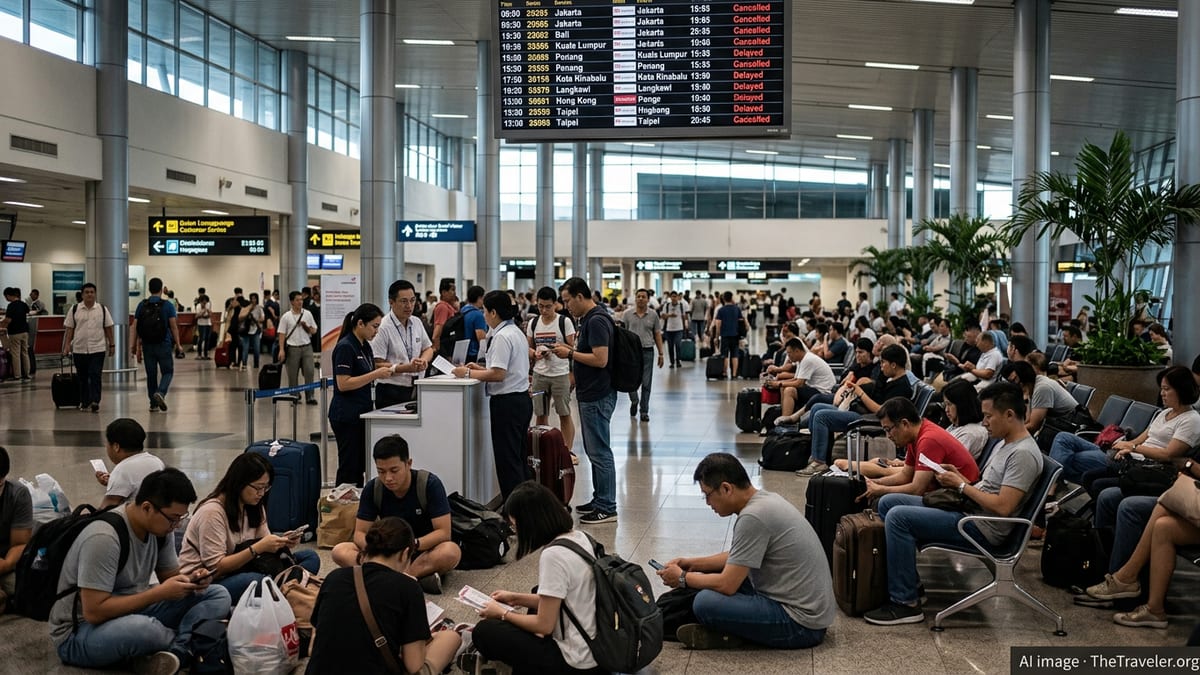
Major Asian Hubs Buckle Under Wave of Disruptions
Publicly available flight-tracking data and regional aviation reports indicate that 3,674 flights have been delayed and 351 cancelled across Asia today, with a concentration of disruption in Japan, Singapore, South Korea, India and China. The breadth of the impact is being felt across some of the region’s busiest international gateways, where tight schedules leave little room to absorb cascading delays.
Tokyo area airports, Seoul Incheon, Delhi’s Indira Gandhi International and key Chinese hubs such as Shenzhen Bao’an have reported elevated levels of late departures and arrivals, contributing to missed connections and last-minute rebookings. Singapore Changi has also seen mounting knock-on delays as connecting traffic from heavily affected markets arrives behind schedule.
Reports from aviation analytics platforms show that this latest bout of disruption follows several days of unstable operations in the wider region, with previous spikes of more than 5,000 delays and several hundred cancellations recorded across Asia’s main hubs. Today’s figures continue that pattern, underscoring how quickly localized operational pressures can spill across multiple national networks.
The combined effect has left terminal departure boards across the region dominated by delayed statuses, as ground handling teams, air traffic flow managers and airline control centers attempt to reset schedules while keeping aircraft and crews within legal operating limits.
Flag Carriers and Regional Airlines Under Strain
The disruption is affecting a broad mix of carriers, but publicly available schedules and tracking data indicate that Korean Air, Japan Airlines, Singapore Airlines and China Eastern are among those facing some of the biggest operational challenges on their core Asian routes today. High-frequency services between Northeast Asia, Southeast Asia and the Indian subcontinent appear particularly exposed.
In Seoul, Korean Air’s hub operation at Incheon has been impacted by late inbound aircraft from China and Japan, narrowing the buffer for onward departures and raising the risk of missed long haul connections. Similar patterns are evident in Tokyo, where Japan Airlines services are contending with congested departure banks and arrival slots that have shifted later into the day.
Singapore Airlines, which relies heavily on precise wave timings at Changi, is grappling with delays to feeder flights from India, China and regional Southeast Asian cities. Even modest schedule slippages can create pressure in such a tightly choreographed operation, leading to compressed connection windows and the need to reroute some travelers onto later departures.
Chinese carriers including China Eastern are facing additional complexity because many of their networks are built around multiple large hubs, such as Shanghai and Shenzhen. When severe delays build in one hub, they can ripple quickly across domestic and regional routes, compounding the number of passengers affected and stretching available aircraft and crew resources.
Shenzhen, Tokyo, Seoul and Delhi Emerge as Pressure Points
Among the hardest-hit airports today are Shenzhen Bao’an, Tokyo’s major airports, Seoul Incheon, Delhi Indira Gandhi International and Singapore Changi. These hubs sit at the heart of dense regional route maps and serve as critical junctions for both business and leisure travel flows.
Shenzhen has seen elevated levels of disruption in recent days, according to published operational tallies, and today’s activity continues that trend. As a key gateway to southern China, the airport links a wide range of domestic and international destinations, which means local delays can quickly trigger wider schedule imbalances.
Tokyo and Seoul remain vital connectors for Northeast Asia, with heavy traffic volumes and intricate connection banks across domestic, regional and long haul routes. When weather, air traffic constraints or earlier-day disruptions tighten available margins, departures can begin to roll back across the schedule, creating long queues at departure gates and customer service counters.
Delhi’s position as one of India’s primary international gateways makes any disruption there particularly consequential. Aviation monitoring reports in recent weeks have already highlighted elevated delay levels at Delhi, and today’s figures suggest that knock-on effects from other parts of Asia are feeding into an already stretched operation, complicating recovery efforts across Indian domestic and international services.
Operational and Weather Factors Combine
Analyses from regional aviation observers suggest that today’s widespread disruption is not driven by a single incident but rather by a combination of operational constraints, weather variations and lingering capacity mismatches between strong demand and available fleets. Even transient storms or reduced visibility periods at one or two major hubs can create backlogs that take much of the day to clear.
In addition, tight aircraft and crew rotations across Asia leave airlines more vulnerable when several hubs experience disruption at once. Aircraft arriving late into a hub can miss their planned departure slots or require crew changes, multiplying the number of flights that ultimately operate behind schedule or are cancelled outright when recovery is no longer practical.
Industry data over recent months has also pointed to a broader pattern of volatility in on-time performance across Asia, with some days running near normal and others seeing dramatic spikes in delays and cancellations. Today’s 3,674 delays and 351 cancellations fit squarely into this more volatile regime, highlighting the fragility of recovery in a region that has largely returned to pre-pandemic traffic volumes.
Airports themselves are contending with staffing and capacity challenges at security, immigration and ground services, which can slow turnaround times even when weather is favorable. When these pressures align with congested air traffic corridors, the result can be sudden and widespread schedule deterioration.
What Travelers Can Expect in the Coming Days
Given the scale of today’s disruption, publicly available guidance from aviation analysts suggests that residual delays are likely to persist into subsequent days, particularly on routes where aircraft are out of position or where crews have reached their duty limits. Even if weather and air traffic conditions stabilize, it often takes several scheduling cycles to fully restore normal operations.
Passengers booked on Korean Air, Japan Airlines, Singapore Airlines, China Eastern and other affected carriers through hubs such as Tokyo, Seoul, Delhi, Shenzhen and Singapore are being advised by consumer advocates and travel industry commentators to monitor flight status closely. Rebooking options can be more flexible when travelers act early, especially while there are still open seats on later departures.
Travel planners note that Asia’s consumer protection rules for flight delays and cancellations differ by country, and compensation or care entitlements can vary depending on the carrier, route and specific cause of disruption. Even so, maintaining thorough documentation of delays, cancellations, meal expenses and any overnight stays generally improves the prospects of securing refunds or other remedies after travel is completed.
For now, the priority for many travelers is simply reaching their destination. With thousands already grounded across Asia today and aircraft and crew rotations under sustained pressure, the region’s aviation system faces a challenging task to absorb the latest wave of disruption while keeping the rest of the busy spring travel schedule on track.