

More news on this day
Thousands of travelers were stranded across Asia today as a wave of disruption swept through major hubs in Japan, South Korea, Singapore, China, the Philippines, and Hong Kong, with 3,072 flights delayed and 154 cancelled, interrupting operations for carriers including Cathay Pacific, Korean Air, Japan Airlines, Air China, All Nippon Airways, and several regional airlines.
Get the latest news straight to your inbox!
Major Asian Hubs Log Thousands of Delays and Cancellations
Publicly available operational data compiled from airport trackers and aviation industry coverage show that flight disruption on April 7 reached unusual levels across East and Southeast Asia. Tokyo, Seoul, Hong Kong, Manila, Singapore, and multiple mainland Chinese cities all reported elevated numbers of late departures and scrapped services, affecting both domestic and international routes.
Tokyo Haneda alone recorded well over 300 delayed flights and more than 10 cancellations, while Tokyo Narita logged more than 160 delays. In South Korea, Seoul Incheon saw more than 230 delays and at least one cancellation, signaling pressure on one of the region’s busiest international gateways. Hong Kong International Airport, another critical long-haul hub, reported nearly 300 delayed departures on the day.
In mainland China, Guangzhou, Shenzhen, Hangzhou, Beijing Capital, Beijing Daxing, Kunming, and Chengdu were among the worst affected airports, each reporting dozens to hundreds of delays and multiple cancellations. Manila’s Ninoy Aquino International Airport and Singapore Changi added to the regional logjam with more than 100 delayed flights each, compounding pressure on airline networks and airport resources.
Aggregated figures from aviation monitoring services for the day indicate that, across the affected countries, a total of 3,072 flights were delayed and 154 cancelled, leaving aircraft out of position and schedules in disarray. This sharp, single-day spike occurred against a broader backdrop of mounting disruption across the Asia Pacific network in recent weeks.
Flagship Carriers See Network Strain in Tokyo, Seoul, and Hong Kong
The disruption rippled through the schedules of some of Asia’s best-known airlines. Reports indicate that Cathay Pacific, Korean Air, Japan Airlines (JAL), Air China, All Nippon Airways (ANA), Philippine Airlines, and several low-cost and regional operators all faced knock-on impacts as aircraft and crew rotations were thrown off balance.
In Japan, JAL and ANA experienced issues across their domestic and regional networks centered on Tokyo’s Haneda and Narita airports, where congestion and turnaround bottlenecks extended delays through the day. Publicly accessible flight information boards showed departure banks with long rows of late flights on key routes linking Tokyo with Seoul, Hong Kong, Singapore, and major Chinese cities.
Korean Air and other South Korean carriers, including services operating via Seoul Incheon, were affected by delays on regional routes into Japan, China, and Southeast Asia. Hong Kong-based Cathay Pacific and Chinese mainland carriers such as Air China and China Eastern were hit particularly hard on routes in and out of Guangzhou, Shenzhen, Hangzhou, and Beijing, as those airports reported some of the highest disruption tallies.
While long-haul services generally continued to operate, aviation trackers and media monitoring suggest that departure times for intercontinental flights were often pushed back as aircraft arrived late from short- and medium-haul sectors. This contributed to missed connections and forced rebookings for passengers traveling between Asia, Europe, the Middle East, and North America.
Weather, Capacity Pressures, and Operational Challenges Converge
Regional coverage and airline advisories point to a combination of factors behind the surge in delays and cancellations. Localized adverse weather conditions in parts of East Asia contributed to air traffic control flow restrictions, while several major hubs continued to operate near or above their planned capacity, magnifying the effect of any disruption.
Analysts following Asian aviation note that the region has been grappling with higher fuel prices, tight staffing, and infrastructure constraints since late 2025. Industry associations have recently warned that increased operating costs and infrastructure bottlenecks are eroding resilience, making airline and airport systems more vulnerable when weather or technical issues arise.
The latest disruption also overlaps with a period of restructuring and route cuts for some carriers, as airlines across Asia Pacific react to volatile jet fuel markets and elevated insurance and financing costs. Publicly available statements and recent network announcements by several large airlines indicate ongoing schedule trims, which can leave fewer spare aircraft and crews to absorb unexpected shocks.
Within this context, a day featuring more than 3,000 delayed flights across multiple countries illustrates how quickly a regional system can become stretched. Even when only a fraction of flights are formally cancelled, the wider effect on punctuality, missed connections, and on-the-day rebooking needs can be substantial.
Stranded Passengers Face Long Queues and Patchwork Rebooking Options
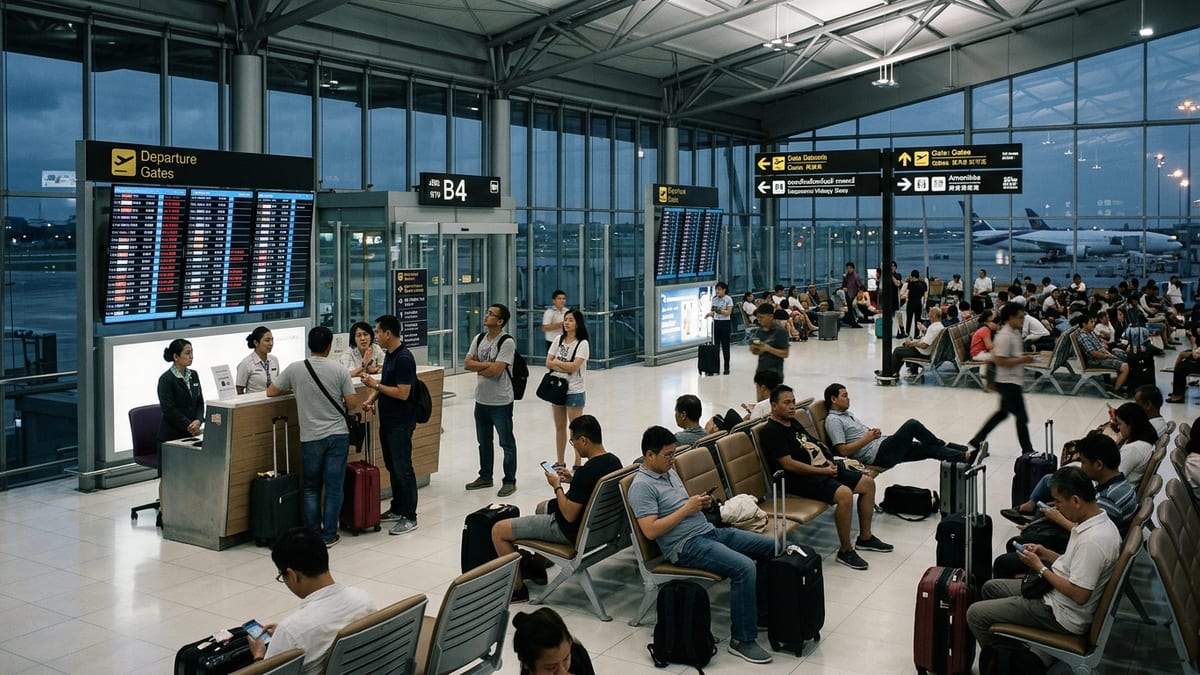
Travelers caught up in the disturbance reported, through social and traditional media channels, long lines at check-in and transfer desks from early morning into the evening at several affected airports. With airlines scrambling to reassign equipment and crews, passengers at hubs such as Tokyo, Hong Kong, Seoul, Singapore, and Manila often faced multi-hour waits for updated departure times or alternative routings.
Some carriers offered same-day rebooking where seats were available on later departures, while others advised passengers to shift travel to subsequent days due to limited spare capacity. In certain cases, airlines publicized flexible change policies, allowing date or routing changes without additional fees, reflecting broader industry guidance that encourages accommodating travelers during severe disruptions.
For travelers relying on regional connections, delays at one hub frequently translated into missed onward flights. According to publicly accessible airline and airport information, passengers bound for secondary cities in Japan, South Korea, China, and the Philippines were often forced to overnight after missing last departures of the day. This created additional demand for short-notice hotel stays and ground transport around major airports.
Consumer advocates monitoring the situation pointed to the importance of checking itineraries frequently and using airline apps, airport displays, and email or SMS alerts to stay informed. They also highlighted varying compensation and care entitlements depending on the airline’s policies and the jurisdictions involved, noting that passengers may face different levels of support when journeys span multiple countries and carriers.
What Today’s Turmoil Signals for Asia’s Peak Travel Season
The latest wave of flight disruption comes as Asia’s aviation sector prepares for busier travel months ahead, including major holiday periods in several countries. Industry commentary suggests that if cost pressures, capacity constraints, and intermittent weather issues persist, travelers could see more days with elevated delays and cancellations during peak periods.
Airline and airport data from recent weeks already show a pattern of intensified disruption on certain days across the region, with large hubs in Japan, South Korea, China, Hong Kong, Singapore, and the Philippines repeatedly appearing near the top of global delay rankings. Analysts interpret this as a sign of a network running close to its operational limits.
Travel planners and booking platforms are advising customers to factor in greater risk buffers, such as longer connection times and travel a day earlier for critical events, when flying through busy Asian hubs. They also emphasize the value of choosing itineraries with fewer separate tickets, which can simplify rebooking when more than one flight segment is disrupted.
While aviation stakeholders across Asia are working to restore punctuality and strengthen resilience, the scale of today’s disruption underlines the ongoing fragility of the regional air travel system. For now, passengers flying through major Asian gateways are likely to face a higher-than-usual chance of delays and last-minute schedule changes, even as demand for international travel continues to rise.