

More news on this day
Air travel across Asia faced another day of heavy disruption as publicly available aviation data showed 264 flights cancelled and 3,829 delayed across major hubs in China, Japan, Singapore, India, Saudi Arabia and the United Arab Emirates, affecting carriers including Batik Air, IndiGo, Air China and FlyDubai.
Get the latest news straight to your inbox!
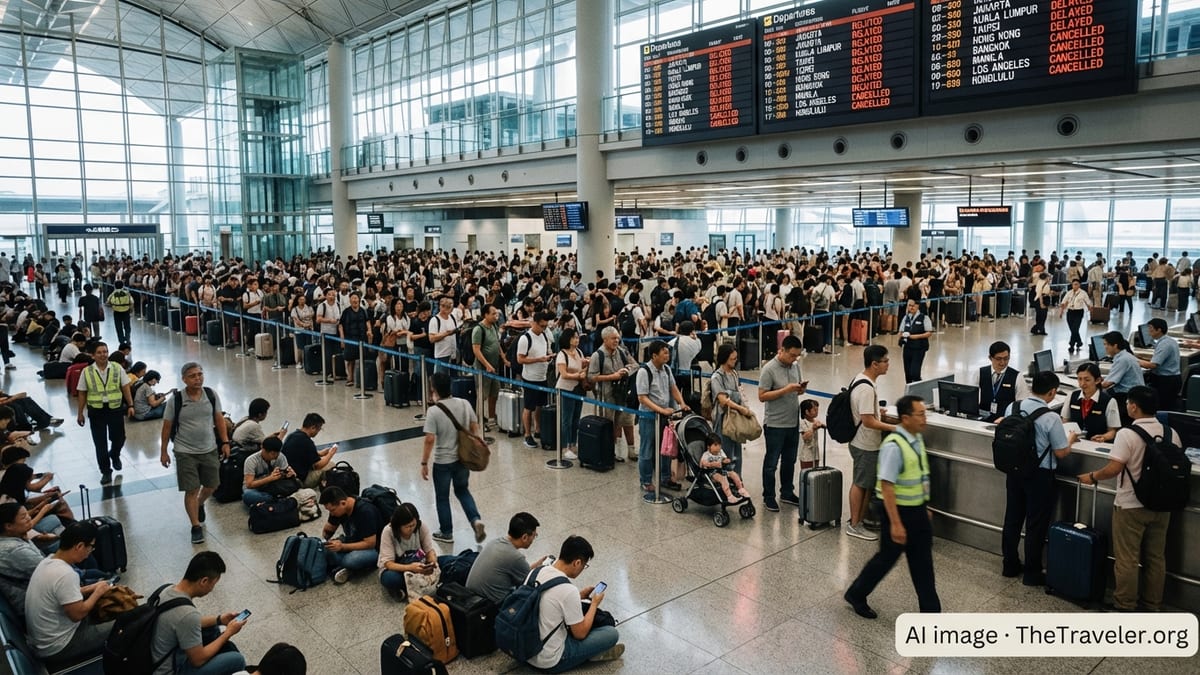
Widespread Disruptions From Tokyo to Abu Dhabi
The latest wave of operational disruption built on days of uneven schedules across the region, with congestion and knock-on delays reported at airports in Tokyo, Shanghai, Kolkata and Abu Dhabi. Aggregated airport statistics and tracking dashboards indicate that flight punctuality deteriorated sharply through the morning and afternoon, with rolling delays turning into outright cancellations on a number of regional and medium haul routes.
Published coverage of Asia’s aviation network shows that Japan and China once again feature prominently among the hardest hit, mirroring similar patterns reported at Tokyo Haneda, Narita and Shanghai Pudong in recent days. While today’s figures are lower than some previous peaks that saw more than 500 cancellations and over 5,000 delays in a single day across Asia, the combined total of 4,093 affected flights remains significant for passengers and airlines alike.
In the Gulf, Abu Dhabi and other UAE airports continued to report elevated disruption after a period of instability in West Asia airspace. Flight-tracking summaries from the past 48 hours show persistent schedule adjustments affecting services to and from India and East Asia, contributing to the broader regional total of cancellations and delays.
Key Carriers Hit: Batik Air, IndiGo, Air China and FlyDubai
Regional low cost and full service carriers bore the brunt of the latest disruption. Batik Air, which operates dense networks across Southeast Asia, has already featured in recent data sets that highlighted several hundred delays and cancellations across Bangkok, Kuala Lumpur, Jakarta and Singapore over the past two days. Today’s figures add further pressure to its schedule as late running rotations ripple through its short haul network.
India’s IndiGo, the region’s largest low cost airline by market share, continued to grapple with a challenging operational environment. Publicly available information from Indian and Gulf-focused coverage shows IndiGo trimming or cancelling selected flights to Abu Dhabi, Jeddah and other Middle Eastern destinations in recent weeks as carriers react to constrained airspace and ongoing volatility in West Asia. These cuts have combined with weather and congestion elsewhere in Asia to extend journey times for many travellers.
Major Chinese and Gulf carriers were also affected. Air China flights at Beijing and Shanghai appeared among the disrupted services in today’s regional tallies, reflecting congestion at those hubs. In the UAE, FlyDubai again featured in airport operations summaries as several services were grounded or delayed across Dubai and Abu Dhabi, compounding difficulties for passengers seeking to connect between Asia, the Middle East and Europe.
Hotspots in China, Japan, Singapore, India and Saudi Arabia
Today’s breakdown of affected airports points to several recurring hotspots. Chinese hubs such as Shanghai, Guangzhou and Shenzhen have repeatedly posted high numbers of daily delays and cancellations this week, with weather, traffic congestion and aircraft rotations all cited in recent reporting as contributing factors. These airports play a pivotal role in connecting domestic Chinese cities with Southeast Asia, meaning disruption there often spreads rapidly.
In Japan, Tokyo’s Haneda and Narita airports remain under pressure after successive days in which more than 300 flights were delayed in and out of the capital. Data highlighted by regional travel outlets shows that even modest cancellation numbers at these tightly scheduled airports can cascade into missed slots, longer turnaround times and aircraft repositioning challenges, particularly for carriers serving both domestic and international routes.
Singapore’s Changi Airport again appeared in disruption tables, registering well over one hundred delays per day on several recent dates as weather systems and regional knock-on effects filtered through. In India, Kolkata joined Delhi and other major gateways in experiencing interruptions, with local coverage indicating that international services to the Gulf and Southeast Asia have been especially sensitive to upstream schedule changes.
Saudi Arabian gateways, including Jeddah and Riyadh, have also been drawn into the wider pattern of disruption. Publicly available flight summaries linked to the ongoing situation in West Asia show that services between Saudi Arabia, India and the UAE have seen repeated adjustments, contributing to the cumulative cancellations and delays counted across Asia today.
Regional Turbulence Adds to Weather and Capacity Strains
Behind the raw numbers, multiple overlapping factors continue to strain Asia’s aviation system. Recent analyses by aviation and business outlets point to lingering turbulence related to the West Asia conflict, which has triggered temporary airspace closures, extended routings and heightened operational complexity for flights connecting South and Southeast Asia with the Gulf and Europe.
At the same time, several major hubs are operating close to capacity during peak hours, leaving limited room to absorb weather-related disruptions. Heavy rain, thunderstorms and low visibility at various airports in China, Japan and Southeast Asia have prompted additional spacing between arrivals and departures, slowing the overall flow of traffic and driving up delay totals.
Operational and crew scheduling pressures add another layer of difficulty. Airlines that have already stretched fleets to meet post-pandemic demand now face tighter turnaround windows and limited spare aircraft. When an early rotation runs significantly late or a route is suspended for operational reasons, subsequent flights can quickly fall behind schedule, contributing to the kind of cumulative totals of 264 cancellations and 3,829 delays recorded today.
What Travellers Can Expect in the Coming Days
Travel industry reporting suggests that passengers across Asia should prepare for continued irregular operations in the near term, particularly on routes touching China, Japan, Singapore, India, Saudi Arabia and the Gulf. While the absolute level of disruption fluctuates from day to day, the underlying drivers of congestion, weather exposure and regional airspace uncertainty remain in place.
Airlines in affected markets have increasingly turned to dynamic scheduling, last minute aircraft swaps and rolling rebooking to keep as much of their network running as possible. Public advisories from carriers and airports in India and the UAE in recent days have encouraged passengers to verify departure times repeatedly on the day of travel and to allow additional time for check in and security, especially when connecting between flights.
For now, the latest tally of 264 cancellations and 3,829 delays underscores how fragile on time performance remains across Asia’s interconnected hubs. With key carriers such as Batik Air, IndiGo, Air China and FlyDubai still navigating a volatile operating environment, travellers flying through Tokyo, Shanghai, Kolkata, Abu Dhabi and other major gateways may need to factor disruption risk into their plans for at least the coming days.