

More news on this day
Thousands of passengers across Asia faced a day of disruption on April 5 as aviation data showed 3,674 flight delays and 351 cancellations across major hubs in Japan, Singapore, South Korea, India and China, snarling operations for carriers including Korean Air, Japan Airlines, Singapore Airlines and China Eastern.
Get the latest news straight to your inbox!
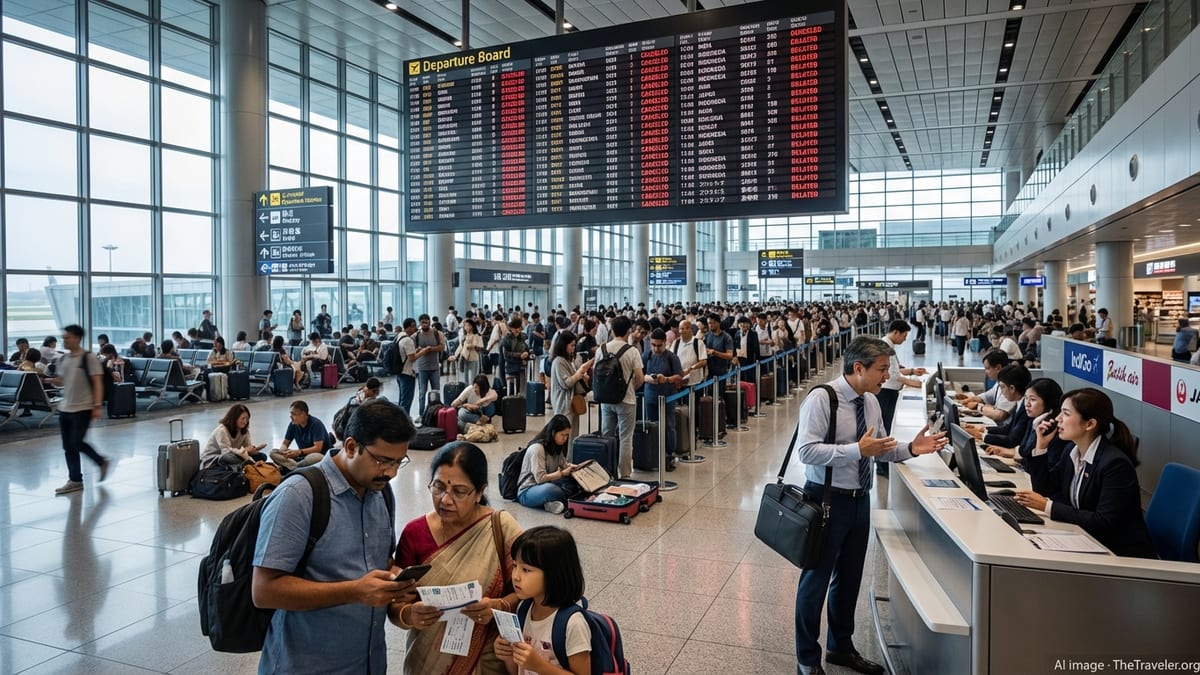
Major Asian Hubs Buckle Under Wave of Disruptions
Publicly available flight tracking data for April 5 indicates that some of the heaviest disruption was concentrated at large Chinese and Japanese airports, with Shenzhen Bao’an and Guangzhou Baiyun recording some of the highest combined totals of delays and cancellations. Shenzhen alone reported more than 50 cancellations and almost 600 delays, while Guangzhou saw dozens of flights scrapped and hundreds running late, contributing significantly to the regional tally.
In Japan, Tokyo Haneda and New Chitose in Hokkaido were among the most affected, with several cancellations and hundreds of delays reported between them. The pattern extended to South Korea’s main international gateway at Incheon, where more than 200 delays were logged, as well as to Singapore’s Changi Airport, which reported over 150 delayed departures and arrivals despite avoiding large-scale cancellations.
India’s network also felt the strain, with data showing disruption at major metros including Delhi, Bengaluru and Chennai. Delhi’s Indira Gandhi International Airport recorded well over 200 delayed flights and a smaller number of cancellations, while Bengaluru and Chennai added further to the regional totals. In mainland China, Shanghai Pudong, Shanghai Hongqiao, Beijing Capital, Beijing Daxing and a string of secondary hubs such as Xi’an, Nanjing and Chengdu all reported substantial disruption.
The cumulative effect across 20‑plus airports produced a picture of widespread operational stress in one of the world’s most important aviation markets. While point‑to‑point services were affected, the impact was amplified by the role of hubs such as Tokyo, Seoul and Singapore in connecting long‑haul traffic between Asia, Europe and North America.
Flag Carriers and Regional Airlines Under Pressure
The disruption rippled through the networks of leading Asian and global airlines. Publicly available data highlighted schedule impacts for Korean Air and other South Korean operators at Incheon, where delayed departures created knock‑on effects for long‑haul services crossing the Pacific. In Japan, Japan Airlines and other carriers contended with congestion and rotations pushed out of position at Tokyo Haneda and New Chitose.
Singapore Airlines and its regional partners were also drawn into the turbulence, with Changi’s delay figures affecting both outbound and inbound services. Although the airport reported comparatively fewer cancellations, late‑running flights can still generate missed connections, extended ground times and increased crew and aircraft repositioning needs across the network.
In China, China Eastern and other major mainland carriers experienced widespread schedule interference at key gateways including Shanghai Pudong, Shanghai Hongqiao and Beijing’s two primary airports. Additional disruption at regional airports such as Xi’an, Nanjing and Chengdu added complexity for network planners trying to keep aircraft and crew aligned with published timetables.
Indian airlines operating from Delhi, Bengaluru and Chennai faced similar operational challenges, particularly on routes linking South and East Asia. The situation followed earlier weeks in which carriers across the region had already been managing geopolitical airspace constraints and elevated demand, leaving thinner buffers in schedules and greater sensitivity to fresh shocks.
Weather, Congestion and Wider Geopolitics Form a Volatile Backdrop
Regional coverage from travel and aviation outlets on April 5 linked the latest wave of disruptions to a mix of adverse weather patterns, airport congestion and an already strained operating environment across Asia and adjoining regions. Heavy seasonal weather around parts of East Asia and southern China has repeatedly triggered rolling delays in recent weeks, feeding into hub operations from Beijing and Shanghai to Tokyo and Seoul.
At the same time, ongoing airspace restrictions and route adjustments connected to instability in parts of West Asia have forced many carriers to operate longer routings or restructured schedules. Industry analyses published in recent days describe how re-routed flights and extended block times have eroded slack in airline timetables, leaving less margin for handling storms or local operational issues without cascading impacts.
Financial and aviation data commentary over the past week has also highlighted how a series of high‑impact disruption days in late March and early April has affected thousands of flights across Asia. These earlier events, involving several thousand delays and hundreds of cancellations in markets including Thailand, Malaysia and the United Arab Emirates, set the stage for further strain whenever fresh pressure emerges on major hubs.
Taken together, the series of disruption spikes underscores how interconnected the region’s aviation system has become. Operational issues at a single large airport can quickly surface hours later in distant markets such as Delhi, Singapore or Tokyo when aircraft and crews arrive late or are forced to divert.
Impact on Travellers Across Tokyo, Seoul, Delhi and Shenzhen
For passengers, the practical impact on April 5 has been what departure boards and mobile alerts make plain across Asian terminals: rolling delays, last‑minute gate changes and, in hundreds of cases, outright flight cancellations. Travellers moving through Tokyo, Seoul, Singapore, Delhi and key Chinese hubs such as Shenzhen and Shanghai have faced longer dwell times, missed onward connections and the need to rebook itineraries, often at short notice.
Reports from consumer travel platforms and social media highlight long queues at service desks in some of the worst‑affected hubs, as passengers seek alternative routes to Europe, North America and within Asia itself. With hub‑and‑spoke networks heavily used by airlines such as Korean Air, Japan Airlines, Singapore Airlines and China Eastern, a single cancelled leg can strand passengers far from their final destinations.
Travel insurers and consumer advice outlets have been reiterating standard guidance for disruption events, encouraging passengers to document delays, monitor their flight status frequently and review policy terms on missed connections and additional accommodation costs. Some airlines have issued rolling advisories urging customers to check their flight status before leaving for the airport and to allow extra time for check‑in and security where congestion is reported.
Although many services are still operating, the elevated number of delayed flights means schedules remain fluid throughout the day. Industry observers note that even as operations gradually stabilise, aircraft and crews out of position can continue to affect services into the following day, particularly on long‑haul routes that depend on tight turnaround windows.
What Passengers Can Expect in the Coming Days
Aviation data and recent patterns suggest that the immediate disruption across Japan, Singapore, South Korea, India and China may ease as the day progresses, especially if weather conditions improve and backlogs at key hubs are cleared. However, the volume of affected services on April 5 increases the likelihood of residual knock‑on delays across overnight and early‑morning waves of flights on April 6.
Travel industry commentary indicates that airlines are likely to continue making tactical schedule adjustments, including aircraft swaps, re‑timed departures and selective cancellations on lower‑demand services, in order to protect core long‑haul and high‑yield routes. Passengers connecting through hubs such as Tokyo, Seoul, Singapore and the main Beijing and Shanghai airports may therefore see schedule changes even if their original flight has not yet been flagged as disrupted.
Analysts examining recent weeks of Asia‑Pacific operations point to a broader structural challenge, in which strong post‑pandemic demand, constrained capacity growth and evolving airspace restrictions leave carriers operating closer to the limits of their networks. In that environment, days like April 5, when more than 3,600 flights are delayed and hundreds cancelled across a handful of markets, highlight the need for both airlines and passengers to plan for greater volatility.
For now, publicly available data shows that the focus remains on restoring as much schedule integrity as possible across the busiest Asian corridors. Passengers scheduled to travel in the coming days are being advised by airlines, airports and travel intermediaries to remain flexible, monitor updates closely and be prepared for changes as the region’s aviation system works through another intense bout of disruption.