

More news on this day
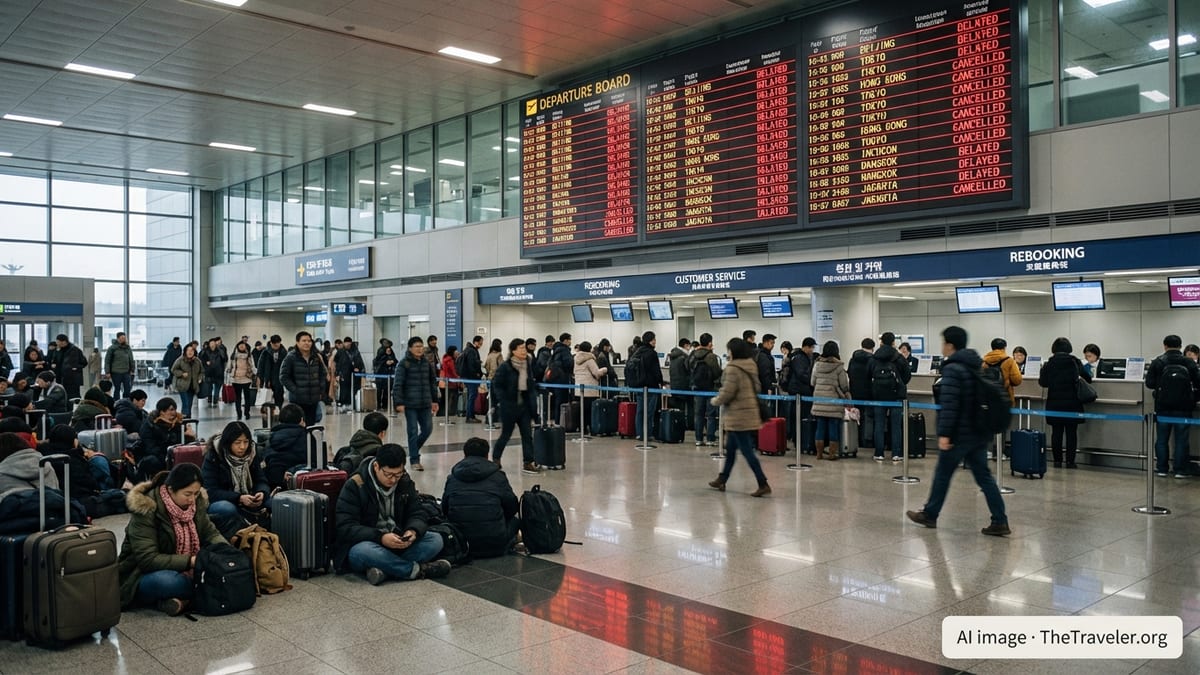
Asia’s key aviation hubs were hit by another wave of disruption this week as at least 26 flights were cancelled and 569 delayed across Indonesia, Malaysia, Japan, China, South Korea, Thailand and other markets, snarling operations for carriers including Batik Air, All Nippon Airways, Cathay Pacific, Korean Air and Condor Airlines at airports in Beijing, Tokyo, Hong Kong, Incheon and beyond.
Fresh Disruptions Sweep Asian Skies
The latest bout of air travel chaos rippled across Asia’s already strained aviation system, compounding weeks of rolling delays and cancellations. While the headline figures of 26 cancelled flights and 569 delays are modest compared with earlier mass disruptions, their concentration at major hubs magnified the impact on passengers and airline schedules.
Operational data from regional aviation trackers and airport authorities indicate that the newest cancellations are spread across multiple countries, with Indonesia, Malaysia, Japan, China, South Korea and Thailand again among the hardest hit. The knock-on effect has been felt far beyond Asia, as affected long haul services to cities in North America, Europe and Australia are rebooked, rerouted or significantly delayed.
Industry analysts note that this latest wave follows a broader pattern of instability seen since early January, when Asia’s major airports began reporting unusually high volumes of flight disruptions tied to tight aircraft utilization, weather volatility and chronic staffing gaps. The cumulative effect, they say, is an increasingly fragile network where relatively small operational shocks cascade rapidly across borders.
For travelers, that fragility is translating into longer queues, missed connections and mounting uncertainty, even on routes that were once considered highly reliable. Airlines insist they are working to stabilize schedules, but staffing limits, congested airspace and compounding weather challenges are leaving little room for error.
Major Carriers Caught in a Regional Logjam
Among the airlines hit in the latest round of disruptions are several of Asia’s most prominent brands. Batik Air, a key Indonesian carrier with extensive domestic and regional operations, has been particularly exposed, after already suffering dozens of cancellations and delays at Indonesian hubs in recent days. Its dense network around Jakarta, Bali and secondary cities such as Makassar and Surabaya leaves little flexibility when aircraft or crew are out of position.
Japan’s All Nippon Airways and Cathay Pacific in Hong Kong have also reported a build up of delayed departures and arrivals, especially at peak hours. Both carriers rely heavily on tight turnaround times and high aircraft utilization to serve complex banks of connecting flights. Even short delays early in the day can reverberate across their networks, pushing evening departures into late night or early next morning slots.
Korean Air, operating from its busy Incheon hub, has faced similar challenges, struggling to absorb disruptions without affecting long haul connections to North America and Europe. Industry observers say that some of the carrier’s backup capacity, including reserve aircraft and standby crews, has already been stretched by previous bouts of extreme weather and maintenance bottlenecks this winter.
Condor Airlines, primarily known as a European leisure carrier, has been swept up in the turmoil through its long haul operations connecting to Asian gateways. Even when Condor flights themselves depart on time, delays at partner and codeshare airlines have caused a wave of missed and misaligned connections, leaving passengers stranded mid journey at hubs such as Tokyo and Beijing.
Beijing, Tokyo, Hong Kong and Incheon Bear the Brunt
The disruptions have been especially visible at Asia’s premier connecting hubs. In Beijing, both Beijing Capital and the newer Daxing airport have seen rows of delayed departures on information boards as crews and aircraft struggle to arrive on time from secondary Chinese cities and neighboring countries. Heavy air traffic volumes and intermittent winter weather have further constrained the capacity of air traffic controllers to resequence flights efficiently.
Tokyo’s Haneda and Narita airports, already managing dense domestic and international schedules, have experienced mounting delays for carriers such as All Nippon Airways and Japan Airlines. Winter weather, including strong crosswinds and low cloud, has forced temporary runway closures and slowed arrival and departure rates, particularly during peak morning and evening waves. Even when conditions improve, the backlog can take hours to clear, leaving passengers facing last minute gate changes and tightened connection windows.
Hong Kong International Airport, a critical bridge between mainland China and the rest of the world, has faced its own challenges as Cathay Pacific and other regional airlines juggle tight turnaround times with rising passenger volumes. While the airport’s modern infrastructure and strong ground handling capacity have allowed it to recover more quickly than some peers, the interconnected nature of its long haul and regional banks means even isolated delays can force widespread retiming.
In South Korea, Incheon International Airport remains a barometer of regional stability. Recent days have brought waves of late arrivals and delayed departures, particularly for Korean Air and other carriers serving Southeast Asia and Oceania. Civil aviation officials have urged airlines to build more slack into their timetables, but with yields under pressure and demand still rebounding strongly, many operators have been reluctant to reduce daily frequencies.
Passengers Face Long Queues, Tight Connections and Frayed Nerves
For passengers, the latest disruption has meant more than just numbers on a departure board. Travelers across Asia have described crowded check in halls, long lines at transfer desks and overflowing customer service counters as airlines attempt to rebook affected customers. At some airports, staff have reported working extended shifts to handle reissues, meal vouchers and overnight accommodation for those suffering missed connections.
Families traveling during school holidays, business travelers on tight schedules and long haul tourists connecting through Asian hubs have all been impacted. Many have found themselves unexpectedly overnighting in transit cities far from their intended destinations, scrambling to rearrange hotel bookings and onward connections. Others have faced several hours of uncertainty while waiting for updated departure times that shift repeatedly as airlines attempt to recover their schedules.
Airlines have encouraged passengers to monitor digital channels for real time updates, but limited call center capacity and overloaded mobile apps have in some cases compounded the frustration. Ground staff, often bearing the brunt of customer anger, have called for clearer communication from operations centers and more realistic scheduling practices to avoid repeated last minute changes.
Consumer advocates warn that the growing gap between optimistic schedules and operational reality is eroding trust in the region’s carriers. They argue that while weather or isolated technical issues are inevitable, the scale and frequency of recent disruptions suggest systemic vulnerabilities that require more than short term fixes.
Underlying Causes: Weather, Staffing and Network Strain
Aviation experts point to a convergence of factors behind Asia’s current wave of flight disruptions. Seasonal weather across East and Southeast Asia has been more volatile than usual, with recurring episodes of heavy rain, low visibility, high winds and localized storms. These conditions have reduced runway capacity at several airports, forced aircraft to hold or divert and required more conservative spacing between arrivals and departures.
At the same time, airlines continue to grapple with staffing challenges, particularly among pilots, cabin crew and specialized ground handling personnel. Many carriers downsized aggressively during the pandemic and have struggled to recruit and train replacements at the pace demanded by the rapid recovery in travel demand. That shortage becomes critical when irregular operations require extra crews to operate delayed or repositioning flights.
Maintenance capacity is another pressure point. With fleets operating close to their maximum daily utilization, there is limited slack to pull aircraft from service for unscheduled checks or repairs. When technical issues arise, they can quickly trigger cascades of cancellations and delays, especially on carriers that rely on a small number of aircraft types concentrated at specific hubs.
The complexity of modern route networks further amplifies each disruption. Airlines like Cathay Pacific, All Nippon Airways and Korean Air operate highly banked schedules, where hundreds of passengers transfer between multiple flights in narrow time windows. If an inbound service arrives even an hour late, dozens of connections may be lost, requiring rebooking across the network and consuming precious open seats on later flights.
Wider Economic and Tourism Impact Across the Region
The ripple effects of repeated travel disruption are increasingly visible in Asia’s tourism and business sectors. Hoteliers in major gateway cities such as Bangkok, Kuala Lumpur and Tokyo report an uptick in last minute one night stays from stranded passengers, often booked at discounted emergency rates. While this provides some short term occupancy, industry groups caution that it is not a sustainable or desirable source of demand.
Tour operators and meeting planners say travel uncertainty is complicating logistics for group tours, conferences and incentive trips. Itineraries that rely on tight regional connections are being reworked to include longer layovers or additional buffer days, adding cost and reducing the number of destinations that can be visited within fixed time frames. Some organizers are quietly shifting events to alternative regions with more stable air links.
For export oriented economies, disruptions at major cargo friendly hubs such as Beijing, Shanghai and Incheon pose a more subtle but significant risk. Passenger aircraft carry a substantial share of high value air freight in their bellies, and when flights are cancelled or heavily delayed, just in time supply chains can face bottlenecks. Logistics companies have reported rising demand for contingency trucking and warehousing as shippers navigate irregular air schedules.
National tourism boards, which rely heavily on air connectivity to feed visitor arrivals, are monitoring the situation closely. Several have launched joint initiatives with airlines and airports to improve operational resilience, including better information sharing, joint crisis drills and investments in weather and air traffic management technology designed to reduce the impact of adverse conditions.
How Airlines and Airports Are Responding
In response to the latest wave of disruption, affected airlines in Indonesia, Malaysia, Japan, China, South Korea and Thailand have introduced a mix of short term mitigation measures and longer term adjustments. Several carriers have quietly trimmed peak hour schedules or consolidated low demand flights to free up aircraft and crews, creating small buffers that can be deployed when irregular operations occur.
Some operators, including leading full service airlines, have strengthened their customer care policies, offering more flexible rebooking options and expanded waivers of change fees when disruptions are clearly linked to operational issues rather than weather. Others are investing in improved real time communication tools, such as push notifications and more dynamic mobile app interfaces, to keep passengers informed more consistently.
Airports, for their part, are focusing on ground side resilience. Major hubs including Beijing, Tokyo, Hong Kong and Incheon have increased staffing at information counters and transfer desks during known peak disruption windows, while also coordinating more closely with immigration, security and customs authorities to expedite reprocessing of misconnected travelers. Some have opened additional rest areas or temporary lounges to relieve crowding around departure gates.
Regional regulators and air navigation service providers are also involved, exploring improvements in cross border air traffic management and contingency routing that could help reduce airborne holding and diversions during weather events. However, these systemic changes take time, and industry insiders caution that passengers should expect periodic flare ups of disruption to continue through at least the current travel season.