

More news on this day
Thousands of passengers across Asia faced mounting frustration today as 39 flights were cancelled and 806 delayed across major hubs including Selangor, Bangkok, Taoyuan City and Kuala Lumpur, with carriers such as Air China, Malindo Air, Thai Lion and EVA Air struggling to keep schedules on track and travelers stranded in terminals from Malaysia and Thailand to Taiwan and Indonesia.
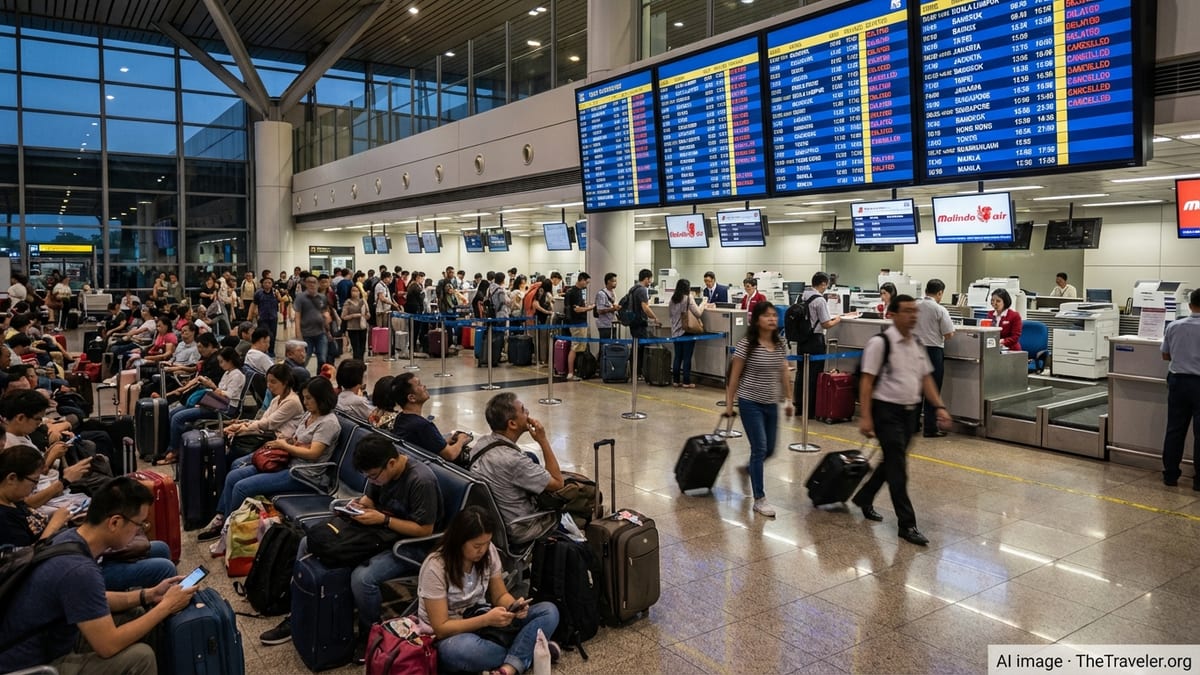
Widespread Disruption Across Key Asian Gateways
The latest wave of disruption has rippled through some of Asia’s busiest aviation hubs, snarling travel plans for business and leisure passengers alike. Airports serving Selangor and Kuala Lumpur in Malaysia, Bangkok in Thailand, Taoyuan City in Taiwan and key gateways in Indonesia have all reported significant schedule changes, with dozens of cancellations and hundreds of delays compressing into a single turbulent operating window.
While the total number of affected flights remains fluid as airlines update schedules, current figures indicate at least 39 outright cancellations and 806 delays across the region. The imbalance between a relatively modest number of cancelled services and an overwhelming volume of delayed departures reflects how airlines are attempting to keep aircraft and crews in circulation, even as systems strain under operational and weather-related pressure.
Travel industry analysts note that these fresh disruptions come on top of several recent days of instability across Asia’s skies, with airports from Jakarta and Kuala Lumpur to Bangkok, Tokyo, Shanghai and others repeatedly reporting large clusters of late departures and arrivals. For passengers, this has translated into missed connections, unscheduled overnight stays and mounting uncertainty over when flights will actually depart.
At terminal level, the impact is visible in packed departure halls, long check in lines and clusters of travelers gathered around information screens waiting for status updates. Airport staff, already stretched by high travel volumes, are working to rebook travelers, arrange accommodation where required and handle a surge of customer service requests.
Air China, Malindo, Thai Lion and EVA Among Affected Carriers
The disruptions have spread across a wide range of airlines, but regional and international carriers with dense networks in Southeast and East Asia are feeling particular strain. Air China has faced rolling knock on effects at Chinese and regional hubs, as earlier delays cascade into later rotations and complicate onward services to destinations such as Bangkok, Kuala Lumpur and Taipei.
In Malaysia, Kuala Lumpur International Airport and nearby facilities in Selangor have experienced strong pressure on carriers such as Malindo Air, which operates a dense schedule linking the Malaysian capital with Indonesian cities, Bangkok and Singapore. Recent operational data already show Malindo Air managing a relatively high average delay time, and the latest spike in disruption has further eroded on time performance, with aircraft and crews caught in extended ground holds and slot queues.
Thai Lion, part of Thailand’s rapidly expanding low cost sector, has also been contending with disrupted rotations at Bangkok’s airports, particularly on popular regional routes that feed into the wider Southeast Asian network. Delays on early morning departures have had a domino effect on aircraft utilization across the day, forcing schedule compressions and, in some cases, last minute cancellations when crew duty limits are reached.
In Taiwan, EVA Air and other local carriers have been juggling congested operations at Taoyuan International Airport, a critical hub for connections between Northeast Asia, Southeast Asia and long haul markets in North America and Europe. Even when cancellations are limited, extended departure queues, slow turnarounds and air traffic control constraints have caused inbound and outbound flights to run significantly behind schedule, stranding connecting passengers in transit areas for hours.
Weather, Congested Skies and Operational Strain Converge
Behind the numbers lies a convergence of familiar, but potent, stressors on Asia’s aviation system. In several affected countries, bouts of heavy rain, low cloud and thunderstorms have periodically reduced runway capacity, forced temporary ground stops and triggered diversions to secondary airports. These weather windows tend to be short, but their timing during peak morning and evening waves has proved especially damaging.
At the same time, major regional hubs are operating near or at their practical capacity, particularly during peak travel days. Airports in Kuala Lumpur, Bangkok and Jakarta have all struggled at times with air traffic control congestion, where limited runway slots and crowded approach paths force aircraft into holding patterns or delayed pushbacks from gates. Even a modest backlog can quickly ripple through an airline’s tightly timed daily schedule.
Operational constraints within airlines are compounding the situation. Months of strong demand recovery have pushed carriers to maximize fleet utilization, leaving little slack when aircraft require unscheduled maintenance or when crews are out of position. Staffing shortages in ground handling, security screening and technical services remain an issue in some markets, further lengthening turnaround times and making it harder to recover from even minor disruptions.
Industry observers point out that these pressures are not isolated episodes, but part of a broader pattern that has seen repeated waves of delays and cancellations across Asia in recent weeks, affecting airlines from low cost operators to full service flag carriers. The latest figures from Kuala Lumpur, Bangkok, Taoyuan and Indonesian hubs fit into a regional picture where irregular operations have become increasingly frequent.
Selangor, Bangkok, Taoyuan City and Kuala Lumpur Feel the Strain
Among the hardest hit are the metropolitan areas that anchor Asia’s busiest travel corridors. In Malaysia, the greater Kuala Lumpur region, including Selangor, has seen its primary international gateway struggle to maintain flows as disruptions cascade across domestic and regional routes. Travelers bound for popular leisure destinations such as Bali and Phuket, as well as business centers in Singapore and Jakarta, have been caught up in a cycle of rolling gate changes, delayed boarding and missed connections.
In Bangkok, both the main international airport and the city’s second field have grappled with congested departure banks. Delayed inbound aircraft from China, Malaysia and Indonesia have knocked connecting banks off schedule, with long haul flights to Europe and the Middle East sometimes awaiting late arriving passengers and baggage. Thai carriers and foreign airlines alike have had to juggle tight connection windows and rising passenger frustration.
Taoyuan City, host to Taiwan’s principal international gateway, has been a focal point for disruption in the Taiwan market. As a key stop for travelers linking Northeast Asia with Southeast Asia and beyond, any breakdown in timing at Taoyuan quickly ripples into neighboring hubs. With airports across Taiwan already familiar with recent episodes of severe weather and precautionary shutdowns, airlines have been cautious about pushing operations into marginal conditions, which in turn has extended delays.
Indonesia’s main hubs, led by Jakarta and Bali, have been contending with their own share of challenges. Capacity limits on popular departure banks, combined with variable weather conditions and heavy regional traffic, have slowed departures and arrivals, feeding into the broader regional disruption picture. For Malaysia, Thailand and Taiwan, which depend heavily on Indonesian traffic for both tourism and labor travel, these chokepoints have added another layer of complexity.
Knock On Effects for Regional and Long Haul Connections
The immediate victim of widespread delays and scattered cancellations is often the short haul passenger left waiting at the gate, but the structural impact reaches far beyond. Asia’s major hubs act as intricate connection nodes, feeding passengers between domestic spokes, regional routes and long haul flights. When departure waves are pushed back by an hour or more, carefully constructed connection windows quickly disintegrate.
Long haul services linking Kuala Lumpur, Bangkok and Taipei with cities in Europe, North America and the Middle East have had to decide, in some cases, whether to depart on time without delayed connecting passengers or to hold departures and risk arriving late into tightly regulated curfew airports. Either choice carries costs, from hotel bills and rebooking obligations to crew scheduling complications and lost customer goodwill.
Regional business travelers, who often rely on same day returns and multiple sector itineraries, have found their plans particularly vulnerable. A morning delay departing Kuala Lumpur or Bangkok can wipe out the feasibility of afternoon meetings in another capital, while uncertainty over return flights forces contingency planning and, in some cases, cancellations of trips altogether.
Tourism flows are also at risk. Multi stop itineraries that link beach destinations in Thailand and Indonesia with urban breaks in Kuala Lumpur or Taipei depend heavily on predictable flight timings. With late evening departures pushed into the night and occasional overnight misconnects, some travelers have already lost precious vacation days or had to cut segments from their plans.
Scenes of Frustration in Terminals Across the Region
Inside the terminals, the human impact of the disruption is unmistakable. In Kuala Lumpur and Bangkok, travelers have reported crowded check in halls where lines stretch past queuing posts, as staff work through rebookings and baggage issues at reduced counters. Overhead announcements frequently update passengers on revised departure times, while some screens show flights cycling repeatedly between statuses such as delayed, boarding and gate closed.
Families with young children, older travelers and those with mobility challenges are among the most affected, as long waits test patience and limited seating in gate areas forces some to stand for extended periods. Food outlets and airport lounges have seen surges in demand as travelers try to find more comfortable spaces to wait out delays, but capacity in these areas is finite and many passengers are left in crowded concourses.
In Taoyuan City and Indonesian hubs, transit passengers have found themselves in a particular bind, as they are often unable to leave the sterile area without compromising visas or border formalities. With connection times stretched from a planned hour to three or more, they must navigate unfamiliar airports in search of rest areas, charging points and updated information while coping with fatigue and jet lag.
Despite best efforts by frontline staff, communication gaps remain a common source of tension. Some travelers have expressed frustration at inconsistent information between airline apps, airport screens and gate agents, making it difficult to plan even simple decisions such as whether to leave a gate area to get food or stay close in case of a sudden boarding call.
What Stranded Passengers Can Do Now
For travelers still caught in the disruption, experts recommend a combination of proactive communication and flexibility. Passengers are advised to monitor their flight status across multiple channels, including airline mobile apps and airport information displays, and to sign up for notifications where available. In many cases, airlines are offering same day rebooking options at no additional charge when delays cross certain thresholds.
Those with tight connections should contact their airline or travel agent as soon as a significant delay appears likely, rather than waiting until they have already missed a connection at a hub. Some carriers will proactively rebook onward flights when it becomes clear that a misconnect is inevitable, but others may require a request at the transfer desk or via customer service channels.
Travelers who have purchased travel insurance should review their policy conditions, as some plans offer compensation for extended delays, additional accommodation costs and missed connections caused by documented airline disruptions. Keeping receipts for meals, hotels and transport, along with boarding passes and delay confirmations, can make later claims smoother.
Industry professionals also encourage a mindset shift for those traveling through Asia’s busiest hubs during periods of instability. Building in longer connection windows, choosing earlier flights where possible and avoiding highly compressed multi sector itineraries can all help reduce exposure to cascading delays. While no strategy can eliminate the risk of disruption entirely, modest adjustments in planning can meaningfully improve resilience in a stressed system.
Airlines and Airports Seek to Stabilize Operations
Airlines involved in the current wave of irregular operations have been working to restore stability, with schedule adjustments, substitution of larger aircraft on constrained routes and increased staffing at key customer touchpoints. Some carriers have begun trimming marginal flights to create buffer capacity, accepting a small number of planned cancellations in order to reduce the risk of widespread knock on delays.
Airports, for their part, are looking to optimize runway use and gate assignment during peak periods. In Kuala Lumpur, Bangkok and Taoyuan City, coordination between airport operators, air navigation services and airline operations centers has been stepped up to manage departure sequencing and minimize ground holds where safety permits. Additional staff have been deployed to information counters and security lines to help ease bottlenecks for already delayed travelers.
In the medium term, regulators and industry bodies across the region are likely to face renewed questions about capacity planning, infrastructure investment and staffing resilience. The recurring pattern of large scale delays and pockets of cancellations suggests that Asia’s rapid traffic recovery has outpaced some elements of the supporting system, from air traffic control resources to terminal facilities.
For now, however, the priority remains clearing the immediate backlog and restoring a measure of predictability for passengers. As delayed flights slowly work their way through departure queues in Selangor, Bangkok, Taoyuan City, Kuala Lumpur and Indonesian hubs, airlines are counting on calmer weather windows and carefully managed operations to bring schedules closer to normal in the coming days.