

More news on this day
Hundreds of passengers across Asia faced a fresh wave of travel disruption this week as major airlines operating in Indonesia, Japan, South Korea, China and India recorded 97 flight delays and 47 cancellations at key hubs including Jakarta, Nagoya, Mumbai and Seoul, according to aggregated flight-status data and regional media coverage.
Get the latest news straight to your inbox!
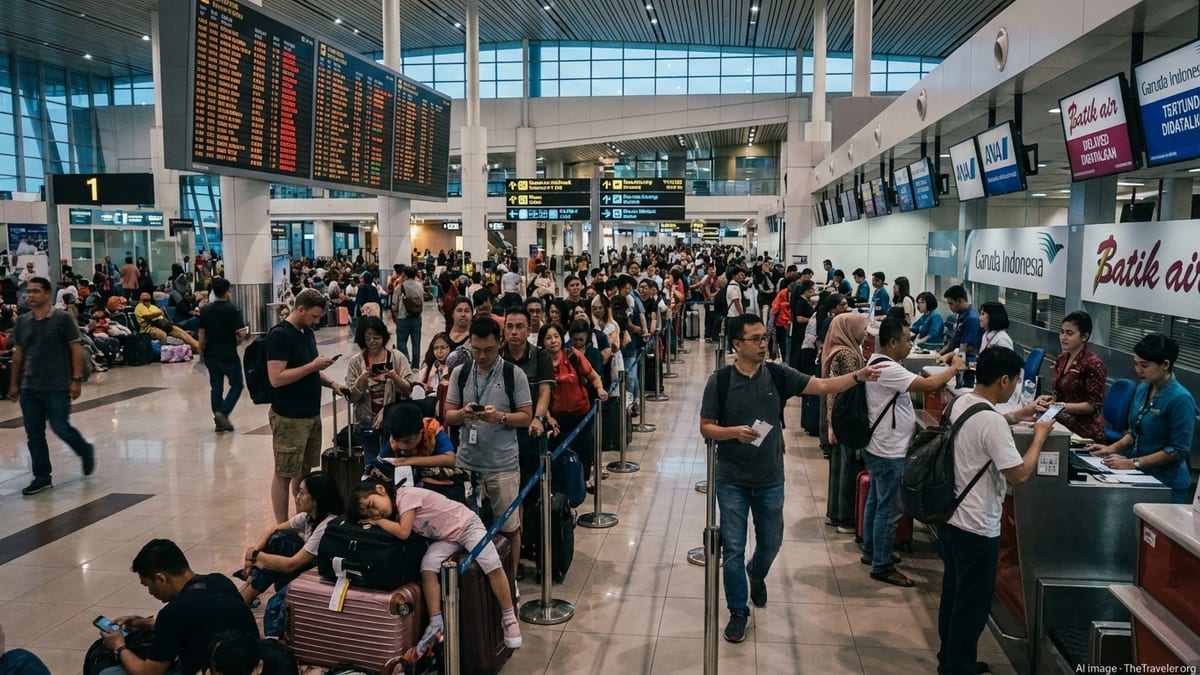
Delays and Cancellations Ripple Across Multiple Asian Gateways
Publicly available aviation dashboards and regional news reports indicate that irregular operations have clustered around several of Asia’s busiest nodes, with Jakarta’s Soekarno Hatta International Airport, Nagoya’s Chubu Centrair, Mumbai’s Chhatrapati Shivaji Maharaj International Airport and major Seoul area airports among those reporting elevated disruption. The latest figures point to 97 delayed departures and arrivals alongside 47 outright cancellations linked to a mix of full-service and low-cost carriers.
These fresh incidents add to a broader pattern of instability in regional schedules. Over recent days, industry-focused outlets have tracked thousands of delays and hundreds of cancellations across key hubs in Japan, China, India and Southeast Asia, as congestion, weather and operational constraints combined to stretch airline and airport resources. Coverage has highlighted particular stress around Japanese and Chinese airports, with knock-on effects spreading across connecting routes to South and Southeast Asia.
In practical terms, the latest round of delays has translated into missed connections, overnight stranding and rebookings that in some cases push journeys into the next day. Passenger accounts shared publicly and live departure boards show queues building at transfer desks and customer service counters as airlines work to re-accommodate travelers on already busy services.
While the total number of affected flights is small compared with overall daily traffic across Asia, the concentration of disruption in a handful of densely scheduled hubs has amplified its impact. Even a few dozen cancellations at airports like Jakarta, Nagoya, Mumbai or Seoul can trigger cascading schedule changes as aircraft and crew are repositioned, forcing adjustments on routes far from the initial problem points.
Major Carriers Caught in a Web of Operational Strain
Data compiled from flight-tracking platforms shows that both network and low-cost airlines have been caught up in the latest irregular operations. Batik Air services touching Jakarta, Korean Air and other South Korean carriers operating to and from Seoul, and China Eastern flights on Chinese and regional routes feature among those reporting delays or cancellations, while India’s IndiGo and additional domestic operators have also adjusted schedules on selected sectors.
Industry coverage in recent weeks has drawn attention to the vulnerability of these carriers to external shocks. Chinese and Japanese airlines have been juggling weather-related disruptions with congested airspace and busy holiday and business travel periods, while Indonesian and Southeast Asian operators, including Batik Air, have appeared prominently in regional delay statistics. Indian airlines such as IndiGo are simultaneously contending with airspace restrictions and tighter crew duty regulations that can limit flexibility when operations start to slip.
Operationally, even a short ground stop, missed slot or technical hold at one airport can create ripple effects across a day’s flying program. Single-aisle aircraft used on intra-Asian routes often operate several legs per day, and a delay on an early Jakarta or Nagoya departure can propagate through subsequent rotations, eventually surfacing as a late-night cancellation in a different country when crews reach duty-time limits or curfews close runways.
Published analyses from aviation consultancies have stressed that many Asian carriers are still running near or at pre-pandemic capacity while working with tighter staffing and maintenance buffers. Under these conditions, a combination of adverse weather, airspace constraints and high seasonal demand can quickly tip operations from manageable delays into widespread schedule disruption.
Weather, Congestion and Fuel Pressures Behind the Numbers
Recent reporting across the region points to a mix of causes behind the latest batch of 97 delays and 47 cancellations. In parts of Southeast Asia and East Asia, seasonal thunderstorms and shifting wind patterns have complicated air traffic management, forcing temporary ground holds, diversions and extended approach sequences. These weather-related constraints have been particularly evident at busy multi-runway hubs where even short interruptions can lead to sustained queues of aircraft waiting to depart or land.
At the same time, several Asia-focused aviation outlets have highlighted ongoing congestion and infrastructure pressure at rapidly growing airports. Jakarta and Mumbai, in particular, are handling heavy domestic and international traffic, and published coverage has noted that peak-hour banks of departures leave limited room to absorb unplanned delays without affecting subsequent waves of flights.
Overlaying these factors, analysts continue to monitor the impact of higher jet fuel prices and broader geopolitical uncertainty on airline scheduling. Recent reports on Asia’s fuel markets describe carriers trimming frequencies and adjusting routings on some services as costs rise and certain airspace corridors face restrictions. While fuel and routing decisions are not cited as the direct trigger for every cancellation, they form part of the context in which operational managers decide whether to maintain, delay or cancel marginal flights when capacity is stretched.
Experts quoted in industry coverage suggest that this combination of weather volatility, constrained infrastructure, elevated fuel costs and complex airspace dynamics has made day-to-day operations more fragile. In such an environment, a localized issue at one hub or with one airline can more readily cascade into multi-airport disruption, as seen in the latest cross-border set of delays and cancellations.
Passenger Impact: Missed Connections, Rebookings and Limited Options
For travelers, the immediate consequences of the disrupted services have included extended waits airside, missed long-haul connections and, in some cases, overnight stays. Passengers transiting through Jakarta, Nagoya, Mumbai or Seoul on itineraries stitched together across different carriers have been particularly exposed, as a delay on a short regional leg can cause a misconnection to a long-haul flight with limited same-day alternatives.
Consumer advocacy groups and travel advisories tracking the current wave of disruptions in Asia emphasize that rebooking options can be constrained when multiple airlines are affected simultaneously. Public guidance commonly urges travelers to monitor their flight status closely, make use of mobile apps and departure boards, and, where possible, build longer connection windows into itineraries involving congested hubs or weather-prone regions.
Reports on recent disruption episodes also highlight that compensation or care obligations vary significantly depending on the country of departure, the airline involved and the underlying cause of the delay or cancellation. Travelers on some routes may be entitled to accommodation, meal vouchers or refunds, while others may find that weather-related disruptions fall outside mandatory compensation frameworks, leaving goodwill policies as the main recourse.
In response, travel planners and corporate travel managers are increasingly recommending contingency planning for trips involving multiple Asian hubs, including flexible tickets, travel insurance that explicitly covers delays and missed connections, and backup routing options that avoid known chokepoints during peak periods or unsettled weather forecasts.
Outlook: Continued Volatility Likely Across Asian Skies
Looking ahead, industry observers expect further bouts of irregular operations in Asia’s air travel network as airlines navigate a complex mix of operational, economic and geopolitical pressures. Recent days have already seen larger regional surges involving several thousand delayed and cancelled flights across multiple countries, suggesting that the latest 97 delays and 47 cancellations may be part of a broader pattern rather than an isolated incident.
Analysts focusing on Asia’s aviation sector note that demand remains robust across many markets, from domestic Indonesian and Indian routes to international links connecting Japan, South Korea and China with Southeast Asia and the Middle East. With aircraft and crews heavily utilized to meet this demand, the margin for error in day-of-operation management remains narrow, leaving little slack when storms build, congestion spikes or upstream disruptions spill into the region.
Travelers planning journeys through Jakarta, Nagoya, Mumbai, Seoul and other regional hubs in the coming days are being advised in public commentary to anticipate possible schedule changes, particularly during late afternoon and evening peaks when earlier delays tend to accumulate. Building additional time into itineraries, monitoring airline announcements and considering alternative routings are among the practical steps recommended to reduce the risk of significant disruption.
While airlines and airports continue to refine contingency plans and invest in resilience, the immediate reality for passengers is that Asia’s interconnected route networks can transmit disruption quickly from one hub to another. The recent cluster of delays and cancellations affecting Batik Air, Korean Air, China Eastern, IndiGo and other carriers underlines how sensitive the system remains to a combination of weather, capacity and operational strain.