

More news on this day
Asia’s aviation network is facing one of its toughest tests in years as a wave of cancellations, diversions and rolling delays ripples from the Middle East to the Pacific, disrupting more than 4,200 flights and exposing how little slack remains in the region’s air transport system.
Get the latest news straight to your inbox!
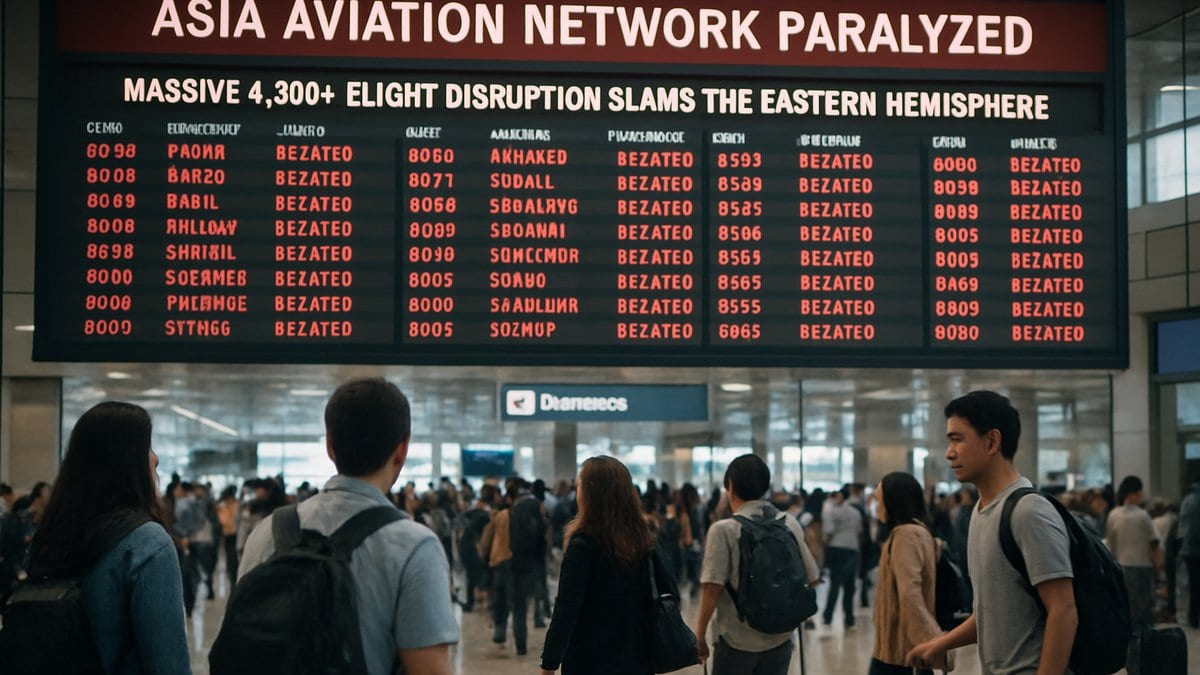
Weather, War and Weak Links Converge on Asia-Pacific Routes
Recent operational data for late March and early April shows that Asia-Pacific carriers and hubs are under acute strain as multiple pressures converge at once. Severe thunderstorms and tropical downpours across Southeast Asia initially triggered hundreds of cancellations and thousands of knock-on delays, particularly at high-traffic hubs such as Bangkok, Kuala Lumpur and Manila. According to published analyses of aviation schedules, one recent 24 hour period saw close to 400 Asia-Pacific cancellations and more than 5,000 delayed departures and arrivals, setting the tone for a bruising start to the April peak season.
At the same time, an evolving conflict in the wider Middle East has forced airlines to skirt large swaths of airspace that once provided direct links between Europe, the Gulf and major Asian markets. Industry monitoring indicates that more than 400 weekly flights linking Asia with the Middle East and beyond have been cut or rerouted, contributing to a measurable contraction in global seat capacity. For Asia-bound traffic, the loss of overflight options translates into longer journeys, higher costs and fewer available seats.
The rerouting burden has fallen heavily on secondary corridors through Central Asia and the Indian Ocean, placing extra pressure on already busy hubs in South Asia and the Gulf. Carriers that maintain services are adding up to several hours of flying time on some long haul sectors to avoid restricted airspace, consuming additional fuel and stretching already tight aircraft and crew rotations. The impact is most visible on trunk routes connecting North Asia and Southeast Asia with Europe, where schedules that once ran with comfortable padding are now operating on razor thin margins.
The result is a system that can be tipped into widespread disruption by any new shock, whether an afternoon of extreme weather in one city or an unscheduled runway closure in another. For travelers, that fragility is showing up as last minute cancellations, unplanned overnight stays and missed connections that cascade across entire itineraries.
Capacity at the Limit: No Redundancy in Asia’s Hub System
While flight statistics highlight headline numbers of cancellations and delays, operational analyses point to a deeper structural issue behind the latest turmoil. Many of Asia’s largest airports and airlines are now operating at or near full capacity, with little built in redundancy to absorb disruptions that span multiple regions. Terminal expansions and new runways in cities such as Bangkok, Manila and Jakarta have lagged behind demand growth, leaving ground infrastructure heavily congested during peak hours.
In practice, this means that when a storm cell shuts down departures for even 60 to 90 minutes at a busy hub, the queue of aircraft waiting to take off or land can take the rest of the day to unwind. Gate space, ramp staffing and baggage systems all become bottlenecks, slowing the recovery. Similar constraints apply in the air, where crowded approach paths and limited air traffic control capacity in some parts of the region restrict the ability to clear backlogs quickly once the immediate weather threat has eased.
Network design compounds the problem. Over the past decade, several Asia-Pacific carriers have aggressively banked arrivals and departures in tightly clustered waves to maximize connectivity. That strategy works well when operations are smooth, but it amplifies disruption when a significant portion of a bank is delayed or cancelled. Missed connections in one wave reduce the viable passenger loads for onward services, prompting late cancellations and further schedule thinning.
With April and May bringing both holiday traffic and heavy business travel, the lack of reserve aircraft and crew is becoming increasingly visible. Some carriers have reportedly begun trimming schedules on marginal routes or reducing frequencies to free up a small buffer of spare capacity. However, those adjustments are modest compared with the scale of demand, meaning that passengers continue to feel the squeeze on popular regional routes.
IT Fragility and the Shadow of Previous Global Outages
The current wave of operational turmoil is also unfolding against the backdrop of recent global IT failures that have highlighted how dependent aviation has become on complex digital ecosystems. In July 2024, a faulty software update from cybersecurity firm CrowdStrike triggered crashes on millions of Microsoft Windows systems worldwide, affecting airlines, airports and government services across multiple continents. Airlines in Asia and Oceania were among the first to experience the impact, as the outage hit in the middle of the business day for the region.
Published coverage of that incident documented widespread check in issues, failures of automated baggage and departure control systems, and ground stops at some major hubs. Although most airlines restored near normal operations within a few days, some carriers reported prolonged recovery windows and thousands of flight cancellations as aircraft and crew were repositioned. The episode prompted calls from aviation analysts for more robust contingency planning and diversified IT architectures, but implementation appears uneven across the region.
That history is now shaping how carriers and airports respond to fresh technology issues, even when the root cause is different. Several Asia-Pacific airlines have quietly introduced additional manual fallback procedures for check in and boarding, while some airports have invested in parallel systems designed to keep critical services running during outages. However, experts note that such mitigations can only partly offset the risks created by tightly integrated global software platforms.
The latest disruptions are not currently tied to a single high profile IT failure on the scale of the 2024 outage, yet smaller system glitches have continued to crop up at individual carriers and airport operators. When such issues coincide with weather or airspace constraints, they can rapidly turn a local problem into a network wide event, particularly in regions that already lack spare capacity.
Traveler Impact: Longer Journeys, Higher Fares and Thin Protections
For passengers, the paralysis across parts of the Asia aviation network is translating into a mix of immediate inconvenience and longer term cost pressures. Reports from regional travel watchdogs and booking platforms describe an uptick in missed long haul connections, especially on itineraries that rely on Middle Eastern or South Asian transfer hubs. In extreme cases, travelers are being rebooked on routings that add 8 to 12 hours of travel time or require overnight hotel stays at intermediate points.
At the same time, rising jet fuel prices linked to the Middle East conflict are feeding through to airfares. Industry analyses show that carriers on some transcontinental routes have introduced new fuel surcharges approaching the equivalent of tens of dollars per one way ticket. With capacity trimmed by flight cuts and diversions, basic economy fares that once undercut premium options by a wide margin are now climbing faster than many travelers expected at the start of the year.
Consumer protections for disrupted passengers remain patchy across the Eastern Hemisphere. While European Union rules provide clear entitlements for care and in some cases compensation on flights touching EU and UK airports, many intra Asian journeys are governed by weaker national regulations or by the individual policies of airlines. Travel advisers are increasingly urging customers to factor those differences into their planning, particularly when booking the cheapest available tickets on multi leg itineraries.
In response to the latest wave of disruptions, some regional carriers have updated public guidance to emphasize the importance of providing up to date contact details and using airline apps for rebooking when flights are cancelled or significantly delayed. Even so, network wide shocks can overwhelm call centers and digital platforms, leaving many passengers dependent on airport service desks that are already under heavy strain.
What Comes Next for Asia’s Overstretched Air Corridors
Looking ahead, airline schedule data for April and May suggests only a modest easing of pressure on Asia’s skies. Capacity growth projections for the region have already been revised downward compared with earlier plans, reflecting higher fuel costs, uncertain geopolitical conditions and limited aircraft availability. Several carriers are deferring route launches or frequency increases, instead concentrating resources on core markets where demand is strongest and yields are highest.
Infrastructure upgrades may eventually offer relief, but most of the region’s major projects, including new terminals and runway expansions, are years from completion. In the meantime, aviation planners are focusing on tighter coordination between air traffic control centers, more granular weather forecasting and refined slot management to make better use of existing infrastructure. These technical measures can help smooth the peaks of congestion, though they cannot fully replace the need for additional physical capacity.
The experience of recent days reinforces the view among industry observers that Asia’s aviation recovery from the pandemic has reached a delicate phase. Traffic volumes in many markets now match or exceed 2019 levels, yet staffing, infrastructure and IT resilience have not caught up at the same pace. As a result, the system remains vulnerable to simultaneous shocks, whether from conflict, climate or code.
For travelers and airlines alike, the current disruption is a reminder that the era of effortless, just in time connectivity across the Eastern Hemisphere is under strain. Without substantial investment in both hard infrastructure and digital resilience, similar episodes of large scale flight paralysis are likely to recur whenever the region’s weather, technology and geopolitics collide.