

More news on this day
Hundreds of air travelers across Asia were left stranded this week as a fresh wave of flight disruptions rippled through major hubs in Indonesia, the Philippines, Singapore, Japan and China, with scores of cancellations and hundreds of delays affecting routes operated by Batik Air, Garuda Indonesia, PAL Express, Lufthansa, ANA Wings, Dalian Airlines and other carriers.
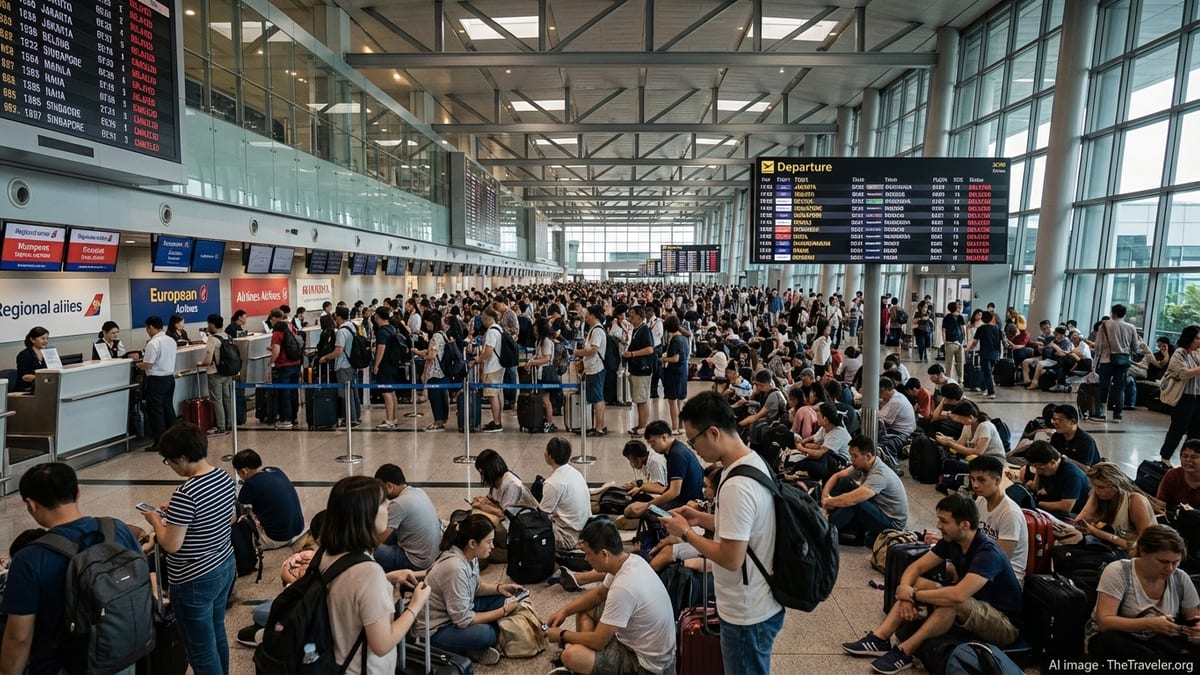
Fresh Disruptions Hit Key Asian Hubs
New data from aviation analytics and regional travel outlets show a continuing pattern of operational strain across Asia’s skies, with dozens of flights canceled and several hundred delayed in a single day across major airports from Jakarta and Beijing to Manila and Naha. While delay volumes far exceed outright cancellations, the combined impact has left terminals crowded and connections in disarray for both regional and long haul travelers.
Recent figures compiled for February 20 indicate that airports in Indonesia, Japan, Singapore, China and the Philippines together recorded dozens of cancellations and well over 300 delays, in line with a broader trend of disruption seen throughout February. In many cases, passengers reported long queues at rebooking desks and a shortage of available seats on alternative flights, particularly on routes linking Southeast Asia to Northeast Asia and the Middle East.
Although exact tallies vary by day and by airport, travel industry monitors have tracked an almost daily stream of disturbances since late January, with cancellations regularly running into the dozens and delays into the hundreds across a network stretching from Jakarta and Manila to Beijing, Tokyo and Singapore. The latest round has amplified concerns that Asia’s aviation recovery is straining the capacity of airlines and airports to keep flights running on time.
Jakarta and Manila Bear the Brunt
Indonesia’s Soekarno Hatta International Airport in Jakarta once again emerged as one of the most disruption prone hubs, recording some of the highest combined totals of cancellations and delays in the region. Recent operational snapshots show Jakarta repeatedly appearing near the top of Asia’s delay rankings, with well over 200 delayed flights on several days and double digit cancellations as carriers grapple with crew, scheduling and air traffic constraints.
Domestic and regional airlines have been particularly exposed. Batik Air and Lion Air, both key players in Indonesia’s domestic market, have consistently logged elevated delay counts out of Jakarta. Garuda Indonesia, the national flag carrier, has also seen a significant share of its Jakarta departures leave late, although with a lower proportion of outright cancellations compared with some low cost rivals.
In the Philippines, Manila’s Ninoy Aquino International Airport has recorded waves of delays that echo the strain seen in Jakarta, with dozens of late running flights and a smaller but still disruptive number of cancellations. PAL Express, the domestic arm of Philippine Airlines, has featured among the carriers hit by schedule upheavals, particularly on short haul routes to secondary Philippine cities and nearby international destinations.
Passengers transiting through these hubs have described scenes of crowded departure halls and long lines stretching from airline service counters as travelers attempt to rebook, secure hotel accommodation or obtain meal vouchers. For many, the main frustration has not been the initial delay itself but the difficulty in getting clear information or quick alternatives in the wake of last minute schedule changes.
Beijing, Naha and Other Northeast Asian Airports See Spillover
The latest disruptions have also reverberated across Northeast Asia, where Chinese and Japanese airports are managing heavy winter demand layered on top of seasonal weather risks. Beijing Capital International Airport has reported a steady drumbeat of delays and a notable share of cancellations in recent weeks, with Chinese mainline carriers such as Air China and China Eastern at times scaling back or retiming services on key domestic and regional routes.
Earlier this year, data from flight tracking providers showed Beijing Capital handling dozens of cancellations in a single day, alongside well over 100 delayed flights. On days of peak disruption, passengers reported multiple services to major business centers such as Shanghai, Shenzhen and Chongqing departing late or being consolidated, intensifying crowding at security and boarding gates.
In Japan, regional airports including Naha in Okinawa and New Chitose near Sapporo have experienced intermittent turbulence in their schedules, especially when adverse winter weather coincides with high holiday travel volumes. ANA Wings and Jetstar Japan have both reported clusters of canceled and delayed services at these airports in recent operational updates, particularly on short haul domestic routes linking smaller cities to larger hubs.
For travelers, the effect has been uneven but significant. While major international gateways like Tokyo Haneda and Narita have generally maintained higher levels of resilience, their regional counterparts have shouldered a larger share of cancellations relative to traffic volume, which in turn has disrupted the feeder flights many passengers rely on to connect to long haul services.
Singapore and Regional Connectors Struggle With Knock On Effects
Singapore Changi Airport, one of Asia’s most important transit hubs, has faced acute pressure from delays even as it has largely kept outright cancellations in check. On some February days, Changi has recorded more than 400 delayed movements with minimal cancellations, underscoring how tightly packed schedules and high connectivity can magnify the impact of minor operational hiccups.
Singapore Airlines and its regional partners have together logged more than a hundred delayed flights in a single day on several recent occasions, according to travel industry tallies. While the majority of those departures eventually took off, late running services have created a domino effect for connecting passengers, particularly those arriving from or heading to Indonesia, the Philippines and India.
The knock on effects are not confined to Southeast Asia. Long haul carriers such as Lufthansa, Emirates and other Middle Eastern and European airlines operating into Asian hubs have faced the challenge of integrating delayed inbound feeder flights into tightly timed banks of departures. In some cases, this has meant holding widebody aircraft on the ground to wait for connecting passengers or, conversely, departing on schedule and leaving stranded travelers to be accommodated on later services.
Industry analysts note that while Changi and similar hubs have robust contingency playbooks, sustained daily delays across a network can quickly consume spare runway, gate and staffing capacity, making recovery slower once disruptions cascade through multiple time zones.
Airlines Under Pressure: From Batik Air to Lufthansa
The burden of the latest flight disruptions has fallen unevenly across carriers. Regional airlines with dense domestic schedules, such as Batik Air in Indonesia and PAL Express in the Philippines, are among the most exposed, because even minor crew or maintenance issues can ripple through a large number of closely timed short haul flights.
In Jakarta, Batik Air has repeatedly stood out in daily operational reports for its combination of cancellations and high delay volumes, at times recording more than 70 delayed flights in a single day alongside more than a dozen cancellations on routes ranging from Jakarta to secondary Indonesian cities. The airline has attributed some of the strain to aircraft rotation challenges and congested airspace around peak travel periods.
Garuda Indonesia, while operating a smaller network than before the pandemic, has also faced significant delays, though with fewer outright cancellations. In Manila and Cebu, PAL Express has seen several of its services pushed back, contributing to aircraft and crew being out of position for later waves of flights.
International carriers have not been spared. Lufthansa has faced schedule adjustments and missed connections when Asian feeder flights ran late into its Asian gateways, forcing rebookings onto later departures to Europe. Japanese regional operator ANA Wings has frequently appeared in disruption tallies from airports such as Osaka and Kagoshima, often due to weather sensitivity on short haul domestic sectors, while Chinese regional airlines like Dalian Airlines have encountered cancellations on select routes serving coastal cities and northeastern China.
Weather, Infrastructure and Staffing Drive the Disruptions
Multiple factors lie behind the current wave of cancellations and delays. Seasonal winter weather across East Asia continues to play a decisive role, particularly in northern China and Japan where snow, low visibility and high winds can quickly trigger ground stops or require extra spacing between arrivals and departures. Even brief weather related slowdowns can cause hours of knock on delays for subsequent flights.
Infrastructure constraints are another key pressure point. Several of the airports most frequently cited in recent disruption reports, including Jakarta Soekarno Hatta and Manila Ninoy Aquino, operate close to or at their designed capacity during peak hours. When combined with rising passenger numbers, limited runway and gate space leaves little margin for error when operational hiccups occur.
Staffing and crew availability remain a lingering challenge for many airlines. Although hiring has accelerated, carriers across Asia report that it takes time to bring newly recruited pilots, cabin crew and ground staff fully online, while experienced workers are still in high demand. Any unexpected sickness, regulatory duty time limit or aircraft maintenance requirement can tip a tightly balanced schedule into a pattern of rolling delays.
Industry observers also point to the complexity of today’s interconnected route networks, where a delayed aircraft in one city can arrive late into another hub and miss its scheduled departure slot, forcing additional holding or re-routing and placing further strain on air traffic management systems.
Impact on Travelers and Growing Calls for Better Communication
For passengers, the practical consequences of these disruptions have been stark. Travelers in Jakarta, Beijing and Manila have described waiting in airports for many hours longer than scheduled, missing onward connections and in some cases having to pay out of pocket for hotels when airline provided accommodation was scarce or fully booked.
Families traveling with children and elderly passengers have been particularly vulnerable to long waits, especially at airports where seating and rest facilities are limited and where access to quiet zones or lounges depends on ticket class or loyalty status. Some travelers have reported difficulty in obtaining timely updates through airline apps or airport displays, forcing them to rely on periodic loudspeaker announcements or crowded customer service counters.
Consumer advocates in several Asian markets have renewed calls for clearer and more consistent communication standards during major disruption events. They argue that airlines should more proactively inform passengers about the causes of delays, realistic rebooking options and entitlements to meals, hotel stays or compensation under local regulations.
At the same time, travel industry experts note that passengers can reduce their own risk by allowing longer connection times when booking complex itineraries through known congestion points, monitoring flight status actively on the day of travel and considering travel insurance products that specifically cover missed connections and extended delays.
Outlook: Aviation Recovery Meets Operational Reality
The latest wave of cancellations and delays underscores the tension between Asia’s rapid aviation recovery and the practical constraints facing airlines and airports as they scale up. Air traffic across the region has surged back toward or above pre pandemic levels on many routes, especially those linking Southeast Asia and China to Japan, India and the Middle East.
Yet the infrastructure, staffing and fleet capacity underpinning that growth have not always kept pace. Air traffic control systems, ground handling operations and maintenance facilities are all operating under heavy load, leaving the system vulnerable to disruptions from weather events, technical issues or sudden surges in demand such as holiday travel peaks.
Industry bodies and airport operators in Indonesia, Japan, Singapore, China and the Philippines are responding with a mix of short term and long term measures, from adding staff and refining schedule coordination to planning new runways and terminal expansions. However, many of these projects will take years to translate into additional resilience that passengers can feel day to day.
Until then, travelers flying through hubs such as Jakarta, Beijing, Manila, Singapore and Naha may continue to experience periodic clusters of cancellations and delays. For now, the numbers recorded in recent days serve as a reminder that while Asia’s skies are busier than ever, reliability has yet to fully catch up with demand.