

More news on this day
Thousands of travellers were left sleeping in terminal chairs and queuing at airline counters across Asia on February 27 and 28, as a fast-moving wave of disruptions triggered more than 60 flight cancellations and hundreds of delays on key routes connecting Jakarta, Kuala Lumpur, Singapore, Hong Kong, Vancouver and other major hubs.
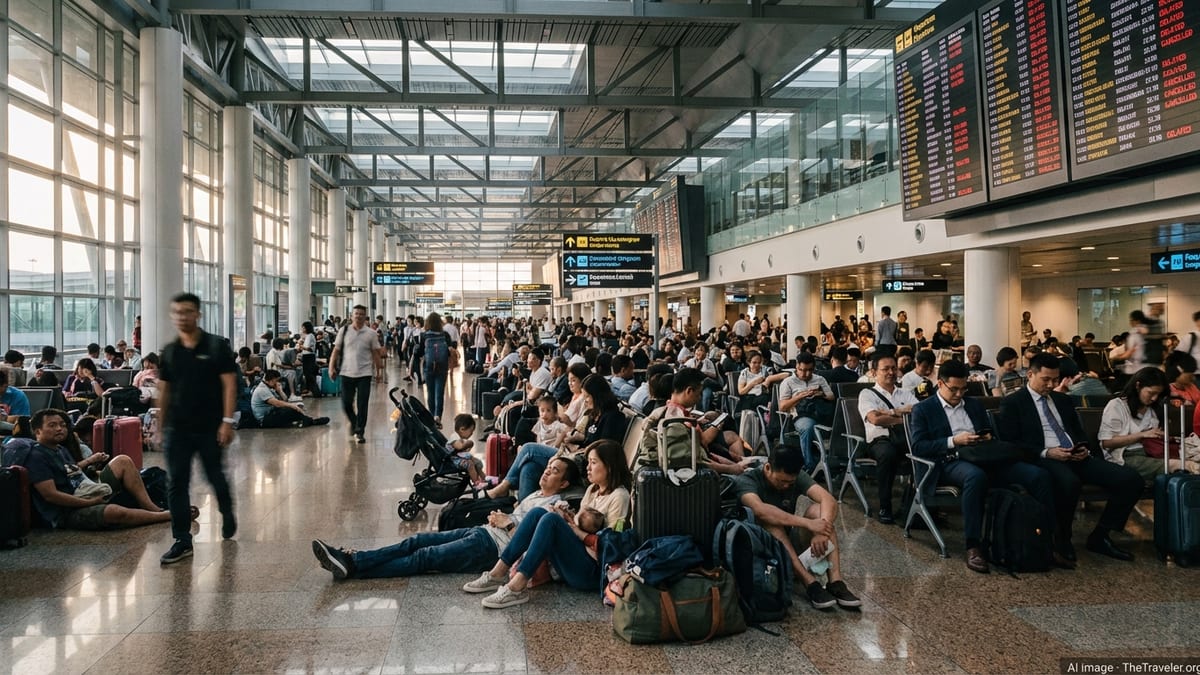
Storm Systems and Operational Strain Collide
The latest bout of chaos has been driven largely by severe weather sweeping across China, Malaysia and Indonesia, where bands of heavy rain, low cloud and unstable winds forced air traffic controllers to slow traffic and ground aircraft. Between February 27 and 28, regional monitoring data showed at least 54 weather-related cancellations and more than 500 delays affecting routes through Kuala Lumpur, Jakarta and multiple Chinese cities.
AirAsia and Batik Air have emerged among the hardest-hit carriers in Southeast Asia, with high cancellation and delay volumes on services in and out of Jakarta Soekarno-Hatta and Kuala Lumpur International Airport. Budget and full-service airlines alike were forced into rolling schedule changes as storm cells shifted through already congested air corridors.
Further compounding the weather disruption, airlines across the wider region have been grappling with tight aircraft rotations and crew availability, leaving little spare capacity to absorb delays. What began as tactical weather holds quickly cascaded into missed connections and overnight strandings for passengers heading to onward destinations such as Singapore, Hong Kong and cities in Australia and North America.
By Saturday afternoon, airport departure boards in several hubs were dominated by red and amber status alerts, with some carriers instituting proactive cancellations to reset schedules rather than extend lengthy knock-on delays into the weekend.
Passengers Stranded from Jakarta to Hong Kong
Travellers transiting through Jakarta, Kuala Lumpur, Singapore and Hong Kong reported hours-long queues at customer service desks, as ground teams struggled to rebook disrupted passengers on already full services. Families returning from Lunar New Year visits, business travellers and backpackers alike found themselves searching for scarce hotel rooms near airport terminals.
At Jakarta’s Soekarno-Hatta International Airport, Batik Air and AirAsia passengers were particularly affected, with cancellations on domestic links to Makassar and regional routes feeding into Singapore and Kuala Lumpur. The concentration of cancellations there made Jakarta one of the highest-hit airports in the region, according to regional flight tracking snapshots.
In Kuala Lumpur, which recorded some of the largest delay totals, Malaysia Airlines and AirAsia both faced heavy pressure on popular regional connections. With many departures running several hours late, travellers bound for onward long-haul flights to destinations including Vancouver, the Middle East and Europe faced missed connections and re-routings via alternative hubs.
Farther north in Hong Kong, operational knock-on effects from weather and regional congestion translated into tighter arrival and departure slots. While the number of outright cancellations remained lower than in Southeast Asian hubs, airlines warned that schedule reliability would remain fragile as they attempted to reposition aircraft and crews from disrupted routes elsewhere in the network.
Malaysia Airlines, AirAsia and Batik Air Among Most Affected
Across the two-day disruption window, Malaysia Airlines, AirAsia and Batik Air stood out among the Asian carriers reporting significant irregular operations, while Air Canada emerged as one of the long-haul operators affected on routes linking Asia with North America. In aggregate, more than 60 flights involving these and other airlines were cancelled, on top of hundreds of delays.
For Malaysia Airlines, pressure mounted at its Kuala Lumpur hub, where already busy schedules were strained further by weather-related delays and airspace constraints on some westbound routes. The airline prioritised safety and regulatory requirements, even where this meant returning aircraft to base or holding them on the ground until conditions improved.
AirAsia, with its dense network of short-haul services across Southeast and East Asia, saw disruption spread quickly as early-morning delays rippled through the day’s rotations. The carrier faced particularly high delay volumes out of Kuala Lumpur and Jakarta, forcing last-minute consolidation of flights and leaving many passengers seeking same-day alternatives on fully booked services.
Batik Air, which has been expanding its regional footprint from Indonesian and Malaysian gateways, recorded some of the highest cancellation counts among carriers operating in and out of Jakarta. With aircraft and crews out of position, the airline focused on stabilising its core trunk routes, even as passengers on secondary city pairs faced extended waits for re-accommodation.
Impact on Key Routes to Vancouver, Singapore and Beyond
While the bulk of cancellations were concentrated within Asia, the disruption quickly spilled onto long-haul corridors linking the region with North America and the Middle East. Air Canada reported schedule adjustments on select Asian services, including flights connecting Vancouver with key transit points in Southeast Asia, as partner and feeder disruptions reduced the reliability of inbound traffic.
Singapore’s Changi Airport, one of Asia’s primary transfer hubs, saw several dozen delays and a handful of cancellations ripple through its schedule, with budget and full-service carriers alike contending with late-arriving aircraft from Indonesia and Malaysia. Connections between Southeast Asian cities and onward flights to Europe, Australia and Canada were especially vulnerable, forcing airlines to rebook passengers via alternative routings or later departures.
Regional aviation analysts noted that the combination of dense route networks and high winter-season demand leaves little slack in Asia’s current airline schedules. When severe weather or airspace constraints hit multiple hubs at once, even a few dozen cancellations can trigger widespread missed connections, particularly on multi-leg itineraries linking secondary Asian cities with major long-haul gateways such as Vancouver and Hong Kong.
For tourism boards and travel operators, the timing is unwelcome. The disruptions come as many destinations across Southeast and East Asia report strong recovery in visitor numbers, with international arrivals climbing back toward or above pre-pandemic levels and airlines running near-peak load factors on key leisure and business routes.
What Travellers Can Expect in the Coming Days
Airlines across the affected region have signalled that schedules should gradually stabilise as weather systems move on and backlogged flights are cleared, but they caution that irregular operations could persist into the early days of March. Aircraft and crews remain out of normal position on several networks, making carriers vulnerable to further delays if additional storms or technical issues arise.
Passengers booked on Malaysia Airlines, AirAsia, Batik Air, Air Canada and other regional carriers in the coming days are being advised to monitor their flight status closely and allow extra time for connections in Jakarta, Kuala Lumpur, Singapore and Hong Kong. Many airlines are offering limited change-fee waivers or flexible rebooking options for travel during the disruption window, though availability on alternative flights remains tight on the busiest routes.
Travel agents and corporate travel managers report a spike in last-minute itinerary changes as companies seek to reroute staff around the most congested hubs. Some are temporarily favouring routings via less-affected gateways, even when this means longer journey times, in a bid to maximise the chances of on-time arrival.
For stranded leisure travellers, the immediate focus remains on finding beds for the night and securing confirmed seats on the next available departures. With hotel inventory near some major airports under strain, particularly around Jakarta and Kuala Lumpur, tourism officials are urging visitors to remain patient while stressing that safety remains the top priority as airlines and airports work to restore normal traffic flows.