

More news on this day
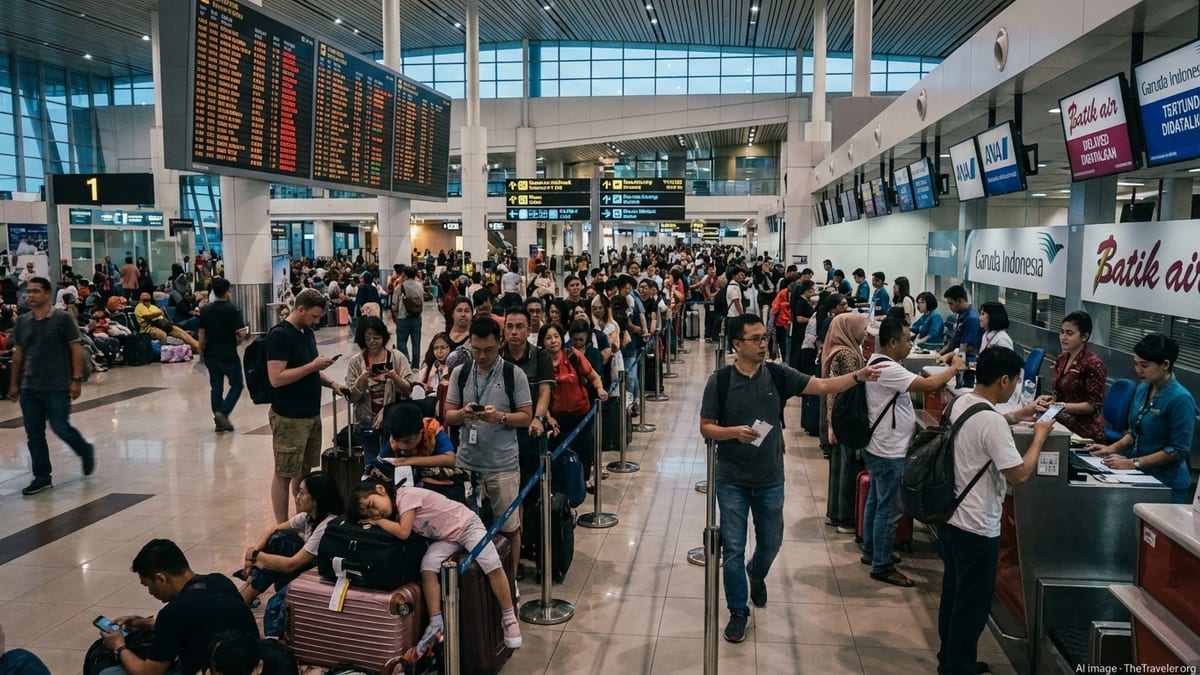
Air travel across Asia faced fresh disruption today as major hubs in mainland China and Southeast Asia reported 57 flight cancellations and 576 delays, leaving thousands of passengers stranded at Beijing Daxing, Chengdu Tianfu, Guangzhou Baiyun, Shanghai Hongqiao, Jakarta and Bali’s main international airports.
Get the latest news straight to your inbox!
Wave of Cancellations Hits Chinese Mega-Hubs
Publicly available operations data for April 7 indicate that Chinese airports once again formed the epicenter of regional disruption, with Beijing Daxing, Chengdu Tianfu, Guangzhou Baiyun and Shanghai Hongqiao all reporting clusters of cancelled and heavily delayed departures. While exact tallies vary by data provider and update cycle, aggregated figures point to 57 cancellations and hundreds of late departures across the affected hubs.
Beijing Daxing, the capital’s newer international gateway, registered multiple cancellations alongside dozens of delayed flights. At Chengdu Tianfu, a growing inland hub, individual services such as Sichuan Airlines flights from smaller Chinese cities were shown as cancelled, adding to a pattern of schedule instability that has seen many services arrive or depart behind time in recent months.
Guangzhou Baiyun, a key base for China Southern Airlines, reported one of the higher concentrations of disrupted movements among Chinese hubs, with cancellations layered on top of a broad band of delays. Shanghai Hongqiao, which handles a dense portfolio of domestic and regional services, also saw knock-on effects as aircraft and crews struggled to cycle back into position after earlier schedule slippage.
Operational statistics and aviation analytics for these airports over the past year show consistently tight utilization of runways and terminal capacity, and recent bulletins highlight Beijing Daxing, Chengdu Tianfu and Guangzhou Baiyun among Asia’s busier and more delay-prone hubs. The latest disruption appears to reflect that underlying vulnerability, where relatively modest scheduling shocks can quickly cascade into wider network problems.
Jakarta and Bali Add to Southeast Asia’s Travel Headaches
The disruption was not confined to mainland China. In Indonesia, Jakarta’s Soekarno Hatta International Airport and Bali’s main international gateway at Denpasar also reported a noticeable uptick in delayed and disrupted services, compounding what has already been a challenging period for punctuality across Southeast Asia.
In Jakarta, delays affected a mix of domestic and regional routes as airlines contended with aircraft arriving late from other Asian hubs, including China. Aviation statistics show Soekarno Hatta consistently ranking among the region’s busiest airports, and recent capacity and traffic reports list it alongside Guangzhou and Chengdu among top Asian gateways by passenger volume, underscoring how quickly localized problems can ripple outward.
At Bali’s Ngurah Rai International Airport, even a relatively small number of outright cancellations can have an outsized impact because the island’s tourism-driven traffic is highly seasonal and concentrated around certain departure banks. Previous disruptions in and out of Bali, including those linked to volcano alerts or operational issues on long-haul sectors, have demonstrated how swiftly hotel stays, onward connections and tour schedules can be thrown off when flights fail to operate as planned.
Today’s cancellations and delays at Jakarta and Bali added to a wider pattern of stress across Asian networks, as carriers juggled late-arriving aircraft, crew duty limitations and congested airspace between China and Southeast Asia.
Operational Strains and Weather Create a Fragile Network
While no single cause fully explains the latest cluster of disruptions, publicly available flight-tracking feeds and regional aviation coverage point to a familiar combination of factors: localized weather, congestion around peak waves of departures, and ongoing fleet and crew imbalances at several Asian airlines.
Recent data snapshots of Chinese and broader Asia Pacific operations show thousands of daily delays against a backdrop of capacity that has largely recovered to, or exceeded, pre-pandemic levels on many trunk routes. Bulletins tracking cancellations across China on April 7 highlight a delay-dominant pattern, with far more services operating late than being outright scrubbed, particularly at Guangzhou Baiyun, Shenzhen, Beijing and Hangzhou. Today’s 57 cancellations, though numerically smaller than the volume of delays, created bottlenecks as passengers scrambled to rebook scarce seats.
Aviation punctuality reports for 2025 and early 2026 have repeatedly cited Beijing Daxing, Chengdu Tianfu, Guangzhou Baiyun and Shanghai’s airports among Asian hubs facing sustained schedule pressure. The combination of rapidly growing demand, dense short-haul schedules and limited slack in the system has left airlines and airports vulnerable when thunderstorms, air traffic flow restrictions or isolated technical issues affect a narrow time window.
In Southeast Asia, the wider geopolitical backdrop has also contributed to route reshuffling and longer routings for some carriers, subtly increasing block times and eroding buffer margins. Flight reduction notices by major regional airlines on routes touching Jakarta and other key Southeast Asian hubs illustrate how schedule planners are still adjusting to airspace constraints and evolving demand patterns.
Thousands of Passengers Face Missed Connections and Rebookings
For travelers caught up in today’s disruption, the impact was felt in long queues at transfer desks, missed connections and forced overnight stays. With 57 flights cancelled outright and 576 delayed across the group of affected airports, even conservative estimates suggest thousands of passengers were pushed into rebooking processes or extended layovers.
Hub dynamics at Beijing Daxing, Guangzhou Baiyun and Shanghai Hongqiao amplify these effects. Many services are timed to feed into tight connection banks, meaning that a delay of even an hour can sever onward links for domestic and international itineraries. When cancellations occur, re-protection options can be limited, particularly on popular routes that are already operating near capacity at peak times.
Travel forums and social media posts over recent weeks have highlighted growing frustration among passengers flying through Chinese hubs, with some reporting last-minute changes, rolling delays and challenges securing clear information about revised schedules. These anecdotal accounts align with the broader statistical picture of elevated delay rates at several mainland airports and underscore the importance of contingency planning for travelers who rely on tight connections.
In Indonesia, where many visitors to Bali and Jakarta are tourists or business travelers on fixed itineraries, even moderate disruption can translate into missed events, shortened holidays or additional hotel and transport costs. The latest wave of delays and cancellations is likely to prompt renewed scrutiny of how airlines serving these markets handle passenger care obligations when schedules fall apart.
What Today’s Disruption Signals for Asia’s Summer Travel Season
The clustering of cancellations and delays across Beijing Daxing, Chengdu Tianfu, Guangzhou Baiyun, Shanghai Hongqiao, Jakarta and Bali arrives just as airlines and airports prepare for the northern summer peak. Industry traffic and capacity reports show strong demand forecasts for intra-Asia travel in 2026, supported by expanding networks and restored frequencies on many key routes.
At the same time, punctuality data suggest that several hubs entering the busy season are already operating with thin operational margins. Beijing Daxing and Chengdu Tianfu remain relatively new airports integrating complex domestic and international traffic flows, while Guangzhou Baiyun and Shanghai’s airports are navigating slot constraints and continued fleet redeployments by Chinese and foreign carriers.
For travelers, today’s disruption serves as a reminder that itinerary planning in Asia’s interconnected aviation market increasingly requires built-in flexibility. Longer connection times, comprehensive travel insurance and careful monitoring of flight status in the 24 hours before departure can help mitigate some of the risks posed by sudden cancellation spikes and rolling delays.
For the aviation sector, the episode underlines the need for continued investment in air traffic management, airport capacity and operational resilience at the region’s busiest gateways. As demand climbs through 2026, the balance between aggressive scheduling and network stability will remain a central challenge for airlines and airport operators across Asia.