

More news on this day
Thousands of passengers across Asia were left stranded on Friday as more than 50 flights were canceled and many more delayed, snarling travel through key hubs from Jakarta and Bali to Singapore, Sydney and San Francisco.
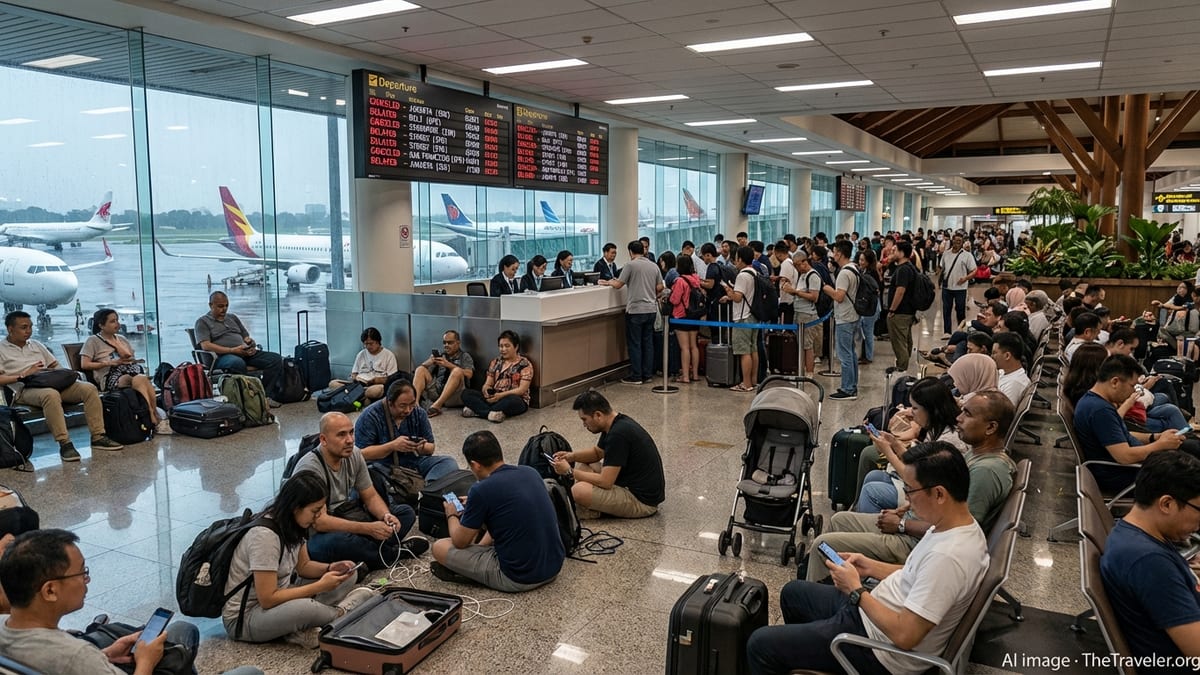
Regional Wave of Cancellations Hits Key Asian Gateways
The latest wave of disruption swept through airports in Indonesia, Malaysia, Laos, Taiwan and Hong Kong, where operational backlogs and tight aircraft rotations triggered new cancellations on already stressed networks. Live airport data and regional aviation trackers showed a spike in scrubbed departures and heavily delayed services on routes linking Southeast Asia with Australia, North Asia and the United States.
While flight delays have been building for several days, Friday’s pattern was notable for the breadth of affected carriers, spanning low cost and full service airlines as well as intercontinental operators. Jakarta’s Soekarno Hatta and Bali’s Ngurah Rai again emerged as flashpoints, but ripple effects were quickly felt at Singapore Changi, Taipei Taoyuan and Hong Kong International as onward connections fell apart.
Many travelers reported being informed of cancellations only hours before departure, compounding congestion at customer service desks and leaving airport hotels oversubscribed. For some, the disruption meant missing cruises, tours and business meetings timed around peak late‑February travel.
AirAsia, Batik Air, Jetstar and United Among Most Affected
Low cost giant AirAsia once again featured prominently among the disrupted carriers, with multiple short haul services in and out of Kuala Lumpur, Jakarta and other Southeast Asian hubs either canceled outright or subject to extended delays. The carrier has faced a sustained run of operational strain this week, with rotating knock‑on effects each time an aircraft or crew misses its planned slot.
Indonesia’s Batik Air, which has been at the center of several recent cancellation clusters in Jakarta and Makassar, canceled additional flights on busy domestic and regional sectors. The latest tally pushed the combined number of scrubbed Batik departures this week into the dozens, affecting holidaymakers returning from Bali as well as business travelers shuttling between Indonesia’s major cities.
Australia’s Jetstar also pulled services touching Bali and Singapore, adding to an already bruising summer for leisure travelers heading to and from Sydney and Melbourne. On the long haul side, passengers on United Airlines reported cancellations and rolling delays on services linking key Asian gateways with San Francisco and other U.S. West Coast cities, complicating itineraries that relied on tight interline connections.
Other regional names, including Garuda Indonesia, Malaysia Airlines, Mandarin Airlines and several Japanese and Chinese carriers, were listed among operators trimming schedules or suffering extended ground holds as the day progressed.
Stranded Passengers Face Long Queues and Limited Rerouting Options
At Jakarta, Bali and Kuala Lumpur, snaking queues formed at airline counters before dawn and persisted into the afternoon as passengers attempted to secure scarce seats on later flights. With many routes already running near capacity, rebooking options were constrained, particularly for families and groups needing to travel together.
In Hong Kong and Taipei, transit passengers were among the hardest hit. Travelers arriving from regional cities in Laos, Vietnam and Indonesia found their onward flights to Singapore, Tokyo, Sydney and the United States delayed or canceled, forcing unexpected overnight stays. Some reported being offered only partial meal vouchers or asked to organize their own accommodation while they waited for new departure times.
The situation was similar in Singapore, where departure boards at Changi showed rolling delays on regional departures and late‑running arrivals from Jakarta and Bali. Travel agents noted a sharp rise in urgent calls from customers attempting to reroute via alternative hubs such as Bangkok, Manila or Seoul, although available inventory there was also tightening as the disruptions cascaded through airline networks.
Social media feeds filled with images of crowded departure halls and exhausted families camping out near boarding gates, highlighting the human toll of what, in operational terms, is often described simply in numbers of delays and cancellations.
Weather, Congestion and Tight Schedules Blamed for Ongoing Turmoil
Airlines and airport authorities across the region have cited a familiar mix of factors behind the latest disruptions: localized weather issues, airspace congestion along busy corridors, and tightly wound schedules that leave little room to recover when even a few early flights run late. Industry analysts say that while overall capacity has rebounded since the pandemic, staffing at some airlines, ground handlers and air traffic control units remains finely balanced.
In Indonesia and Malaysia, afternoon thunderstorms and reduced visibility have repeatedly forced temporary ground stops or slowed arrival and departure rates, creating backlogs that push into the evening peak. When coupled with maintenance needs and crew duty time limits, carriers are often left with no choice but to cancel later rotations rather than risk operating aircraft and crews out of position for the following day.
Network planners also point to the complexity of linking short haul Asian flights with long haul services to Australia and North America. A delay on an early morning sector into Jakarta or Singapore can easily cascade into a missed departure window for a widebody flight to Sydney or San Francisco, where airport curfews and slot restrictions leave limited flexibility.
Regulators in several markets have been pressing airlines to build more slack into schedules and to improve real‑time communication with passengers, but competitive pressures and high demand on core routes continue to encourage tight turnarounds and ambitious daily utilization targets.
Travelers Urged to Monitor Flights and Build in Extra Margin
With no immediate, single cause that can be quickly resolved, aviation experts caution that travelers in and through Asia should expect intermittent disruption to persist in the coming days. Peak routes into and out of Jakarta, Bali, Singapore, Sydney and major North Asian hubs are considered particularly vulnerable whenever weather deteriorates or a technical issue grounds an aircraft unexpectedly.
Frequent travelers and travel advisors recommend building additional margin into itineraries that rely on key connections, especially when linking regional flights in Indonesia, Malaysia or Laos with long haul departures to Australia, Europe or North America. Where possible, booking earlier flights in the day and avoiding tight layovers can reduce the risk of missed onward legs.
Passengers are also being encouraged to monitor airline apps and airport information screens closely and to check in online as early as possible. Some carriers have begun proactively waiving change fees or offering flexible rebooking for affected routes, although the availability of alternative seats remains the biggest constraint.
For now, stranded passengers across Asia’s hubs are left waiting for aircraft, crews and schedules to realign, hoping that the latest wave of cancellations will be short lived and that their disrupted journeys can soon resume toward Jakarta, Bali, Singapore, Sydney, San Francisco and other key destinations.