

More news on this day
Thousands of travelers across Asia are facing severe disruption this week as more than 150 flights operated by Qatar Airways, Batik Air, Malaysia Airlines and other carriers are cancelled or heavily delayed, leaving passengers stranded at airports in Indonesia, Malaysia, Hong Kong and Taiwan and severing key links to Jakarta, Bali, Makassar, Kuala Lumpur, Penang, Kota Kinabalu, Langkawi, Taipei and other major destinations.
Get the latest news straight to your inbox!
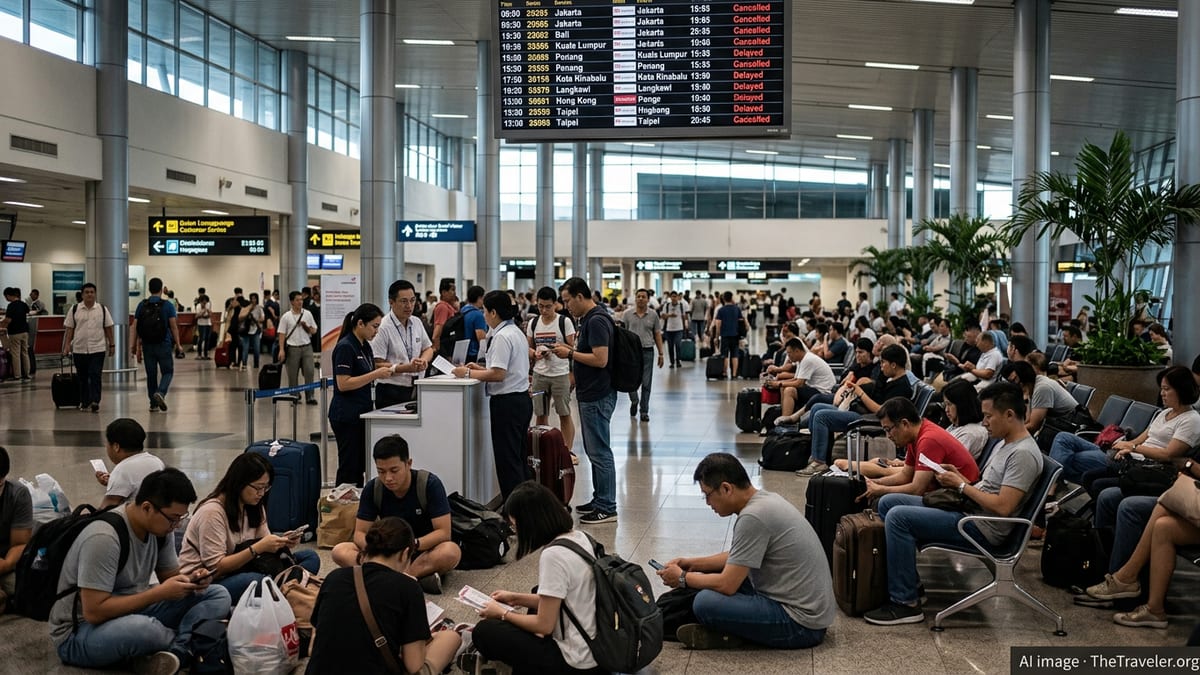
Middle East Airspace Crisis Ripples Across Asian Routes
The latest wave of disruption is closely tied to the continuing closure and restriction of airspace over parts of the Gulf region, which has forced airlines to cut or reroute services that normally transit Doha, Dubai, Abu Dhabi and other Middle Eastern hubs. Carriers are struggling to keep long-haul networks intact, with aircraft and crews out of position and limited alternative routings available through already congested skies.
Qatar Airways, one of the biggest transfer airlines for Asia–Europe and Asia–Africa traffic, has been operating on a reduced schedule since late February, trimming frequencies to and from Doha and prioritising a limited list of long-haul destinations. As rotations are cancelled or consolidated, connecting services into Southeast and North Asia have been scaled back, hitting itineraries that include Jakarta, Bali, Kuala Lumpur, Hong Kong and Taipei.
Regional players such as Batik Air and Malaysia Airlines have also cut flights that either feed into Gulf-bound services or rely on aircraft returning from disrupted Middle East sectors. This knock-on effect has led to cancellations well beyond direct Middle East routes, with travellers on ostensibly domestic or intra-Asia services finding their flights abruptly removed from schedules.
Travel data providers tracking airport operations across the region report that, over recent days, combined cancellations linked to the crisis have surpassed 150 flights on Asia-facing routes, with Indonesia and Malaysia among the hardest hit. Those figures are expected to rise as airlines continue to replan schedules through at least late March.
Indonesia and Malaysia See Extensive Cancellations
Indonesia’s main international gateway, Soekarno–Hatta International Airport in Jakarta, has recorded clusters of Qatar Airways and regional carrier cancellations affecting both outbound and inbound passengers. Bali’s Ngurah Rai International Airport has seen services trimmed or retimed, particularly for travellers connecting to or from long-haul flights that previously relied on Doha and other Gulf hubs as a bridge.
At secondary Indonesian airports, including Medan and Makassar, the network shock is being felt through reduced frequencies by Batik Air and partner carriers. Local media have highlighted cases such as a Batik Air service from Medan to Jakarta being cancelled at short notice, forcing passengers to queue for hours at counters and scramble for scarce seats on remaining departures.
Malaysia is experiencing similar turbulence. Kuala Lumpur International Airport has logged a growing tally of cancellations and long delays involving Qatar Airways, Malaysia Airlines and other regional operators, as aircraft scheduled for Middle East rotations remain grounded or are reassigned. Penang, Kota Kinabalu and Langkawi have reported last-minute schedule changes, with some holidaymakers learning only at check-in that their flights have been cancelled or combined with later departures.
The Malaysian government has been simultaneously coordinating evacuation flights from Doha for citizens caught in the wider West Asia conflict zone, further complicating capacity planning. While special services have successfully brought stranded Malaysians home, they have also absorbed aircraft and crews that would ordinarily operate commercial routes around the region.
Hong Kong and Taiwan Passengers Confront Uncertain Connections
In North Asia, Hong Kong International Airport and Taiwan’s Taoyuan and Kaohsiung airports are grappling with schedule volatility as airlines trim or suspend services that once routed through the Middle East. Qatar Airways, which has maintained a reduced number of flights to Hong Kong and selected Southeast Asian cities, has warned passengers of frequent timing changes and potential cancellations at short notice.
Travellers in Hong Kong report long lines at rebooking desks and call centres overwhelmed by requests to reroute journeys away from Gulf stopovers. Some passengers bound for Jakarta, Bali or Kuala Lumpur have been rebooked via East Asian hubs such as Tokyo, Seoul or Shanghai, resulting in journeys extended by many hours and, in some cases, overnight layovers that were not originally planned.
Taiwanese travellers have faced a similar scramble, particularly those using international carriers to connect from Taipei to leisure destinations in Indonesia and Malaysia via Doha. With those itineraries now disrupted, demand has shifted rapidly toward alternative routings on regional airlines and through non-Gulf hubs, driving up fares and depleting available seats during peak travel periods.
Airports and tourism boards in Hong Kong and Taiwan are urging passengers to reconfirm their bookings well before departure and to allow additional time at the airport, warning that check-in and transfer processes are under strain as airlines make last-minute adjustments to schedules.
Knock-On Impact for Tourism and Regional Economies
The timing of the disruption is particularly damaging for tourism-dependent destinations such as Bali, Langkawi and Penang, which rely heavily on international arrivals from Europe and the Middle East as well as from within Asia. Hoteliers and tour operators report a spike in cancellations and no-shows as visitors abandon trips or are unable to find viable replacement flights.
Travel industry analysts note that Gulf carriers like Qatar Airways play an outsized role in funnelling long-haul passengers into Southeast Asia, especially to secondary cities that lack direct nonstop links from Europe. When those connecting flights vanish or operate at sharply reduced frequencies, the effects cascade through local economies, from airport retailers and ground handlers to small businesses that cater to foreign tourists.
Domestic networks are also feeling pressure. As international itineraries unravel, some travellers are booking additional regional flights to reposition through alternative hubs such as Singapore, Bangkok or Tokyo. This has led to fuller-than-usual loads on intra-Asia services and left fewer seats available for local travellers in Indonesia and Malaysia, even on routes that are not directly tied to the Middle East.
Economists warn that if the airspace restrictions and associated cancellations continue deeper into March and April, they could shave meaningful percentages off expected tourism revenues in popular beach and city destinations across the region, complicating recovery plans that were counting on a robust 2026 travel season.
Airlines Offer Rebooking Options as Passengers Seek Clarity
In response to the unfolding situation, airlines including Qatar Airways, Malaysia Airlines and various low-cost and regional carriers have published updated travel waivers and flexible rebooking policies. Passengers with tickets issued before the latest escalation and with travel dates through late March are generally being offered free date changes, rerouting via alternative hubs where available, or, in some cases, refunds or travel credits.
However, execution on the ground has been uneven. While some passengers have reported successful rerouting onto partner airlines that avoid Gulf airspace, others describe long waits on customer service hotlines and limited transparency about which flights are likely to operate. In several Asian airports, stranded travellers have resorted to purchasing entirely new tickets on competing carriers to secure a way home, hoping to claim reimbursement later.
Consumer advocates in multiple countries are urging travellers to document cancellations and keep records of additional expenses such as hotels and meals, noting that compensation rules vary depending on where a journey originates and which airline is operating the affected sector. They also advise monitoring airline apps and airport information screens closely, as schedules are being updated frequently throughout the day.
With airspace restrictions still in force and carriers adjusting operations on a rolling basis, aviation authorities and industry observers say travellers should brace for further disruption in the days ahead. For now, Asia’s vital air links to Jakarta, Bali, Makassar, Kuala Lumpur, Penang, Kota Kinabalu, Langkawi, Taipei and other key destinations remain fragile, with each new cancellation rippling across an already stretched regional network.